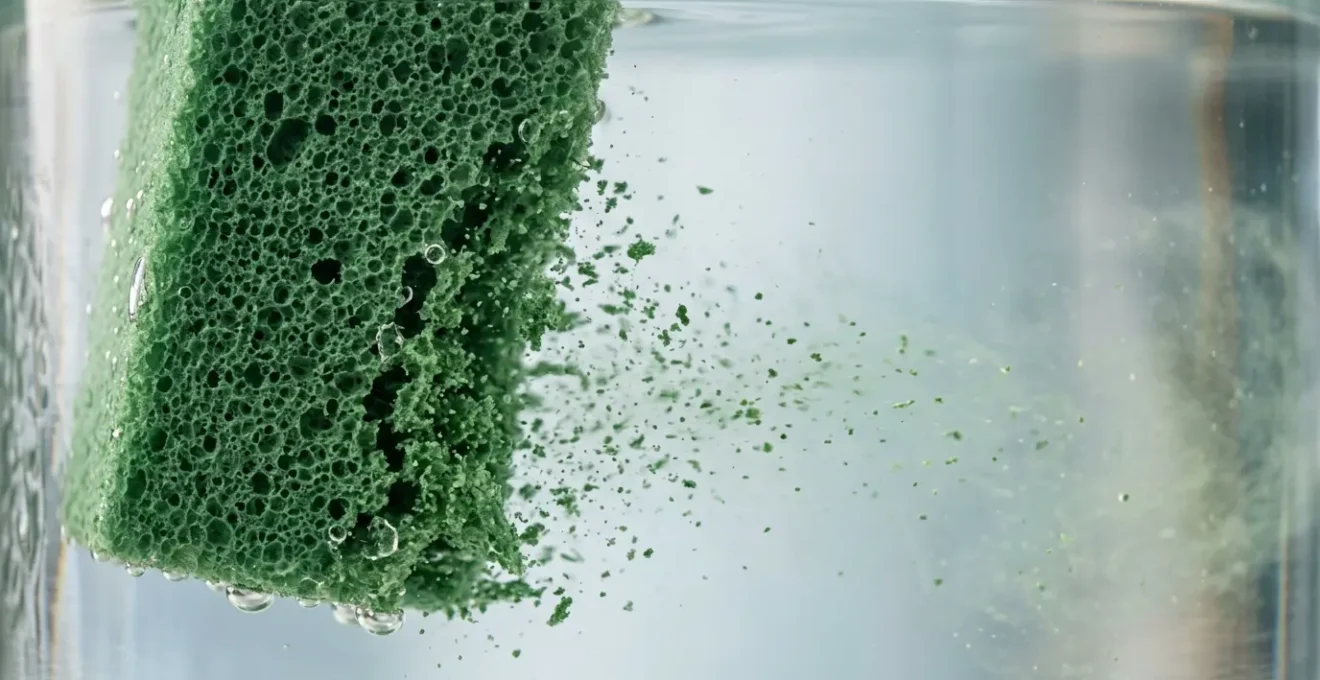
Contrary to its harmless appearance, green floral foam is a persistent microplastic pollutant with documented health risks, and its use is coming under increasing regulatory scrutiny in the UK.
- Floral foam breaks down into toxic microplastics that contaminate waterways and harm aquatic life.
- The dust from dry foam contains chemicals like formaldehyde, subject to strict UK workplace exposure limits.
- Claims for “biodegradable” foam are heavily policed by the UK’s Advertising Standards Authority (ASA) and often don’t meet the standard for home composting.
Recommendation: Transitioning away from floral foam is not just an environmental choice but a professional necessity to protect your health, your clients, and the integrity of your craft.
For decades, the dense green brick of floral foam has been an invisible pillar of the floristry industry. It’s the silent partner in countless arrangements, a tool so ubiquitous that its presence is simply taken for granted. We cut it, soak it, and watch it dutifully hold our creations, never questioning the legacy of the green dust on our hands or the cloudy water we pour away. But this convenience comes at a staggering, and largely hidden, environmental and health cost.
The common wisdom is that foam is just another piece of plastic waste. The reality is far more insidious. This isn’t just about landfill; it’s about a systemic pollutant that starts in your workshop and ends up in the food chain. The dust you breathe is regulated as a hazardous substance, and the marketing claims on “eco-friendly” alternatives often crumble under legal scrutiny. While floral foam is not yet illegal in the UK, its entire lifecycle—from manufacture to disposal—is governed by a patchwork of health, safety, and environmental regulations that every professional florist must understand.
This article will dismantle the myth of floral foam as a harmless tool. We will move beyond the platitudes and uncover the scientific and regulatory truth. We’ll trace the journey of its toxic components, from the dust in your lungs to the microplastics in our rivers. We will scrutinize the claims of “bio-foams” and provide you with the ethical framework and practical language to lead your business, and your clients, towards a truly sustainable future. This is about transforming your craft to genuinely celebrate nature, not inadvertently poison it.
To navigate this critical issue, we will explore the specific dangers and regulations you need to be aware of. This guide breaks down the science, the law, and the practical steps for moving forward responsibly.
Summary: The Toxic Truth About Floral Foam and UK Rules
- Drainage Danger: What Happens When You Pour Foam Water Down the Sink?
- Phenol and Formaldehyde: The Hidden Risks of Dry Foam Dust
- Bio-Foam: Is It Really Biodegradable or Just Breaks Down Faster?
- General Waste Only: Why You Must Never Put Foam in Green Bins?
- Funeral Tributes: How to Explain to Families Why You Don’t Use Foam?
- Composting: Does Agra-Wool Really Break Down in a Home Compost?
- Cellophane Ban: What Are the Alternatives for Wrapping Bouquets?
- sustainable eco-floristry
Drainage Danger: What Happens When You Pour Foam Water Down the Sink?
The simple act of pouring used floral water down the sink is arguably the most damaging, yet routine, practice involving floral foam. It feels harmless, but it’s a direct pipeline for microplastic pollution into our aquatic ecosystems. Floral foam is a type of phenol-formaldehyde plastic, a non-biodegradable material. When soaked and used, it crumbles, releasing countless microscopic plastic particles into the water. These particles are too small to be filtered out by most water treatment facilities and flow directly into rivers and oceans.
This isn’t just inert plastic. Pioneering research has revealed a disturbing reality: floral foam microplastics leach chemicals more toxic to aquatic invertebrates than particles from other common plastics. These tiny creatures are the foundation of the aquatic food web, and their decline has cascading effects on the entire ecosystem. The problem’s scale is immense, as it has been a standard industry practice for decades.
For the past 60 years, florists all over the world have been pouring it down the sink or putting it in the soil.
– Rita Feldmann, RMIT University study on floral foam pollution
Each time cloudy foam water is discarded, we are contributing to a legacy of persistent pollution. The microplastic contamination is cumulative and irreversible. Understanding this turns a mundane workshop task into a significant environmental decision, highlighting the urgent need to capture all foam waste, including the water, for proper disposal.
Phenol and Formaldehyde: The Hidden Risks of Dry Foam Dust
While the aquatic impact of wet foam is critical, the risk to the florist themselves comes from the dry, dusty state of the product. The fine green powder that coats surfaces when a block of floral foam is cut or shaped is not just an annoyance; it’s an airborne hazard. This dust contains a cocktail of chemicals, including phenol and formaldehyde, which are by-products of its manufacturing process. These are known respiratory irritants and, in the case of formaldehyde, a classified carcinogen.
This is not speculation; it is a recognised workplace hazard in the UK. The Health and Safety Executive (HSE) sets strict Workplace Exposure Limits (WELs) under the Control of Substances Hazardous to Health (COSHH) regulations. According to these rules, the long-term exposure limit for formaldehyde is just 2 parts per million (ppm) over an eight-hour period. This underscores the legal and ethical responsibility of employers and self-employed florists to manage this risk through proper ventilation and personal protective equipment (PPE), such as FFP3 masks.
The image of a well-protected workspace is not one of paranoia, but of professionalism and adherence to safety standards.
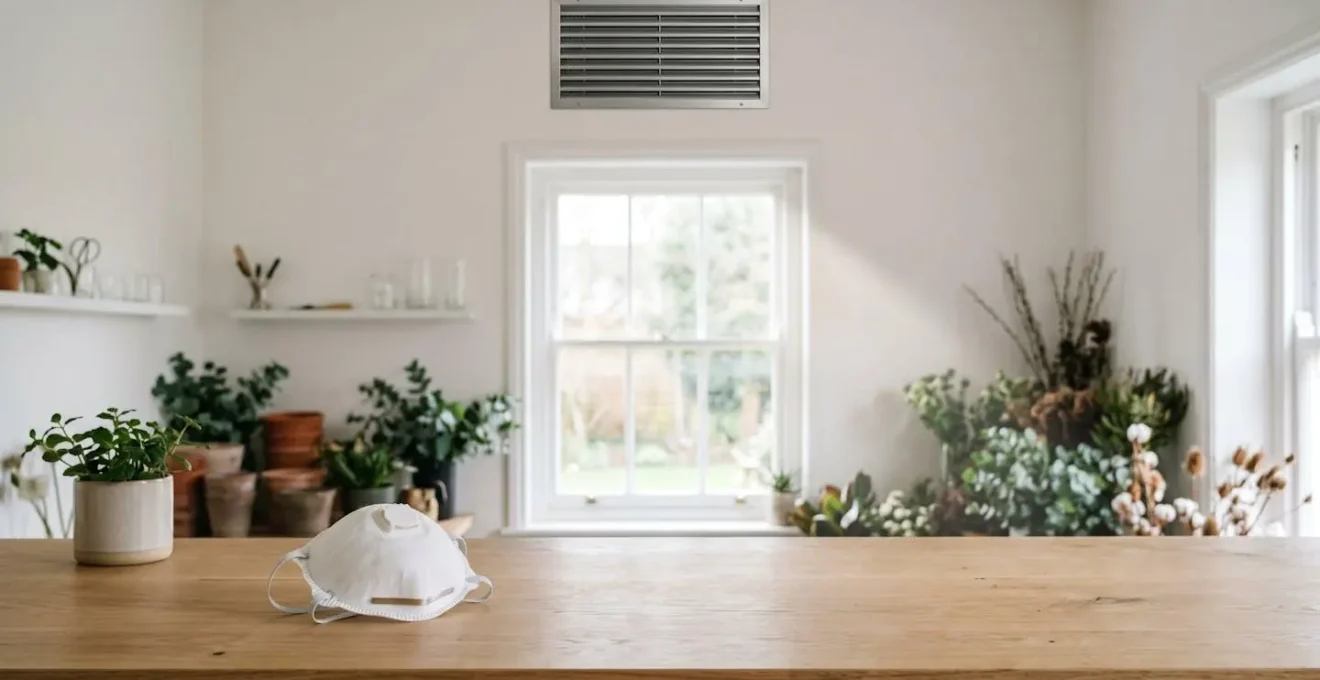
The “chemical exposure pathway” is direct: the dust is inhaled, and the fine particles can lodge deep within the lungs, causing potential short-term irritation and long-term health problems. Ignoring the dust is ignoring a legally recognised risk to your own health. Any florist working with foam must consider if their practices meet the workplace exposure limits set by the UK HSE under COSHH regulations, a question that often leads to the conclusion that avoiding the material altogether is the safest option.
Bio-Foam: Is It Really Biodegradable or Just Breaks Down Faster?
In response to growing environmental concerns, a new generation of “bio-foams” has entered the market, often promoted as biodegradable or even compostable. These claims offer a tempting solution, suggesting we can maintain our working methods with a clearer conscience. However, these terms are subject to strict regulatory scrutiny in the UK, and the reality is often far more complex than the marketing suggests. The UK’s Advertising Standards Authority (ASA) is clear on this matter.
The ASA has specific guidance on environmental claims, and it is a watchdog for “greenwashing.” The terms “biodegradable” and “compostable” have precise legal and scientific meanings. To claim a product is biodegradable, marketers must be able to prove it. In fact, the ASA has ruled in multiple cases that a product advertised as such must break down significantly faster than conventional plastic in its likely disposal environment. Many so-called bio-foams simply disintegrate into smaller pieces—a process of fragmentation, not biodegradation. They still release microplastics, and may require specific industrial composting conditions that are not met by home composting or landfill.
biodegradable and compostable refer to different processes and should only be referred to as compostable if both claims can be substantiated.
– UK Advertising Standards Authority, ASA guidance on environmental claims and green disposal
This puts the onus on the florist to be a critical consumer. Before accepting a “bio” product as a guilt-free alternative, you must ask for proof. Can it be composted at home? Does it have independent certification (like EN 13432)? If the answers are vague, it’s likely the product does not solve the underlying microplastic problem and may be in breach of advertising standards. True biodegradability means returning to nature, not just disappearing from sight.
General Waste Only: Why You Must Never Put Foam in Green Bins?
Understanding the correct disposal route for traditional floral foam is non-negotiable for any responsible florist. Given its nature as a non-recyclable, non-compostable plastic, there is only one correct place for it: the general waste bin. Placing floral foam or its fragments into recycling or green waste bins is an act of contamination that undermines the entire waste processing system.
In the UK, local councils operate carefully managed systems for waste separation. The green bin is exclusively for garden and sometimes food waste, which is sent for industrial composting to create nutrient-rich soil improver. Introducing floral foam, a plastic product containing chemicals, into this organic stream is catastrophic. It will not break down; instead, it will fragment, contaminating the final compost with microplastics and rendering it useless or even harmful if spread on land.
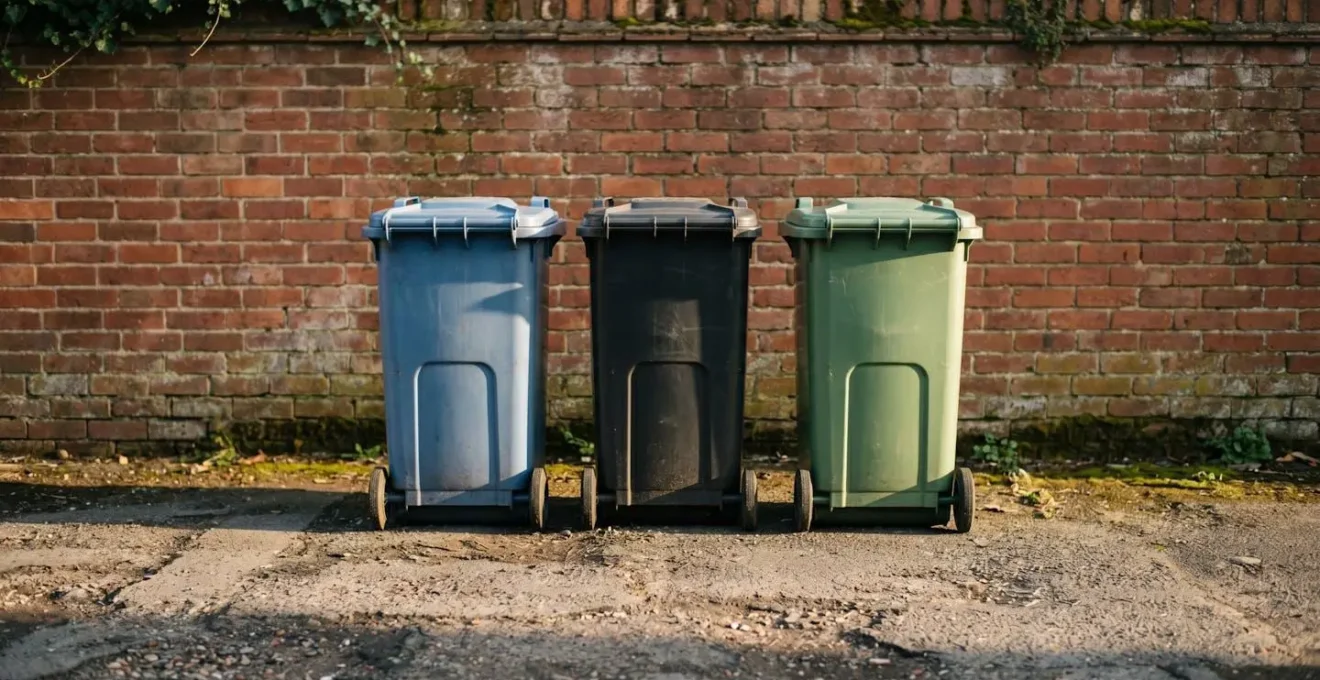
Similarly, it has no place in mixed recycling. It cannot be processed alongside paper, glass, or other plastics. Its presence can jam machinery and lower the quality of the recycled materials. The clear guidance from environmental experts is to treat it as you would any other non-recyclable waste.
This includes every last fragment. Sweeping dust from the floor, collecting off-cuts, and even straining the water used to soak the foam to capture particles should all become standard practice. As one guide advises, “Avoid washing floral foam fragments down the drain. Instead, place discarded foam in general waste to prevent microplastic contamination.” This diligence is the last line of defence in preventing further pollution from a product whose lifecycle ends the moment it enters your workshop.
Funeral Tributes: How to Explain to Families Why You Don’t Use Foam?
Discussing mechanics with a grieving family is perhaps the most sensitive challenge a foam-free florist faces. Funeral work is steeped in tradition, and many classic tribute shapes (hearts, letters, wreaths) have historically relied on foam. Explaining your refusal to use it requires immense compassion, clarity, and a focus on positive, meaningful alternatives. This conversation is not about environmental policy; it’s about honouring a loved one with authenticity and care.
The key is to frame the decision not as a restriction, but as an elevation of the tribute. Lead with what you *do*, not what you *don’t* do. Explain that you create arrangements using natural, sustainable methods that result in a more beautiful and heartfelt tribute. You can say something like, “To honour your loved one, we create our tributes using natural techniques that allow the flowers to express themselves fully. This means every design is unique and created with the utmost care, without the use of plastics.”
Focus on the benefits of the foam-free approach. A design without foam is often more graceful, with more movement and a softer, less rigid appearance. You can highlight that the tribute will be fully compostable, returning to the earth—a powerful and comforting metaphor. Offer beautiful alternatives like woven willow bases for wreaths, moss-filled frames for shapes, or elegant sheafs tied with natural ribbon. Show them examples. When a family sees a stunning, naturally-crafted tribute, the question of foam often becomes irrelevant. Your professional responsibility here is to guide them gently towards a choice that is both beautiful and respectful to the memory and the planet.
Composting: Does Agra-Wool Really Break Down in a Home Compost?
As florists seek foam alternatives, materials like Agra-Wool are gaining attention. Marketed as a natural product, it raises a key question for the eco-conscious florist: can it truly be composted at home? The answer requires a nuanced understanding of its composition. Agra-Wool is made from basalt wool, a fibre created by melting and spinning basalt rock, bound with a bio-based binder. While it is presented as a more natural alternative, its compostability is not as straightforward as that of a flower stem.
Basalt fibres themselves are mineral and do not decompose in a biological sense like organic matter. They will break down physically over a very long time, but they won’t be consumed by the microorganisms in a typical home compost heap. The *binder* used in the product may be biodegradable, but the wool itself will persist. Therefore, while it may be considered “inert” and non-toxic, putting Agra-Wool in a home compost system will not result in it turning into rich humus. It will simply exist as fine mineral fibres within the compost.
This contrasts sharply with the goal of zero-waste floristry, which is to return all organic components to the earth. The Sustainable Floristry Network champions this ideal: “The more organic material we divert into composting schemes, the fewer greenhouse gas emissions we create.” To achieve this, materials must be genuinely compostable. While Agra-Wool is a significant step away from plastic foam, its end-of-life needs to be managed with realistic expectations. It is not a “disappearing” solution in a home compost environment, and for true circularity, florists must continue to prioritise materials like moss, twigs, and other fully organic mechanics.
Cellophane Ban: What Are the Alternatives for Wrapping Bouquets?
The move away from single-use plastics is a powerful legislative and consumer-driven trend that extends far beyond floral foam. A prime example is the growing scrutiny on bouquet wrappings, particularly traditional cellophane. While a specific “cellophane ban” for flowers isn’t yet law in the UK, the direction of travel is clear. Recent government action provides a strong signal that all industries must find alternatives for unnecessary single-use plastics.
For instance, under new waste management regulations that came into force in England in October 2023, the sale of items like single-use plastic cutlery, balloon sticks, and polystyrene containers was banned. This legislation demonstrates a clear intent to reduce plastic pollution at the source. For forward-thinking florists, this is a cue to get ahead of the curve. Waiting for a specific ban on cellophane is a reactive stance; the proactive, and more sustainable, approach is to phase it out now.
Fortunately, the alternatives are numerous and often more beautiful. High-quality, recyclable or compostable papers, such as kraft paper or tissue paper, offer a rustic and elegant look. Fabrics like burlap, linen, or reusable Furoshiki-style wraps can become part of the gift itself, adding value and eliminating waste. Even within plastics, there are better choices. Some films are certified as home compostable. The key is to shift the mindset from a disposable, waterproof barrier to a presentation style that is both protective and part of a sustainable, high-end product. This transition not only reduces plastic waste but also enhances the perceived value and craft of the bouquet.
Key takeaways
- Floral foam is a direct source of toxic microplastic pollution in waterways, and its dust is a regulated health hazard in the UK.
- “Bio” foams are not a silver bullet; their environmental claims are under strict scrutiny and they often do not break down in home compost.
- A truly sustainable floristry practice involves eliminating foam, choosing certified compostable materials, and communicating these positive choices to clients with confidence.
sustainable eco-floristry
Embracing sustainable eco-floristry is a holistic commitment that goes far beyond the single issue of floral foam. It’s about re-evaluating every aspect of the craft—from sourcing to mechanics to waste—through the lens of environmental and ethical responsibility. It is a powerful shift from being an industry that merely uses nature to one that actively works to protect it. At its heart is a fundamental question that every florist must ask themselves, as articulated by a leader in the movement.
For an industry that seeks to celebrate nature, we are actually adding to environmental problems when using this product.
– Rita Feldmann, Founder of the Sustainable Floristry Network, response to RMIT floral foam study
This philosophy extends to sourcing. Choosing locally-grown, seasonal flowers dramatically reduces the environmental impact of the final arrangement. In fact, research shows the carbon footprint of locally-grown UK flowers can be as little as 10% of those imported out-of-season. Sustainable floristry also means championing foam-free mechanics like chicken wire, pin frogs (kenzans), moss, and intricate twig structures. It involves minimising waste, composting all organic material, and choosing renewable resources for wrapping and transport. It is a journey of rediscovering older, more skillful techniques and innovating new ones.
Your Action Plan for Foam-Free Floristry
- Audit Your Mechanics: List every type of mechanic you currently use. Identify all foam-based products (bricks, rings, spheres) and single-use plastics.
- Research Alternatives: For each foam product, research and source at least two foam-free alternatives (e.g., reusable metal frames, moss/twig bases, pin frogs).
- Practice New Techniques: Dedicate time to mastering foam-free methods. Build confidence by creating designs for your portfolio or shop display using only sustainable mechanics.
- Update Your Pricing: Accurately cost your new mechanics and the extra time required. Ensure your pricing reflects the higher skill and value of sustainable design, and be ready to explain this to clients.
- Communicate Your Stance: Update your website, social media, and client consultation materials to proudly state your commitment to foam-free, sustainable floristry. Frame it as a positive enhancement of your craft.
Ultimately, sustainable eco-floristry is about integrity. It’s about ensuring your business practices are in perfect alignment with the beauty of the natural product you work with. It’s a commitment to a healthier planet, a safer workplace, and a more authentic, skillful, and valuable art form.
The journey to becoming a truly sustainable florist begins with a single, informed decision. By arming yourself with the knowledge of floral foam’s true impact and the regulations that govern it, you are empowered to make a change that benefits your health, your business, and the planet. Start today by auditing your workshop and committing to mastering one foam-free technique.