Flowers & Plants
The world of flowers and plants offers an extraordinary palette for creative expression, yet understanding what works, when, and why can feel overwhelming. Whether you’re a professional florist building commercial designs or an enthusiast arranging blooms for your home, the difference between a stunning arrangement and a disappointing one often lies in knowledge rather than budget.
This foundation explores the essential principles that underpin successful floral work: seasonal availability, variety characteristics, proper handling techniques, and smart sourcing strategies. Think of it as learning the alphabet before writing poetry—once you understand these fundamentals, your creative possibilities expand exponentially.
From the dramatic movement of tulips to the sturdy reliability of carnations, from delicate British natives to bold tropical specimens, each flower has its own personality, requirements, and ideal applications. The following sections will demystify these differences and give you the confidence to choose, handle, and source flowers like a seasoned professional.
The Seasonal Nature of Flowers: Why Availability Matters
One of the most common frustrations newcomers face is discovering that certain flowers simply aren’t available when they want them. The floral industry operates on two parallel tracks: seasonal local production and year-round global imports. Understanding this distinction transforms how you plan and design.
British dahlias, for instance, bloom from late summer through autumn. No amount of wishing will produce locally-grown dahlias in May—the plants haven’t even been planted yet. Similarly, British peonies have a brief but glorious season, typically spanning just six to eight weeks in late spring. If you need peonies in November, they’ll come from the Southern Hemisphere, traveling thousands of miles.
This geographical journey comes with trade-offs. Imported flowers often sacrifice scent for shelf life, bred specifically to survive long-haul transport. Many imported roses, for example, have virtually no fragrance compared to their locally-grown garden rose cousins. The choice isn’t about right or wrong—it’s about understanding what you’re gaining and losing.
Working with the seasonal calendar rather than against it yields several advantages:
- Superior freshness and vase life from shorter supply chains
- Fuller fragrance in varieties that haven’t been bred primarily for transport
- Lower costs during peak local season
- More sustainable choices with reduced carbon footprint
- Authentic seasonal character that resonates with customers
Smart designers learn to celebrate what’s abundant rather than forcing what’s scarce. June’s local abundance looks very different from February’s offerings, and that rhythm creates natural variation in your work.
Spring’s Signature Flowers: Tulips, Peonies, and Blossom
Spring brings some of the most beloved yet temperamental flowers in the floral repertoire. Understanding their unique behaviors separates amateur work from professional results.
Tulips: Managing Movement and Growth
Tulips possess a characteristic that surprises many first-time users: they continue growing after cutting, sometimes adding an inch per day to their height. This movement creates both challenge and opportunity. In a mixed arrangement, tulips may quickly outgrow their companions, disrupting your carefully planned composition.
Additionally, tulips are phototropic—they bend toward light sources. An arrangement positioned near a window may look dramatically different by evening, with stems curved in entirely new directions. Professional designers either embrace this kinetic quality, positioning tulips where movement enhances the design, or use them in mono-stem arrangements where uniformity matters less.
Conditioning matters significantly with tulips. Tight, closed buds will open; fully open blooms will continue spreading. Purchase at the stage that matches your timeline, remembering that warmth accelerates opening while cool storage slows it.
Peonies: Timing the Perfect Opening Stage
Peonies present a different timing puzzle. Buy them too tight, and they may never open properly. Buy them too open, and you’ll have mere days before petal drop. The ideal purchasing stage for most applications is the marshmallow stage—when buds are soft and beginning to show color, but haven’t yet unfurled.
For weekend events, this means purchasing on Tuesday or Wednesday. The peony will gradually open over several days, hitting peak beauty precisely when needed. Storage temperature becomes your control mechanism: refrigeration pauses development, while room temperature accelerates it.
Many growers sell peonies with bulbs still attached, and there’s good reason for this. The bulb provides visual authenticity and allows the flower to draw nutrients until the final moment. When working with premium British peonies during their brief season, leaving the bulb on becomes both a practical and aesthetic choice.
Summer Abundance: Roses, Dahlias, and Lilies
Summer’s warmth brings the floral year’s most diverse selection, with varieties ranging from delicate to architectural, subtle to intensely fragrant.
Garden Roses and Scent Profiles
Garden roses differ dramatically from standard commercial roses. While standard roses prioritize uniform shape, straight stems, and longevity, garden roses embrace irregular forms, fuller heads, and most importantly, fragrance. Their scent profiles vary widely, generally categorized as myrrh (sweet, anise-like), fruit (reminiscent of apples or berries), tea, or spice.
For weddings and high-end design, garden roses command premium prices but deliver unmatched romance. Their looser petal structure means gentler handling—they won’t tolerate the rough processing that commercial roses endure. Budget extra stems for potential damage, and never crowd them during transport.
Recent breeding programs have produced garden roses in previously unavailable colors, including muted browns, purples, and sophisticated apricots that designers particularly value. These antique-toned varieties pair beautifully with natural, unstructured designs.
Dahlias and Lilies: Handling Delicate Beauty
Dahlias rank among the most spectacular yet challenging flowers for professional use. Their large, intricate heads and hollow stems make them genuinely delicate. They demand immediate deep water after cutting and resent being moved once conditioned. Despite this fussiness, their dramatic impact and extraordinary color range make them indispensable for late summer and autumn work.
Lilies present a different challenge: intense fragrance that divides opinion sharply. Some clients adore it; others find it overwhelming or trigger allergies. The solution lies in variety selection. Asiatic lilies offer bold color with minimal scent, making them ideal for sensitive environments. Oriental lilies provide the classic lily fragrance—use them strategically where their perfume enhances rather than dominates.
Remove lily pollen before it fully develops to prevent staining fabrics and skin. This also slightly extends vase life by preventing the flower from completing its reproductive cycle.
Hardy Varieties and Meadow Flowers: Versatile Workhorses
Not all flowers demand kid-glove treatment. Some varieties offer exceptional longevity and forgiveness, making them invaluable for situations requiring reliability over drama.
Carnations have experienced a remarkable renaissance after decades of being dismissed as dated. Modern breeding has produced varieties in sophisticated muted tones—dusty roses, antique purples, and subtle browns—that bear little resemblance to the bright, generic carnations of previous generations. More importantly, carnations offer extraordinary vase life, often lasting two weeks or more, and tolerate temperature fluctuations that would devastate delicate varieties.
Sweet peas, another supposed old-fashioned flower, bring fragrance and delicate beauty despite their hardy nature. They’re genetic survivors, having been cultivated for centuries, which means they possess inherent vigor. Their climbing habit produces long, usable stems, and their scent—sweet and nostalgic—adds sensory dimension to arrangements.
Daisies in their many forms bridge the gap between wildflower charm and commercial viability. Ox-eye daisies offer authentic meadow character, while Shasta daisies provide larger, more uniform blooms. For foam-based designs, Shasta varieties generally hold up better, as their stems are stronger and less prone to collapse. Both varieties evoke cheerful simplicity and last remarkably well—often outlasting showier companions.
Native British varieties like cow parsley present an interesting category shift. Once dismissed as weeds, these roadside plants now command respect in high-end natural designs. Their delicate umbel structure adds textural contrast, and their authenticity resonates with clients seeking local, seasonal character. The question becomes not whether they’re weeds, but whether they have adequate vase life for professional use. Many do, particularly when harvested correctly and conditioned promptly.
Exotic Stems and Tropical Drama
When local seasonal offerings feel too familiar, exotic stems provide instant impact and luxury positioning. Tropical flowers command premium prices and attract clients seeking statement pieces.
Heliconia and Strelitzia (bird of paradise) represent the bold end of the exotic spectrum. Both offer architectural forms and intense colors impossible to find in temperate flowers. Strelitzia generally outlasts Heliconia in vase life terms, sometimes remaining presentable for two weeks, while Heliconia peaks at seven to ten days. Their dramatic scale means fewer stems create significant impact, which helps justify their higher cost.
Orchids, particularly Phalaenopsis and Cymbidium varieties, bridge exotic appearance with remarkable longevity. Phalaenopsis blooms can last weeks, making them extraordinarily cost-effective despite premium pricing. Cymbidiums offer a more traditional floral form while maintaining the orchid family’s characteristic endurance.
The business of exotic stems involves different sourcing considerations. Most arrive via international supply chains with specialized handling requirements. Building relationships with importers who understand proper cold-chain management becomes essential, as tropical flowers suffer irreversible damage from temperature shocks that temperate varieties might survive.
Pairing exotic blooms with appropriate foliage amplifies their impact. Monstera leaves and various palm varieties provide scale and reinforce the tropical narrative. The large surface area of these leaves also contributes structure to arrangements, creating visual weight and frame.
Foliage: Building the Foundation
Flowers capture attention, but foliage provides the structure, texture, and longevity that makes arrangements successful. Yet foliage selection often receives far less consideration than it deserves.
Some greens offer extraordinary staying power. Certain eucalyptus varieties, ruscus, and leather fern can survive two weeks without water, making them invaluable for installations where regular maintenance isn’t possible. This hardy category forms the backbone of wedding work, corporate installations, and any situation where reliability trumps delicacy.
Understanding which foliage tolerates which conditions prevents costly failures. Pittosporum, for example, offers beautiful glossy leaves but wilts quickly in warm, dry environments. Italian ruscus, conversely, seems nearly indestructible, maintaining appearance even in challenging conditions.
Exotic foliage—Monstera, various palms, tropical ferns—creates entirely different aesthetics but demands more careful handling. These varieties need consistent moisture and dislike cold storage, which can cause blackening or cellular damage. They’re spectacular for high-impact event work but poor choices for long-lasting customer arrangements.
The role of foliage extends beyond mere background. Textural varieties like asparagus fern add movement and softness. Structural greens like bear grass create linear elements. Large leaves like hosta or fatsia provide bold focal points. Professional designers think in terms of foliage architecture, using greens to establish form before adding flowers.
Vase Life and Care: Professional Techniques
Understanding variety characteristics means nothing without proper handling. Professional techniques can double vase life, while poor practices destroy flowers regardless of their inherent quality.
The fundamentals apply universally: clean vases, fresh water, proper flower food, and cool storage. But specific varieties demand specific approaches. Poppies, for instance, benefit from stem-end searing—briefly holding cut stems in flame to seal the milky sap that otherwise clouds water and shortens vase life. Hellebores require similar searing, or alternatively, stem splitting to aid water uptake through their tough stems.
Timing matters as much as technique. The concept of purchasing stage recognizes that different situations require different maturity levels. Tight buds for events several days away; partially open blooms for immediate impact. This requires communicating clearly with suppliers about your specific timeline rather than simply ordering generic availability.
Some flowers arrive with parts best removed before use. Those lily stamens we mentioned earlier, for instance. Rose guard petals—the outer petals that protect the bloom during transport—should usually be removed to reveal the pristine interior petals, though some designers now celebrate them as part of the flower’s authentic character.
Storage temperature dramatically affects longevity. Most cut flowers prefer temperatures just above freezing, ideally between 1-4°C. Tropical varieties need warmer storage, typically 10-13°C. Mixing temperature-sensitive tropicals with cold-loving temperate flowers in the same cooler creates problems for at least one category.
Sourcing and Grower Relationships
Where and how you purchase flowers affects quality, cost, variety availability, and environmental impact. The rise of micro-growers and renewed interest in local production has expanded sourcing options significantly.
Small local farms often grow varieties unavailable through wholesale markets—unusual colors, heirloom varieties, or specialty items that don’t ship well. Finding these micro-growers requires research. Farmers’ markets, online directories, and floral design communities provide starting points. Many small growers welcome direct contact with designers willing to purchase entire crop sections.
Farm visits offer insights impossible to gain from catalogs. Seeing how flowers are grown, understanding the grower’s philosophy, and building personal relationships creates supply chain transparency. You’ll learn which varieties the grower excels with, what’s coming into season, and potentially secure access to limited quantities before they’re generally available.
Pre-ordering crops represents the deepest level of grower collaboration. By committing to purchase specific varieties months ahead—literally from seed to vase—you guarantee supply of exactly what you need while giving growers the financial certainty to plant varieties they might otherwise avoid. This model works particularly well for wedding work with specific color palettes or designers building signature looks around particular flowers.
The trade-off for these benefits is reduced convenience. Local micro-growers can’t offer the one-stop shopping of wholesale markets. You might visit multiple farms or coordinate several deliveries to gather everything needed. For many designers, the quality and uniqueness justify this extra effort, while others blend local specialty purchases with wholesale staples.
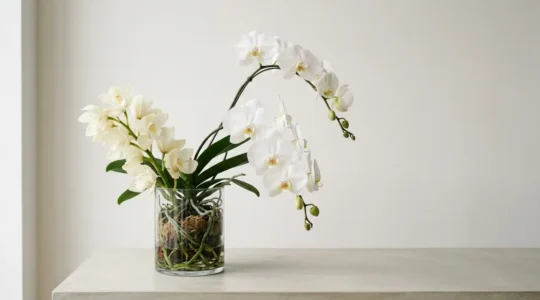
Orchid Elegance: A Strategist’s Guide to Phalaenopsis & Cymbidium for Lasting Corporate Design
The key to successful corporate floral design isn’t just choosing beautiful flowers, but engineering them for maximum weekly return on investment (ROI). Phalaenopsis and Cymbidium orchids offer superior longevity, but only if their specific mechanics—from hydration to temperature control—are professionally…
Read more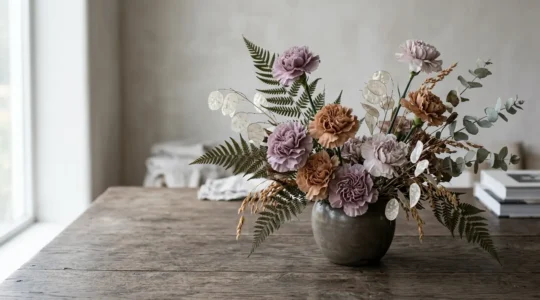
The Carnation Comeback: Why This Hardy Flower Deserves a Second Look
The carnation’s greatest strength isn’t its price, but its unparalleled performance as a high-end design tool. It offers unique, sophisticated antique palettes that rival boutique flowers. It can be physically manipulated to mimic the fullness and luxury of blooms like…
Read more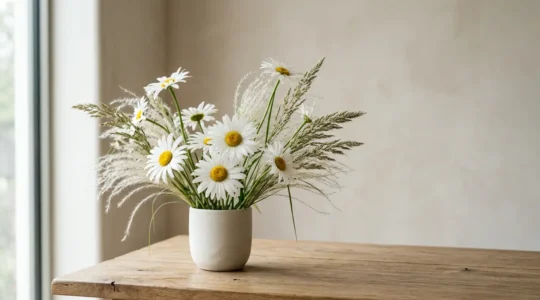
The Humble Daisy: Bringing Meadow Charm to High-End Design
In summary: Elevating the common daisy to high-end status depends on sophisticated, often invisible, professional techniques. Mastering conditioning, mechanics, and context is essential to move beyond the simple “meadow” look. True luxury in floral design now intertwines aesthetics with sustainability…
Read more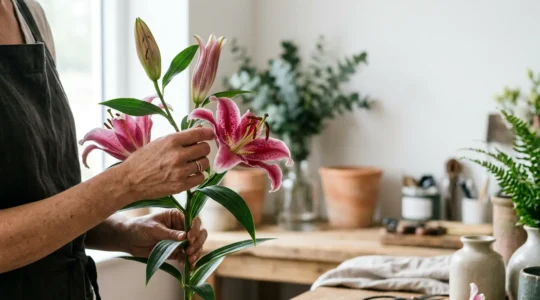
The Fragrant Lily: Love It or Hate It, How to Use It Professionally?
Professional lily design is less about the flower and more about mastering its powerful biology—scent, pollen, and toxicity—to curate specific client experiences. Scent is manageable: Unscented Asiatic hybrids are ideal for dining, while fragrant Orientals excel in “impact zones” like…
Read more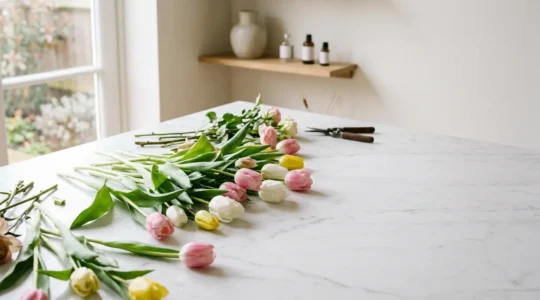
Tulipmania: Mastering the Movement of Spring’s Most Popular Flower
Controlling tulips isn’t about fighting their droop with myths like pin-pricks; it’s about mastering the plant’s internal biology. Post-harvest growth is driven by water-fueled cell elongation, a manageable process, not an unstoppable urge. Airlocks (embolisms) are real, but they’re fixed…
Read more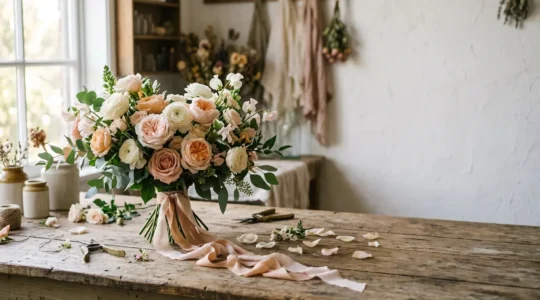
The Garden Rose Guide: Varieties, Care, and Styling for Weddings
The breathtaking beauty of a garden rose on your wedding day is not a matter of luck, but a result of mastering its delicate biology. Their higher price reflects a complex structure (often with over 100 petals) and intense fragrance,…
Read more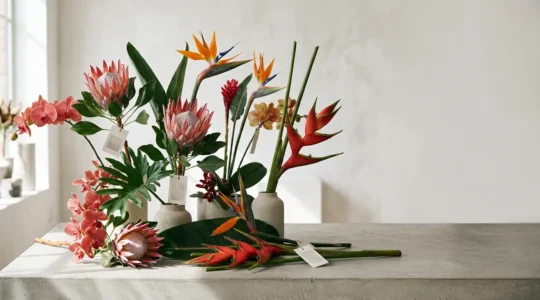
The Business of Exotic Stems: Sourcing and Selling Tropical Luxury
Elevating your floral business to a luxury brand hinges not on selling more flowers, but on strategically engineering the value and narrative of every single stem. Mastering the specific environmental needs of tropicals (like temperature and humidity) is a non-negotiable…
Read more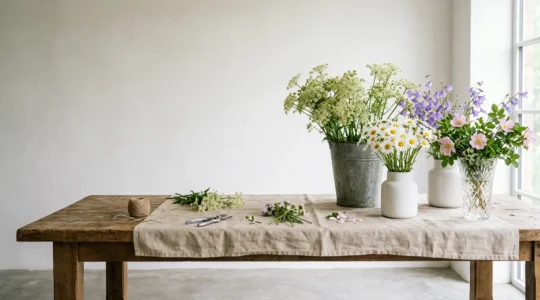
Why Use British Native Varieties in Your Commercial Designs?
Moving beyond aesthetics, using British native flowers is an act of ecological stewardship that offers a powerful, premium narrative for your brand. Native plants are functionally superior for supporting UK pollinators, which are in significant decline. Ethical and legal sourcing…
Read more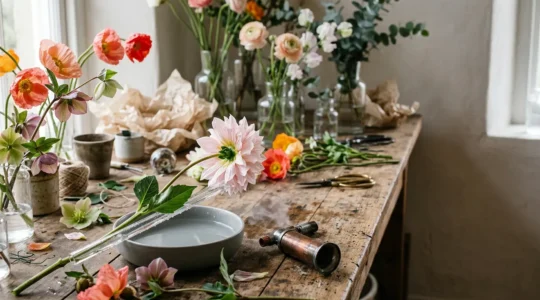
Handling Delicate Cultivars: A Guide to Poppies, Hellebores, and Dahlias
Losing high-value, delicate blooms to wilting and damage is a common frustration for grower-florists. The solution isn’t just better general care; it’s about understanding the unique physiological and mechanical weaknesses of each cultivar. This guide moves beyond basic tips to…
Read more