Occasions & Events
Event floristry stands apart from everyday flower arranging in one critical way: every design decision must serve both beauty and function simultaneously. A centerpiece isn’t simply attractive—it must allow conversation across the table. An arch isn’t just photogenic—it may need to be moved safely between locations. The bouquet held by a bride becomes part of hundreds of photographs, its position as important as its composition.
This intersection of art and logistics makes event floral work uniquely challenging. You’re not arranging flowers in the controlled environment of a studio; you’re adapting to historic architecture, navigating tight timelines, working within budgets, and ensuring every element enhances rather than hinders the human experience of celebration. Understanding these principles transforms floristry from decoration into thoughtful design that guests remember long after petals have faded.
Whether you’re planning your first event or refining your approach, mastering the fundamentals of venue assessment, sightline management, strategic budgeting, and sustainable practices will elevate your work from merely pretty to genuinely purposeful.
Understanding Your Venue: Architecture and Practical Constraints
The building housing your event dictates more than you might initially realize. Architectural style influences everything from color palette to installation method, yet many approach floral design as a one-size-fits-all endeavor.
Consider the contrast between a rustic barn and a formal manor house. The former, with exposed beams and rough-hewn textures, calls for organic, loosely structured arrangements—wildflower meadow aesthetics, asymmetrical compositions, and natural movement. The latter demands refinement: structured symmetry, classic color harmonies, and arrangements that echo the building’s proportions. Using the same design approach in both venues creates visual discord, like wearing hiking boots to a black-tie dinner.
Historic or protected buildings present additional challenges. Grade I listed structures often prohibit pins, tape, or any fixings that might damage original surfaces. This constraint isn’t a limitation—it’s a design parameter that encourages creativity. Freestanding structures, weighted bases, and tension systems become your tools, often resulting in more elegant solutions than sticky tape ever provided.
This is precisely why the site visit is non-negotiable. Measurements determine whether your planned arch will physically fit through doorways for the ceremony-to-reception move. Photographs capture lighting conditions that influence color choices. Conversations with venue staff reveal restrictions before you arrive with a van full of unsuitable materials. The thirty minutes spent measuring doorway heights, noting electrical outlet locations, and understanding guest flow patterns will save hours of improvisation on installation day.
The Science of Sight Lines and Guest Experience
Floral design for events operates under a principle rarely discussed in traditional flower arranging: flowers must enhance what people came to see, never obstruct it. This is where the 14-inch rule and related sight line principles become essential.
The concept is straightforward: arrangements must sit either below chin height (approximately 14 inches) or rise well above head height (30 inches or more). This creates clear visual zones—guests can see across and through low arrangements during conversation, or beneath tall arrangements that provide drama without blocking. The awkward middle ground, between 14 and 30 inches, creates a frustrating barrier where people crane their necks and shift positions throughout the meal.
This principle extends beyond tables to every ceremony element. The altar arrangement that looks spectacular in isolation becomes problematic if it obscures the couple’s faces during the vows—the moment every photographer and guest is trying to capture. Similarly, bouquets held too high (often a nervous habit as brides clutch them toward their chest) block the dress detail and create unflattering shadows in photographs. The natural carrying position, relaxed arms with flowers at hip level, both looks elegant and keeps the focus on faces rather than foliage.
These aren’t arbitrary aesthetic preferences; they’re human-centered design decisions that respect why people gather at events. They come to witness moments and connect with others. Your flowers should frame and enhance these experiences, functioning like thoughtful stage design rather than attention-demanding centerpieces.
Table Design: Shape, Scale and Social Dynamics
The relationship between table shape and centerpiece design is more than visual—it’s deeply social. Round tables encourage democratic conversation where everyone participates equally, while rectangular tables create distinct zones, with ends often feeling separated from the center.
For round tables, centralized arrangements work beautifully because everyone has an equal relationship to the focal point. A lush, textural centerpiece viewed from all angles becomes a shared reference point. For long rectangular tables, the choice becomes more nuanced. A single large centerpiece can leave table ends feeling neglected, while multiple smaller arrangements create rhythm and ensure everyone has nearby visual interest.
This is where the garland versus loose-lay decision enters. A proper garland—foliage wired or bound into a continuous runner—creates undeniable impact and cohesion along the table’s length. However, it requires significant labor and material. The loose-lay alternative, where foliage and stems are artfully scattered without binding, achieves 80% of the visual impact at 40% of the cost and time. For budget-conscious projects, this efficiency is transformative.
Consider also the table’s purpose beyond dining. If guests will linger for hours, lower arrangements feel more intimate and allow candles to provide ambiance without overwhelming. For cocktail receptions where people stand and mingle, taller arrangements help define space and remain visible above the crowd. The design must serve the specific social dynamics you’re creating.
Ceremony Florals: From Aisle to Altar
Ceremony flowers carry unique weight because they backdrop the event’s most meaningful moments. Every element—from the walk down the aisle to the signing of the register—deserves intentional design consideration.
Aisle markers serve dual purposes: they define the processional path and build anticipation as guests await the entrance. Whether you choose elaborate pew end arrangements or simple ribbon-and-stem bundles, consistency matters more than complexity. Evenly spaced markers create rhythm and formality; varied placements feel more organic and relaxed. Both are valid, but mixing approaches reads as inconsistent rather than eclectic.
The altar or ceremony backdrop presents your largest focal opportunity, but it’s also the most logistically complex. If you’re planning to move this arch or installation to the reception area, structural integrity becomes paramount. Wire frames must be reinforced, mechanics must be secure, and the base must be transportable without dismantling the entire piece. Many florists design beautiful arches that cannot survive a move intact—a costly discovery made at the worst possible moment.
Don’t overlook the register table, where the couple will sign documents while photographers capture the moment. This requires a low, asymmetrical arrangement that sits to one side, providing visual interest without dominating the frame or requiring movement when papers are spread out. Treating it as an afterthought often means it’s either omitted entirely or creates awkward composition in official photographs.
Strategic Budgeting: Where to Invest and Where to Save
Event floral budgets vanish quickly without strategic allocation. The key insight: guests remember impact, not item count. Three abundantly filled areas create more lasting impression than ten sparsely decorated spots.
Invest in the high-visibility, high-photograph areas: the ceremony backdrop, the couple’s table, and the entrance arrangement that sets the tone as guests arrive. These are the locations that appear in professional photographs, that frame key moments, and that establish the event’s aesthetic immediately. Economize on areas of lower focus: restroom arrangements, distant corners, or spaces guests occupy briefly.
Material choices dramatically affect budget without necessarily impacting visual result. Seasonal, locally available flowers cost a fraction of imported rarities while often providing superior freshness and longevity. Foliage, frequently undervalued, offers tremendous volume and texture at minimal cost—a foundation of greenery allows fewer premium blooms to read as abundant rather than sparse.
The garland-versus-loose-lay decision mentioned earlier exemplifies strategic economizing. Similarly, reusing ceremony flowers at the reception (moving aisle arrangements to become table centerpieces, relocating the arch behind the head table) effectively doubles your material’s impact without doubling your budget. This requires planning the timing and delegating the physical move to reliable helpers, but the investment efficiency is substantial.
Practical Logistics: Safety, Movement and Timing
The least glamorous aspect of event floristry is often the most critical: ensuring arrangements survive installation, guest interaction, and sometimes relocation without creating hazards or damage.
The glass-vase-and-dance-floor problem is learned through unfortunate experience: as celebrations progress and inhibitions decrease, delicate containers near high-energy areas become genuine safety risks. Shattered glass on a dance floor doesn’t just end the party—it creates liability. Weighted ceramic vessels, metal containers, or even high-quality resin alternatives provide elegant solutions that won’t catastrophically fail when bumped by an enthusiastic dancer.
Moving flowers between locations seems straightforward until you attempt it under time pressure. Arches and large installations need adequate vehicle space, protective wrapping, and multiple people to lift without damaging mechanics. Smaller arrangements require stable transport containers that prevent tipping during transit. Most importantly, you need sufficient time between ceremony conclusion and reception start—a gap that gets compressed as schedules run inevitably late. Always add a 20-minute buffer beyond your calculated minimum.
Installation timing often gets underestimated. You’re not arranging in ideal studio conditions—you’re working around caterers, musicians setting up equipment, and venue staff with their own timelines. Arriving early feels excessive until the day the air conditioning fails, wilting your flowers before guests arrive, and extra time allows complete replacement of affected pieces.
Beyond the Event: Sustainability and Lasting Impact
The brief lifespan of event flowers troubles many clients and designers, making post-event planning increasingly important for both ethical and practical reasons.
Flower donation programs connect event florals with hospices, care homes, and hospitals, giving arrangements extended purpose beyond a single celebration. This requires advance coordination—identifying recipient organizations, arranging pickup timing, and ensuring arrangements are transportable—but transforms waste into meaningful contribution. Many organizations now facilitate these connections, making the logistics simpler than managing disposal.
Living centerpieces, using potted plants guests take home, offer a different sustainability approach. Herbs, small succulents, or flowering plants in attractive containers serve double duty as décor and favor, eliminating both floral waste and the need for separate guest gifts. The aesthetic differs from cut arrangements—more structured, sometimes less romantic—but for the right event style, it’s both economical and environmentally thoughtful.
Even seasonal material choices carry sustainability implications. Incorporating withered leaves, dried grasses, or branch elements in autumn arrangements isn’t compromise—it’s honest seasonal expression that reduces reliance on hothoused blooms while creating distinctive, conversation-starting designs. Unique or unexpected botanical choices become talking points that engage guests and make events memorable in ways that standard roses cannot.
Event floral work demands balancing beauty with function, aspiration with budget, and creativity with logistics. Master these fundamentals, and your designs will do more than decorate—they’ll shape how people experience and remember the occasions they mark.
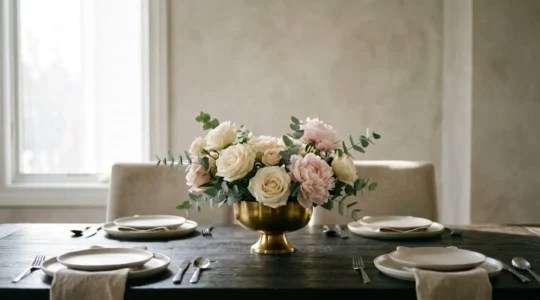
Table Centerpieces: The Art of Conversation and Floral Design
The ultimate goal of a table centerpiece is not simply to be beautiful, but to actively foster connection and conversation. Effective design respects sightlines, keeping arrangements below 14 inches or well above eye level to encourage guest interaction. A successful…
Read more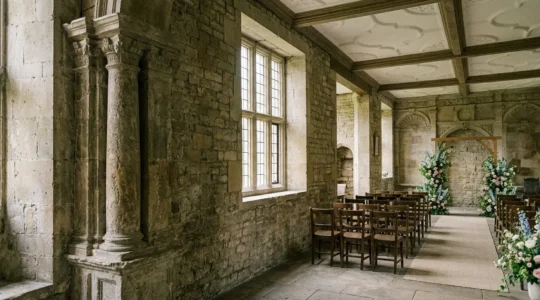
The Art of Cohesion: A Floral Design Guide for Your UK Country House Wedding
Creating a truly cohesive floral concept for a country house wedding isn’t about matching colours; it’s about crafting a narrative that honours the venue’s unique soul. Architectural features, not just the season, should dictate your flower shapes and textures for…
Read more