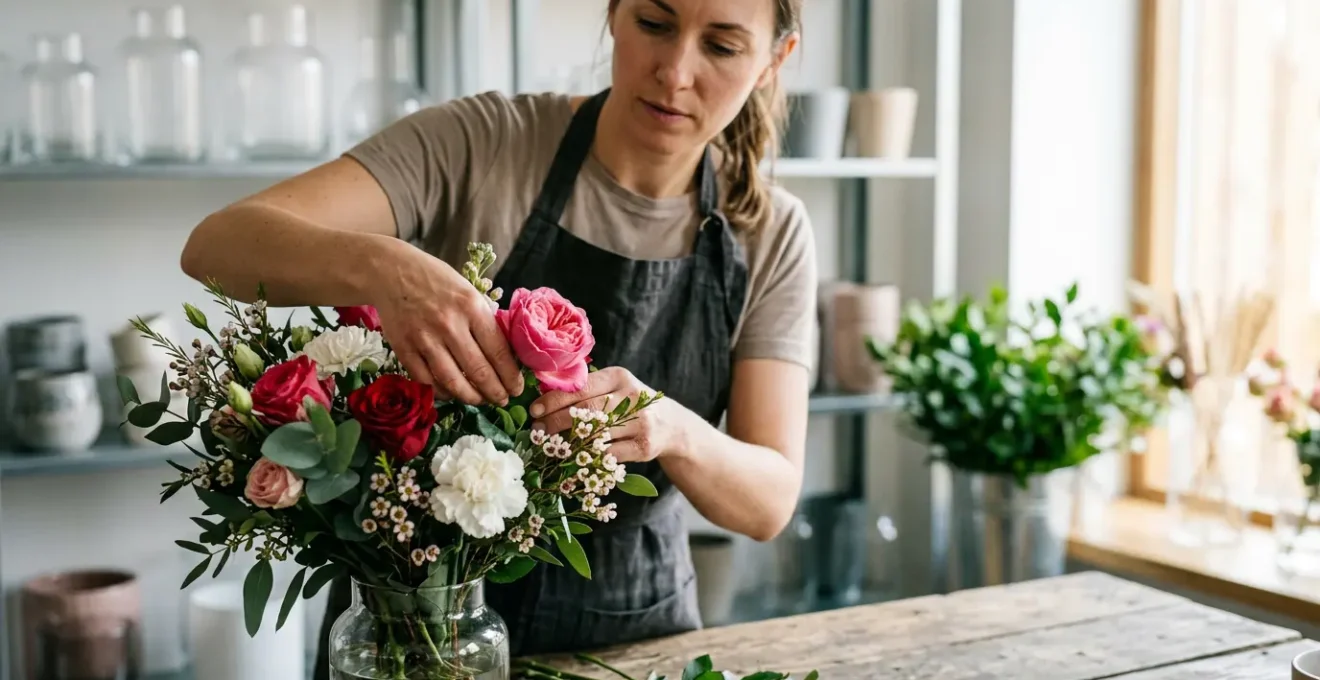
Tired of complaints about flowers dying in 3 days? The solution isn’t just fresher stock; it’s a scientific system that empowers you to control longevity and educate customers.
- Vase life is determined by genetics, post-harvest conditioning, and the customer’s home environment. You can control two of these three factors.
- Invisible enemies like ethylene gas and bacterial biofilms are the primary cause of premature wilting, and both are manageable with proper procedures.
Recommendation: Implement a rigorous, multi-stage conditioning process and provide crystal-clear, non-negotiable care instructions to every single customer.
As a customer service manager in the floral industry, I know the sound of that phone call. The customer is disappointed, frustrated. “The beautiful bouquet I bought just three days ago is already dying.” It’s a call that undermines your reputation and chips away at customer loyalty. You’ve likely tried the standard advice: you source the freshest flowers, preach about changing the water, and include a sachet of flower food. Yet, the complaints persist. This happens because the common advice only scratches the surface of floral science.
The reality is that guaranteeing a 7-day vase life isn’t about luck or simply buying “fresh.” It’s about process. It’s about understanding the biological enemies of a cut flower—bacteria, ethylene gas, dehydration—and systematically defeating them before the bouquet ever leaves your shop. It’s about transforming your role from a simple vendor into a trusted expert on floral longevity. This isn’t just about saving a few stems; it’s about building an unshakeable reputation for quality that turns one-time buyers into lifelong clients.
But what if the secret wasn’t in telling customers to “change the water,” but in understanding the science of bacterial proliferation that makes it necessary? What if you could explain exactly why a fruit bowl is a bouquet’s worst enemy? This guide is designed to arm you with that knowledge. We will deconstruct the science of vase life into actionable, professional-grade procedures. By implementing this system, you can shift from reacting to complaints to proactively guaranteeing satisfaction.
This comprehensive guide provides a systematic approach, covering everything from the inherent genetic potential of different flower varieties to the critical final care instructions you provide. By mastering each stage, you can confidently promise a full week of beauty and transform customer complaints into conversations about your exceptional quality.
Summary: The Science and Strategy Behind a 7-Day Vase Life Guarantee
- Carnations vs Sweet Peas: Which Varieties Are Genetic Survivors?
- Fruit Bowl Danger: Why Ethylene form Apples Kills Your Flowers?
- Top Up or Full Change: Which Routine Keeps Bacteria Low?
- Misting Petals: Does It Hydrate or Cause Botrytis Spots?
- Care Cards: What 3 Instructions Must You Give Every Buyer?
- Cool Chain: How Keeping Flowers at 5°C Adds 3 Days to Vase Life?
- The 1% Rule: Why Overdosing Flower Food Can Burn Leaves?
- The Ultimate Guide to Proper Conditioning for UK Florists
Carnations vs Sweet Peas: Which Varieties Are Genetic Survivors?
The first step in managing customer expectations is understanding a fundamental truth: not all flowers are created equal. The 7-day vase life guarantee begins with an honest assessment of a flower’s genetic potential. Some varieties are sprinters, offering a burst of ephemeral beauty, while others are marathon runners, built for longevity. Your role as an expert is to know the difference and guide your customers accordingly. For instance, flowers like Carnations, Chrysanthemums, and Alstroemeria are renowned for their hardiness. They have robust cellular structures and a lower sensitivity to environmental stresses, making them reliable anchors for a long-lasting arrangement.
On the other end of the spectrum are delicate varieties like Sweet Peas, Poppies, and Dahlias. Their fine petals and fragile stems make them more susceptible to dehydration and damage. Their beauty is intense but fleeting. While they can be conditioned for maximum life, promising a 7-day vase life for a bouquet composed solely of these varieties is setting yourself up for failure. A key customer service strategy is to create mixed bouquets that balance these types. Use the long-lasting varieties as the foundation of your arrangement and the more delicate flowers as “feature” elements.
Educating your customer at the point of sale is crucial. When they admire a bouquet of Sweet Peas, be honest and enthusiastic about their charm: “These are absolutely stunning and have a wonderful fragrance; they are best enjoyed for their immediate beauty over the next 3-5 days.” This reframes the conversation from a potential complaint to an appreciation of the flower’s natural life cycle. By managing expectations upfront, you demonstrate expertise and build trust, which is far more valuable than a short-lived promise. The guarantee is not just about the flower; it’s about the integrity of your advice.
Fruit Bowl Danger: Why Ethylene form Apples Kills Your Flowers?
Once you’ve selected your flowers, the next battle is against an invisible enemy: ethylene gas. This naturally occurring plant hormone acts as a ripening agent, and for cut flowers, it triggers the process of senescence—aging and death. The most notorious source of ethylene in a customer’s home is the kitchen fruit bowl. Ripening fruits, especially apples, bananas, and avocados, release significant amounts of this gas, which can cause flowers to wilt, petals to drop, and buds to remain closed prematurely.
The impact of ethylene is not trivial; it is a primary cause of customer complaints about flowers “suddenly dying.” The effect is particularly dramatic on ethylene-sensitive flowers. For example, without the use of specific anti-ethylene treatments, carnation vase life can drop from 14 days to just 7. For a florist, this means that a perfectly conditioned bouquet can have its life cut in half by being placed next to an apple. This is a critical piece of information to pass on to your customers, as it’s a factor entirely within their control.
However, the fruit bowl is not the only culprit. As a professional, you must be aware of other hidden sources of ethylene in and around your shop. These can include:
- Vehicle Exhaust: Fumes from delivery vans or nearby traffic contain ethylene. Ensure your loading and storage areas are well-ventilated and away from exhaust zones.
- Dying Plant Matter: Decaying flowers and leaves release ethylene themselves, creating a chain reaction that ages nearby healthy blooms. Impeccable shop hygiene and immediate removal of spent stems are non-negotiable.
- Malfunctioning Heaters: Improperly vented heating systems can emit gases that accelerate flower aging.
This knowledge is your defense. By controlling the environment in your shop and clearly warning customers about the dangers in their home, you can eliminate a major variable in the vase life equation.
Top Up or Full Change: Which Routine Keeps Bacteria Low?
The next invisible threat lurking in the vase is bacteria. When a customer says they “changed the water,” it’s crucial to understand what that means. Many people simply top up the vase with fresh water, believing this is sufficient. From a customer service perspective, this is a critical point of failure. Topping up is a recipe for disaster. Flower stems, leaves, and any organic debris in the water create a nutrient-rich soup for bacteria. These microorganisms multiply at an astonishing rate, clogging the flower’s vascular system (xylem) and preventing water uptake. The flower is literally dying of thirst in a vase full of water.
The core of the problem is the formation of biofilm. This is a slimy, resilient colony of bacteria that adheres to the stems and the inside of the vase. In fact, research reveals that over 95% of biomass in water systems can form these protective biofilms, making them incredibly difficult to remove without mechanical action. Topping up the water simply adds more fuel to this bacterial engine. It does nothing to remove the biofilm that is actively strangling the flower stems. This is why a full water change, combined with cleaning the vase, is the only effective method.
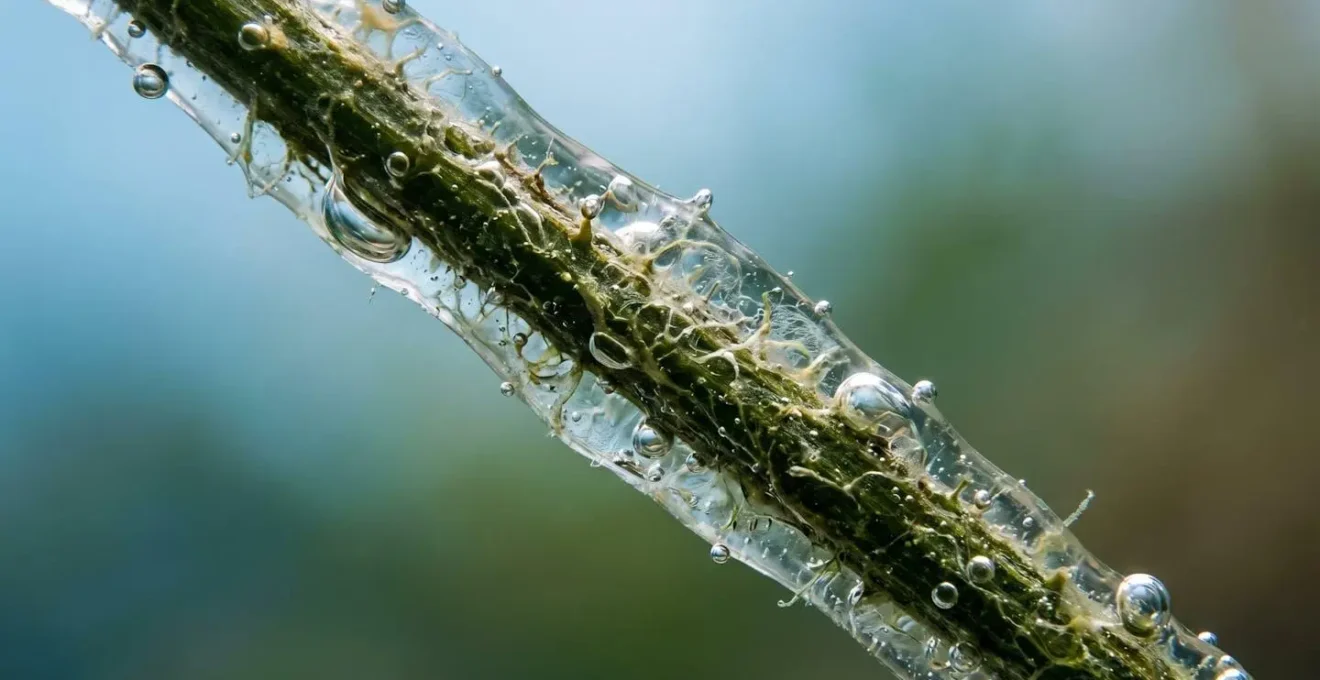
The correct procedure, which you must communicate clearly, is a “Full Change Routine.” Every two to three days, the customer should remove the flowers, discard all the old water, and physically clean the vase with soap and water to remove the biofilm. Before placing the flowers back, the stems should be re-cut to expose fresh tissue that isn’t clogged with bacteria. This single piece of advice, when followed, can dramatically extend vase life. When a customer complains about wilted flowers, asking “Did you top up the water, or did you do a full vase clean and stem re-cut?” can often pinpoint the problem immediately and turn the conversation into an educational one.
Misting Petals: Does It Hydrate or Cause Botrytis Spots?
A common myth among flower enthusiasts is that misting petals helps to hydrate them and keep them fresh. As a floral expert, you must actively debunk this practice. While the intention is good, the result can be catastrophic for the flower’s appearance and health. Water does not get absorbed through the petals; the flower drinks exclusively through its stem. Misting does nothing to hydrate the bloom. Instead, it creates the perfect environment for a fungal disease that is the bane of florists: Botrytis cinerea, also known as grey mould.
Botrytis spores are ubiquitous in the air. They are harmless when dry, but when they land on a wet surface like a misted petal, they can germinate and spread rapidly, causing unsightly brown spots and a “fuzzy” grey mould. This is often the cause of complaints about “spots appearing” on light-colored flowers like roses or lilies a few days after purchase. The infection is irreversible and ruins the aesthetic of the bouquet. The conditions required for infection are simple: the spore, a susceptible host (the petal), and moisture. By misting, the customer is providing the critical third element. As a leading floral care company notes:
Botrytis spores require moisture to move and develop. Condensation on the bud/flower is often enough for the Botrytis spores to quickly develop.
– Chrysal Professional Care, What is Botrytis and how to avoid it?
This expert insight confirms that even a small amount of surface moisture is a significant risk. Your advice must be firm and clear: never mist the petals. The only place water should be is inside the vase. To maintain high humidity if necessary (for example, in a very dry, heated room), a better solution is to place a humidifier in the room, away from the bouquet, or to place the vase on a tray of wet pebbles. This increases ambient humidity without directly wetting the petals. Correcting this single piece of misinformation can prevent a host of quality complaints and position you as a knowledgeable and trustworthy source.
Care Cards: What 3 Instructions Must You Give Every Buyer?
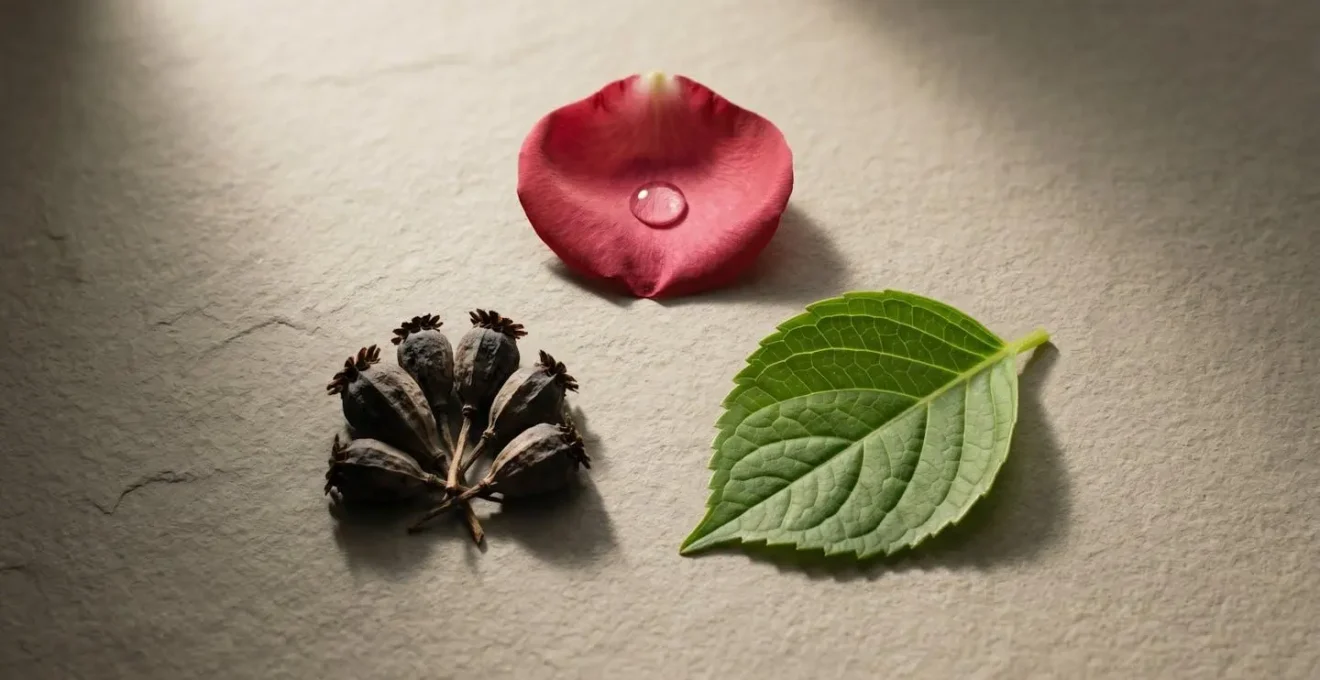
Your expertise and careful conditioning are pointless if the customer undoes your hard work at home. The care card is not a mere formality; it is the final and most critical handover of responsibility. It must be clear, concise, and non-negotiable. Vague instructions lead to failed bouquets and unhappy customers. To ensure success, every care card must contain three essential instructions, which can be remembered with the “Food, Trim, Spot” framework.
First, Fresh FOOD. The flower food sachet is not optional. Professional flower food contains a biocide to inhibit bacterial growth, an acidifier to help the stem absorb water, and sugars to nourish the bloom. It is a scientifically formulated product, and its proper use is vital. As thorough research demonstrates, preservatives can extend flower vase life by 50% to 200% depending on the variety. Your instruction must be specific: “Use the entire sachet in a clean vase with the recommended amount of fresh, cool water.”
Second, Quick TRIM. The concept of bacterial blockage in the stem must be addressed. Your instructions should mandate a re-trim on day 3 or 4. Explain the ‘why’: “After a few days, the stem ends can become blocked. To allow your flowers to keep drinking, re-cut about one inch from the bottom of each stem at an angle.” This simple action opens up the vascular system again, restoring hydration.
Third, Perfect SPOT. This instruction tackles the environmental threats of ethylene and heat. The instruction must be explicit: “Display your flowers in a cool location, away from direct sunlight, heating vents, and ripening fruit.” This simple sentence addresses the three most common household mistakes that shorten vase life. By consolidating these three non-negotiable points onto every care card, you provide a simple checklist for success that empowers the customer and protects your reputation.
Your 5-Point Customer Care Audit
- Points of contact: List all channels where care instructions are given (care card, website, verbal advice).
- Collecte: Gather all existing care instruction materials. Do they all say the same thing?
- Coherence: Does your advice consistently promote the “Food, Trim, Spot” framework? Is it simple and unambiguous?
- Mémorabilité/émotion: Is the information presented in a way that is easy to remember and follow? Is the tone helpful, not demanding?
- Plan d’intégration: Identify gaps or contradictions. Create a single, standardized set of instructions and a plan to implement it across all channels immediately.
Cool Chain: How Keeping Flowers at 5°C Adds 3 Days to Vase Life?
A significant portion of a flower’s vase life is determined long before it reaches the customer. The journey from the grower to your shop is a race against time, and the single most important factor in winning that race is temperature. This is where the concept of the “cold chain” becomes paramount. A flower is a living organism, and like any living thing, it respires. Respiration consumes the stored sugars that the flower needs to survive and open. The warmer the temperature, the faster it respires, and the faster it burns through its energy reserves. Keeping flowers cool slows this process down dramatically.
The ideal temperature for most cut flowers is just above freezing, around 5°C (33-36°F). Maintaining this temperature consistently from the moment they are harvested to the moment they are sold can add several days to their ultimate vase life. Even a few hours at a warm temperature—for example, sitting on a loading dock in the sun or in the back of a hot delivery van—can cause the flower to burn through days’ worth of energy. This damage is irreversible. The flower may look fine upon arrival, but its internal “clock” has been sped up, and it will die prematurely in the customer’s home, leading to an inevitable complaint.
It’s also crucial to understand that not all flowers are the same, and a one-size-fits-all approach to cold storage can be damaging. As this comparative analysis of temperature needs shows, tropical flowers require different handling than standard roses or tulips.
| Flower Category | Optimal Storage Temperature | Risk Level | Special Notes |
|---|---|---|---|
| Standard Cut Flowers (Roses, Carnations, Chrysanthemums) | 5°C (33-36°F) | Low Risk | Standard cooler temperature extends vase life maximally |
| Tropical Flowers (Anthuriums, Ginger, Orchids) | 13°C+ (55°F+) | High Risk – Cold Damage | Suffer chilling injury below 13°C; require warmer storage |
| Bulb Flowers (Tulips, Daffodils) | 2-5°C (35-41°F) | Low Risk | Benefit from colder temperatures; slow respiration rate |
As a manager, your responsibility is to ensure the integrity of the cold chain. This means asking your suppliers about their temperature protocols, using a refrigerated vehicle for pickups if possible, and investing in a reliable floral cooler. Monitor the temperature of your cooler daily. An unbroken cold chain is your silent guarantee that you are providing your customers with a flower that has its full life potential intact.
The 1% Rule: Why Overdosing Flower Food Can Burn Leaves?
While flower food is essential, more is not better. In fact, using too much flower food can be just as damaging as using none at all. This is a common mistake made by both well-intentioned customers and sometimes even inexperienced florists during conditioning. The principle to remember is the “1% Rule”: the ideal concentration of sugar in a flower food solution is typically around 1%. Exceeding this concentration can lead to a condition known as osmotic stress, which can cause leaf burn, wilting, and a shortened vase life.
Imagine the flower’s stem as a straw with a semi-permeable membrane. It naturally draws water up through osmosis, moving from a less concentrated solution (the water) to a more concentrated one (the cells of the plant). When you add the correct amount of flower food, you are creating a solution that is still less concentrated than the flower’s cells, encouraging uptake. However, if you create a solution that is too concentrated—essentially, a sugary syrup—the osmotic balance is reversed. Water can actually be drawn *out* of the stem, or the high sugar concentration can “burn” the delicate vascular tissue, damaging the flower’s ability to drink. This often manifests as brown, crispy leaf edges or a stem that wilts despite being in water.
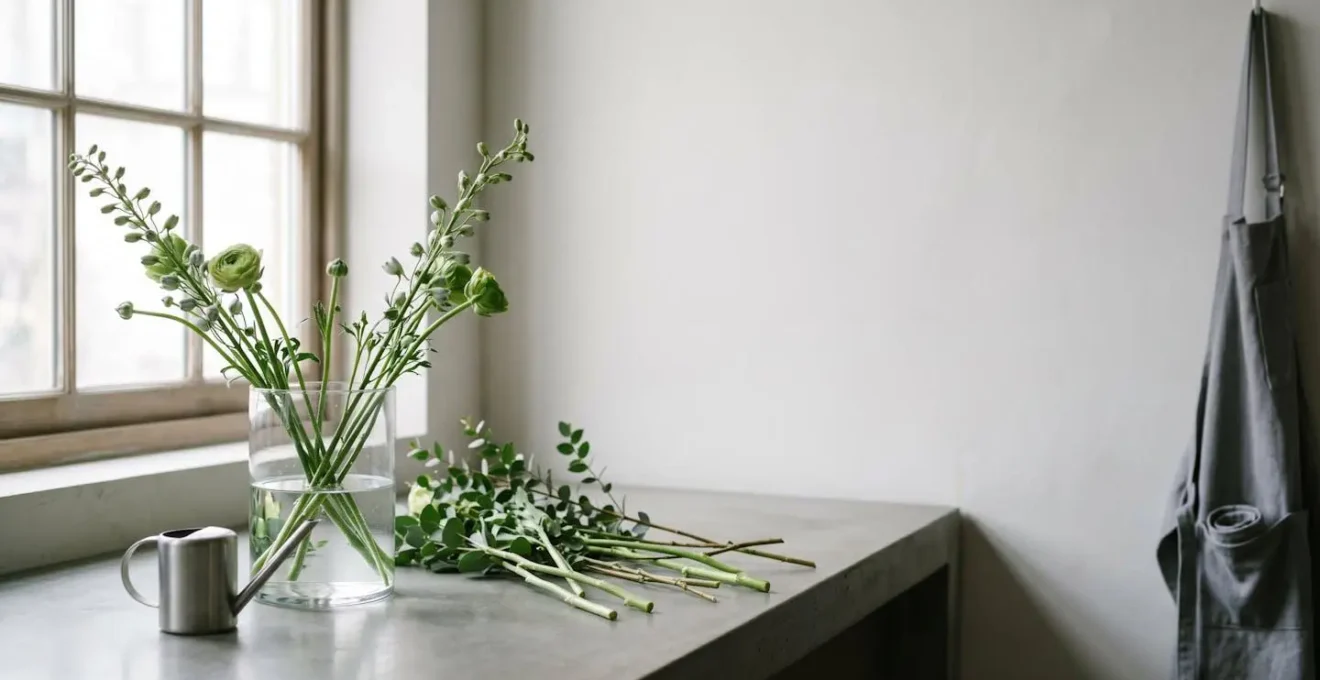
This is why precision is key. The single-dose sachets provided by manufacturers are formulated to be mixed with a specific volume of water (usually 0.5 or 1 liter). Instructing customers to “use the whole packet” is only correct if you also specify the amount of water. For your own conditioning buckets, you must use measuring tools. Do not “eyeball” the amount of flower food. Follow the manufacturer’s instructions to the letter. This disciplined approach ensures your flowers are receiving the optimal nourishment without the risk of damage from an overdose. It’s another crucial step in controlling variables and delivering a consistent, high-quality product.
Key Takeaways
- Control the Controllables: You can’t change a flower’s genetics, but you can master its post-harvest environment through proper conditioning, temperature control, and hygiene.
- Educate to Empower: Most customer complaints stem from a lack of knowledge. Turn every sale into an educational opportunity by providing clear, simple, science-backed care instructions.
- Process Over Product: A guaranteed 7-day vase life is not the result of a single “magic” flower, but the outcome of a rigorous, repeatable professional process that starts the moment flowers enter your shop.
The Ultimate Guide to Proper Conditioning for UK Florists
We’ve deconstructed the individual threats to vase life. Now, let’s assemble this knowledge into the single most important process you will manage in your shop: proper conditioning. This is the professional procedure that prepares flowers for a long and beautiful life after they leave your care. It is a multi-phase process that stabilizes the blooms, ensures maximum hydration, and provides the energy they need for the days ahead. A haphazard approach here will undermine everything else you do. A rigorous, consistent conditioning workflow is the foundation of a 7-day vase life guarantee.
Your conditioning workflow should follow four distinct phases:
- Phase 1 – Receiving & Triage: The moment flowers arrive, the clock is ticking. Immediately unpack them from their transport boxes. Inspect every stem for signs of damage, disease, or premature aging. Any substandard product should be rejected or set aside. This initial quality control is vital.
- Phase 2 – Hydration: The primary goal here is to get water into the dehydrated stems as quickly as possible. Place the stems in clean buckets of cold water with a specific hydration solution. It’s critical to use cold water, not warm.
- Phase 3 – Feeding & Hardening: After at least one hour of initial hydration, the flowers are ready for their first meal. Remove the foliage that will sit below the waterline, re-cut all stems at a sharp angle to open the vascular system, and move them into a fresh bucket containing water mixed with the correct concentration of flower food.
- Phase 4 – Cold Storage: Once fed, move the conditioned flowers to your cooler, set at the optimal temperature for the varieties (typically 5°C). Ensure good air circulation and space between buckets to prevent pockets of high humidity, which can encourage Botrytis. Let them “harden off” in the cooler for at least a few hours before using them in arrangements.
Case Study: Debunking the Warm Water Myth
A common piece of outdated advice is to use warm water to “encourage flowers to drink.” However, as research presented by floral science experts has shown, this is counterproductive. Warm water not only speeds up the flower’s metabolism, causing it to age faster, but it also dramatically accelerates bacterial growth. Cold, clean water is optimal for all stages of flower handling. This research also confirmed that leaving foliage on during the initial hydration phase (except for leaves below the waterline) can speed up water uptake through the plant’s natural transpiration pull, directly contradicting the traditional advice to strip all leaves immediately upon arrival.
By executing this four-phase process for every single flower that enters your shop, you are standardizing quality and maximizing potential. You are no longer leaving vase life to chance; you are engineering it. This systematic approach is your ultimate tool for building customer confidence and making the 7-day guarantee an easy promise to keep.
Start implementing these professional standards today. By transforming your handling and conditioning into a science-backed process and empowering your customers with clear, effective education, you will turn complaints into compliments and build a reputation as a florist who delivers not just beauty, but lasting value.