Your memorial wreaths wilt prematurely outdoors because you’re fighting a one-sided battle focused only on hydration.
- True longevity requires both a massive internal water reservoir (moss/wool) and a protective external moisture shield (compact design, anti-transpirants).
- The choice of foliage and the physical structure are as critical as the water source itself, creating a self-sustaining microclimate.
Recommendation: Shift your thinking from “arranging flowers” to “engineering a self-sustaining hydration system” to guarantee the integrity of your work.
As memorial florists, we bear a unique responsibility. Our work is not simply decoration; it is a final, tangible tribute, a symbol of love and remembrance that must stand with dignity. When a wreath is destined for a graveside, exposed to the unpredictable elements for days on end, the challenge is immense. The standard advice—use fresh flowers, keep them cool—becomes woefully inadequate. We know the sinking feeling of a creation wilting before its time, a silent failure in a moment that demands perfection. The stakes are simply too high for guesswork.
The solution isn’t just about finding a better flower food or a “magic” spray. The truth is, lasting memorial work is an act of engineering as much as artistry. It requires a fundamental shift in perspective: we are not just arranging flowers, we are constructing self-sustaining hydration systems. The key isn’t fighting a losing battle against water loss, but proactively building a structure that both maximizes its internal water reservoir and creates a powerful external moisture shield. It’s a deep understanding of the physics of water retention and the biology of transpiration.
This guide moves beyond the basics. We will dissect the science behind long-lasting arrangements, exploring how material choices, design density, and environmental awareness combine to create tributes that endure. We will explore the mechanics, from the water-holding capacity of moss to the protective architecture of chicken wire, empowering you with the knowledge to build with confidence. By mastering these principles, you ensure that your work remains a beautiful, steadfast testament, offering comfort long after the service has ended.
To navigate these advanced principles, this guide is structured to build your expertise from the foundational water source up to the final structural mechanics. The following sections break down each critical component of “hydration engineering” for the professional memorial florist.
Table of Contents: A Guide to Engineering Long-Lasting Floral Structures
- Moss Bases: How Much Water Can Sphagnum Moss Actually Hold?
- Surface Area: Why Compact Arrangements Lose Less Water Transpiration?
- Hardy Greens: Which Foliage Lasts 2 Weeks Without Water?
- Finishing Sprays: Do Glues and Sprays Really Seal in Moisture?
- Drafts and Radiators: The Silent Killers of Arrangement Longevity
- Float don’t Push: Why Agra-Wool Soaks Differently to Foam?
- The Pillow Technique: How to Scrunch Wire for Maximum Grip?
- Chicken Wire Mechanics: The Reusable Skeleton of Eco-Floristry
Moss Bases: How Much Water Can Sphagnum Moss Actually Hold?
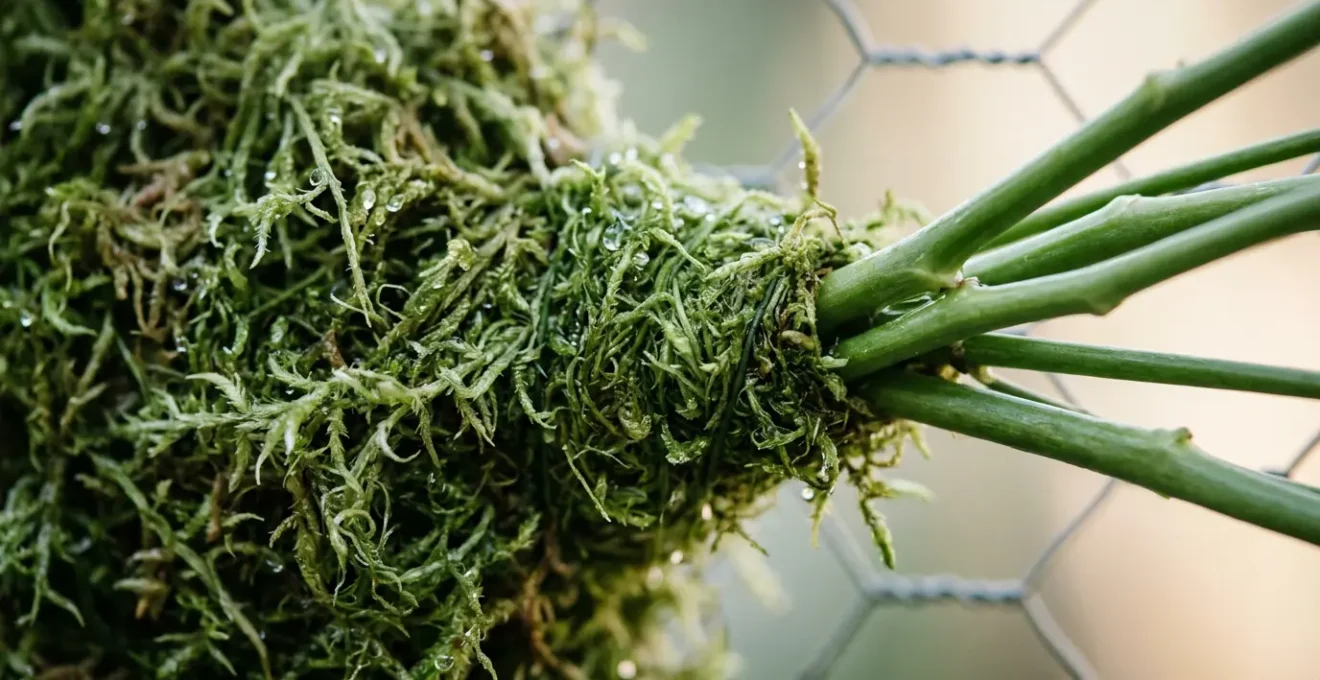
The foundation of any long-lasting outdoor arrangement is its internal water reservoir. Before a single stem is placed, we must ensure the base is a super-saturated, life-sustaining resource. While floral foam has been a default, sphagnum moss offers a superior and more sustainable solution due to its phenomenal water-holding capacity. Understanding its properties is the first step in engineering a resilient design. The cellular structure of sphagnum is a natural wonder, designed for water retention.
The numbers are staggering and demonstrate why it is such a valuable medium for us. Extensive research demonstrates that Sphagnum can hold between 16 to 26 times its dry weight in water. This isn’t just surface moisture; the plant’s unique cell structure actively locks water in, creating a ready supply for stems inserted into it. This weight-based metric is impressive, but for practical design purposes, a volume-based measurement is often more useful when filling a wreath frame or container.
From a horticultural perspective, this translates to incredible efficiency within a given space. Further horticultural studies show typical sphagnum peat retains 60% to 68% of its volume in water. Imagine a 10-liter frame; over 6 liters of that volume is pure, accessible water for your flowers. This makes sphagnum not just a mechanical base but a primary hydration source, crucial for pieces that won’t be revisited. By packing a wreath frame tightly with well-soaked sphagnum, you are front-loading the arrangement with the maximum possible water, creating a buffer that can sustain it for days.
Surface Area: Why Compact Arrangements Lose Less Water Transpiration?
Once the internal reservoir is maximized, the next front in our battle for longevity is minimizing water loss. The primary culprit is transpiration—the natural process of water vapor escaping from the leaves and petals. While we can’t stop it, we can dramatically slow it down by manipulating the design’s surface area and creating a protective microclimate. This is where dense, compact arranging becomes a scientific strategy, not just an aesthetic choice.
The key principle at play is the “boundary layer.” Every leaf and petal has a thin layer of still air surrounding it. When flowers are spaced far apart, air movement (wind) constantly blows this layer away, pulling more moisture from the plant to replace it. However, by clustering flowers and foliage tightly together, we shield them from this effect. This dense grouping creates a self-contained, humid pocket of air around the arrangement.

This protective microclimate acts as a moisture shield. The air trapped within the arrangement becomes more saturated with humidity, which significantly reduces the “pull” of transpiration from the leaves. As an expert from Michigan State University explains, this effect is a core principle of plant science. According to Erik Runkle of Michigan State University, in an article for Greenhouse Product News:
When the boundary layer is thick (no air movement, leaves are crowded together), the microclimate around the plant becomes increasingly different from the surrounding air… the relative humidity becomes high, which reduces water loss (transpiration) from the plant.
– Erik Runkle, Michigan State University, Greenhouse Product News – The Boundary Layer and Its Importance
For a memorial wreath exposed to outdoor breezes, this is not a minor detail; it’s a critical survival mechanism. By designing compactly, we are engineering a defense system that allows the arrangement to conserve the precious water stored in its base.
Hardy Greens: Which Foliage Lasts 2 Weeks Without Water?
Selecting the right botanical materials is as crucial as the mechanics that hold them. While we engineer our structures to provide water, choosing foliage that is naturally resistant to dehydration provides an essential second layer of security. Some greens possess inherent characteristics that make them exceptionally durable, maintaining their structure and color long after more delicate materials would have failed. As memorial florists, building a mental library of these “bulletproof” foliages is non-negotiable.
The key is to look for specific traits. The most common feature of long-lasting foliage is a thick, waxy cuticle. This shiny, often leathery layer is a natural sealant, physically preventing moisture from escaping the leaf. Think of the glossy toughness of Magnolia, Camellia, or mature Italian Pittosporum. These aren’t just pretty; they are biologically armored against desiccation. Another category includes lignified or woody materials like Ruscus or Eucalyptus pods. Their rigid structure doesn’t rely on water pressure (turgor) to stay upright, so they look good fresh and simply dry in place, maintaining their form.
However, selection requires vigilance. Some foliage can be deceptive. The new, lime-green tips on Italian Pittosporum, for example, lack the waxy cuticle of the mature, darker leaves and will wilt quickly without a direct water source. A thorough understanding of your materials is paramount. Building an audit process for your foliage choices ensures every element contributes to, rather than detracts from, the arrangement’s longevity.
Your Action Plan: Auditing Foliage for Outdoor Durability
- Points of contact: List all foliage you regularly use for outdoor memorial pieces.
- Collecte: Inventory their characteristics. Do they have waxy cuticles (Magnolia), woody stems (Ruscus), or are they deceptively thirsty (new Pittosporum growth)?
- Cohérence: Confront this list with the demands of a 5-day outdoor placement. Does the foliage have the natural defenses to survive wind and sun?
- Mémorabilité/émotion: Identify your top 5 most reliable “armored” greens versus those that are high-risk. Phase out the high-risk options for critical outdoor work.
- Plan d’intégration: Systematically replace weaker foliage choices in your standard designs with more robust alternatives from your “armored” list.
Finishing Sprays: Do Glues and Sprays Really Seal in Moisture?
After building a strong water reservoir and selecting hardy, compactly arranged materials, the final layer of defense is the application of a finishing spray or anti-transpirant. Often viewed with skepticism, these products are not magic, but they are based on sound scientific principles. When used correctly, they can provide a measurable advantage in extending the life of an arrangement, especially one facing the harsh conditions of outdoor exposure. They function as an artificial cuticle, supplementing the plant’s natural defenses.
These sprays are essentially a liquid polymer shield. When sprayed onto the foliage and petals, the water carrier evaporates, leaving behind a micro-thin, flexible, and clear film. This film helps to physically block the stomata—the microscopic pores on leaves through which most water vapor is lost. It’s a targeted strategy to reduce the rate of transpiration without harming the flower. An anti-transpirant is a tool of moisture-loss mitigation, a final seal on your carefully engineered system.
The science behind this is well-established in horticulture, used to protect plants from drought and transplant shock. The same principle applies directly to our work in cut flowers. Understanding how they function allows us to see them not as a crutch, but as a specific tool for a specific job. As explained by experts at Rutgers University:
An anti-transpirant is a film-forming complex of polyethylene’s and polyterpenes that when applied to foliage will reduce the moisture vapor transmission rate… Although much of the transpiration from leaves occur through small openings (stomates) under the leaves, a significant amount of water loss can also occur directly through the leaf cuticle or epidermis.
– Steven K. Rettke, Rutgers Cooperative Extension, Plant & Pest Advisory – Primer on Anti-Transpirant Applications
For a funeral wreath, applying a quality anti-transpirant is like giving it a final, invisible raincoat. It provides an extra buffer against drying winds and sun, helping to conserve the water you so carefully packed into the base. It is the finishing touch of a hydration engineer.
Drafts and Radiators: The Silent Killers of Arrangement Longevity
After all our careful engineering—maximizing the water reservoir, creating a boundary layer, selecting hardy foliage, and sealing it with an anti-transpirant—our work can still be undone by a single, often overlooked factor: the environment. For memorial work, this is a dual challenge. The arrangement must first survive the conditions inside the funeral home before facing the rigors of the outdoors. Environmental sabotage from drafts and heat sources can drain an arrangement’s lifeblood before it even reaches its final destination.
Inside, the primary threats are drafts from heating and cooling vents, and radiant heat from direct sunlight or radiators. A constant flow of dry air, even a gentle one, acts like a relentless wick, stripping away the protective boundary layer and accelerating transpiration. Placing a wreath directly under an air conditioning vent or next to a heating radiator is a death sentence. The dry, moving air will desiccate the flowers and foliage at an alarming rate, no matter how well-hydrated the base is. Similarly, direct sunlight through a window can scorch petals and rapidly deplete moisture.
These principles are so fundamental that they form the cornerstone of all post-harvest care advice. The most basic guidelines provided by floral industry leaders always stress the importance of placement. It is our professional duty to manage these factors while the arrangement is in our care and to tactfully advise families if we see a tribute placed in a compromised location.
Caution them about placing flowers in direct sunlight, drafty places, or near heating and cooling vents.
– FloraLife Post Harvest Care Guidelines, Details Flowers Blog – Providing Optimal Fresh Cut Flower Longevity
For an outdoor piece, while we cannot control the weather, we can ensure the arrangement starts its journey fully hydrated and uncompromised. Protecting it from these “silent killers” indoors is a critical first leg of its journey, ensuring it has the maximum possible resources to face the challenges ahead.
Float don’t Push: Why Agra-Wool Soaks Differently to Foam?
The hydration medium is the heart of our structure, and how we prepare it is paramount. The shift towards sustainable materials like Agra-Wool (or other rockwool/basalt wool products) from traditional phenolic foam requires a change in technique. These materials do not hydrate in the same way, and understanding the difference is key to avoiding failure. The common mistake is treating Agra-Wool like foam, which leads to incomplete saturation and a compromised water reservoir. The mantra must be: float, don’t push.
Traditional green floral foam is composed of an open-cell structure. When it hydrates, water fills these cells through capillary action, pushing the air out. Forcing it underwater traps air inside, creating dry pockets that will kill any stem placed in them. This is why foam must be allowed to float and sink on its own. While the principle of floating is the same for Agra-Wool, the physical process is different. Agra-Wool is a fibrous material, more like a dense sponge than a rigid block.
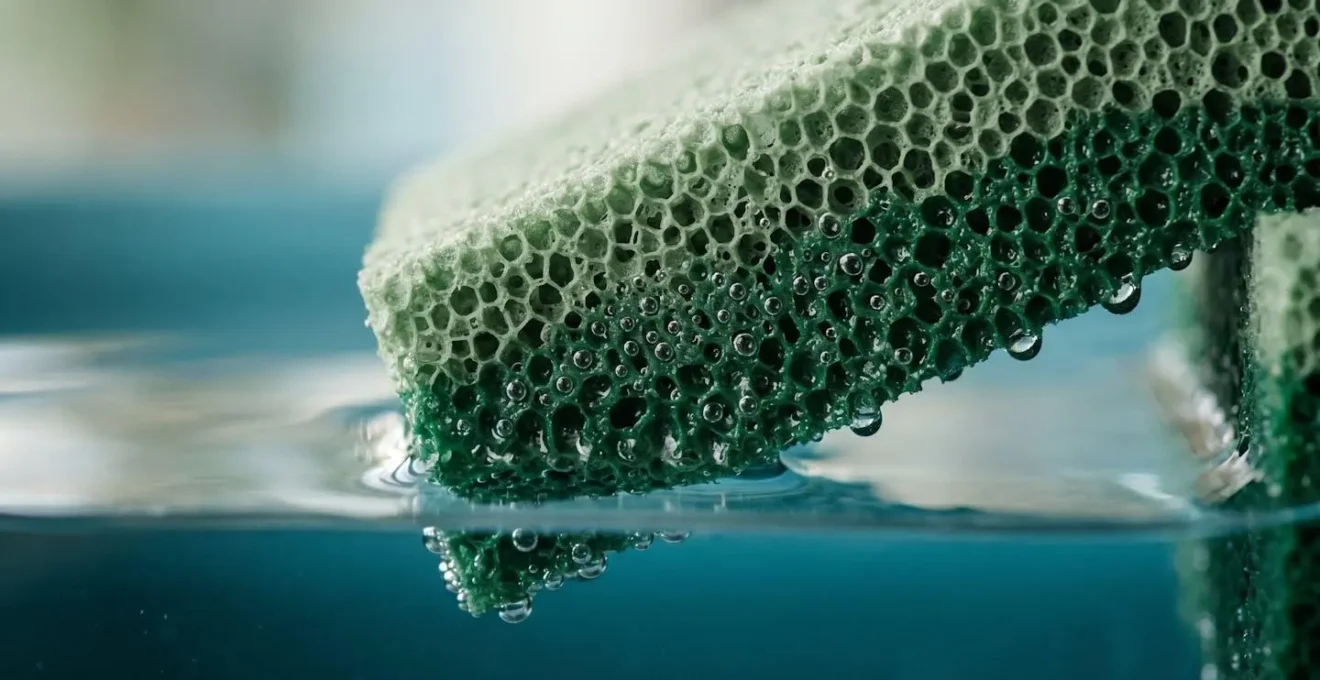
Unlike foam, which has a uniform cell structure, Agra-Wool consists of dense fibers. It needs time for water to penetrate this fibrous mass completely. Pushing it down compresses these fibers, preventing water from reaching the core. It must be laid on the surface of the water and allowed to absorb moisture at its own pace. The process can be slower than with foam, but it is the only way to guarantee full and even saturation. A partially hydrated wool block will create a false sense of security, leading to premature wilting. Patience during this hydration stage is not a luxury; it is a technical requirement for success.
By respecting the material’s properties and allowing it to float and saturate naturally, you ensure that every fiber is loaded with water, creating the robust, life-sustaining heart your arrangement needs to endure. This is a critical point of technique that separates a successful sustainable design from a failing one.
The Pillow Technique: How to Scrunch Wire for Maximum Grip?
When working with foam-free mechanics, chicken wire becomes an indispensable part of our toolkit. However, its effectiveness depends entirely on how it is shaped and secured. Simply balling it up is a common but inefficient method. To achieve maximum grip and create a stable matrix for stems, we must employ the “Pillow Technique.” This method transforms a flat piece of wire into a three-dimensional structure with superior strength and holding power.
The process begins by cutting a square or rectangular piece of chicken wire. Instead of scrunching it into a tight, dense ball, you fold the corners in towards the center, then gently compress the entire form into a soft, puffy, pillow-like shape. The key is to avoid creating hard creases or a dense core. The goal is a loose, airy, but structurally integral form. This “pillow” of wire should be springy to the touch, with many overlapping layers and open spaces.
The genius of the pillow technique lies in its physics. A tight ball of wire offers relatively few points of contact for a stem. A stem inserted into it will likely slide through to the other side or be held by only one or two points of wire, offering poor stability. The pillow, by contrast, creates a complex, three-dimensional web. When a stem is inserted, it must pass through multiple, crisscrossing layers of wire. This creates numerous points of friction and support along the length of the stem, gripping it securely. This allows for precise angle control and ensures that even heavy stems are held firmly in place, which is crucial for maintaining the intended shape of a large wreath or spray.
Securing this wire pillow into the container or frame is the final step. It should be tied in securely, compressing it slightly to increase its internal tension. This creates a responsive, high-grip matrix that is the perfect skeleton for a robust, long-lasting floral design.
Key Takeaways
- Longevity is engineered through a two-part strategy: maximizing the internal water reservoir and minimizing external moisture loss.
- The physical density of an arrangement creates a protective, humid microclimate (the boundary layer) that drastically reduces transpiration.
- Material choice is paramount; use mechanics with high water retention (moss, wool) and select foliage with natural defenses (waxy cuticles, rigid stems).
Chicken Wire Mechanics: The Reusable Skeleton of Eco-Floristry
Moving beyond a simple support, chicken wire represents a fundamental shift in floral design philosophy. In the context of eco-floristry and large-scale memorial work, it is not just an alternative to foam; it is a superior structural element. When properly utilized, it becomes the reusable skeleton of our designs, offering unparalleled strength, flexibility, and sustainability. This approach allows us to build larger, more ambitious, and more resilient pieces with confidence.
Unlike single-use foam, a well-formed chicken wire armature can be used repeatedly, making it an economically and environmentally responsible choice. Its strength allows us to create structures that can support the weight of significant amounts of foliage and flowers without collapsing. For large funeral wreaths or casket sprays that must endure transport and outdoor placement, this structural integrity is not a luxury, it is a necessity. The wire form becomes the permanent architecture into which we weave our transient botanical elements.
This method truly shines in large-scale and event installations, proving that foam-free does not mean compromising on impact or longevity. By integrating water sources directly into the wire structure, top designers create stunning, long-lasting pieces sustainably. This forward-thinking approach elevates our craft from simple arranging to a form of botanical architecture.
Case Study: Welded structures with built-in water receptacles for large-scale installations
Professional floral designer Susan McLeary demonstrates foam-free, low-water installation techniques using chicken wire structures combined with strategic water sources. Her approach includes adding delicate materials like garden roses and sweet pea into large water tubes or built-in water receptacles that are part of welded floral design structures, proving that structural mechanics (steel rods, chicken wire) combined with clever water integration can create sustainable, long-lasting event installations without wasteful conventional hydration methods.
By embracing chicken wire not as a disposable aid but as a core structural skeleton, we unlock new possibilities. We can build with greater ambition, reduce our environmental impact, and ensure our most important tributes have a foundation strong enough to last.
By mastering these principles of hydration engineering, you elevate your craft. You move from a position of hope to one of certainty, ensuring every tribute you create offers enduring beauty and comfort. Take this knowledge and build arrangements that stand as a lasting testament to your skill and care, a final, beautiful act of service.