The carnation’s greatest strength isn’t its price, but its unparalleled performance as a high-end design tool.
- It offers unique, sophisticated antique palettes that rival boutique flowers.
- It can be physically manipulated to mimic the fullness and luxury of blooms like peonies.
- Its genetic resilience guarantees a vase life and structural integrity that other popular wedding flowers simply cannot match.
Recommendation: Stop defending the carnation as a budget option and start championing it as the ‘smart luxury’ choice for clients who value both breathtaking beauty and lasting performance.
You know the moment. You’re in a client consultation, brainstorming a lush, romantic vision. You suggest adding a touch of structure, a pop of unique color. You mention the word “carnation,” and you see it: the subtle tightening of the lips, the polite but firm headshake. The snobbery is real. For decades, the carnation has been unfairly maligned as a cheap, gas station filler flower, the stuff of high school prom corsages and forgotten sympathies. The typical defenses—”they’re affordable,” “they last a long time”—often fall on deaf ears, reinforcing the very budget-conscious image you’re trying to escape.
But what if this perception is fundamentally wrong? What if the carnation’s comeback isn’t about a fleeting trend of retro-nostalgia, but a calculated victory of horticultural science and design ingenuity? This shift in perspective is your greatest tool. The modern carnation is no longer just a hardy survivor; it’s a high-performance design element, a piece of “smart luxury” that allows for creative possibilities that more fragile, ‘prestigious’ blooms simply can’t handle. It’s time to move the conversation away from cost and towards performance, from ‘filler’ to foundational.
This guide is your new arsenal. We won’t just tell you that carnations are cool again. We will arm you with the specific horticultural details, advanced design techniques, and hard scientific proof you need to not just counter client objections, but to proactively position the carnation as the sophisticated, intelligent, and ultimately superior choice for modern, high-impact floral design. You’re not just a florist; you’re a strategist, and this is your secret weapon.
To master this floral renaissance, we will explore the precise arguments and techniques that transform the humble carnation into a design powerhouse. This article provides a structured journey through the specific varieties, methods, and scientific facts that will empower you to champion this versatile bloom with confidence.
Summary: Unlocking the Carnation’s Modern Potential
- Antique Varieties: Finding the Muted Browns and Purples Designers Love
- Petal Ruffle: How to Group Carnations to Look Like Peonies?
- Carnation Lei: How to Thread Heads for a Garland?
- The 3-Week Flower: Why Carnations Outlast Everything Else?
- Drinking Dye: How to Create Blue Carnations by Stem Absorption?
- Carnations vs Sweet Peas: Which Varieties Are Genetic Survivors?
- Pink and Red: How to Make a Clashing Combo Look High Fashion?
- Bold Palettes: How to Sell Bright Colors to Pastel-Loving Brides?
Antique Varieties: Finding the Muted Browns and Purples Designers Love
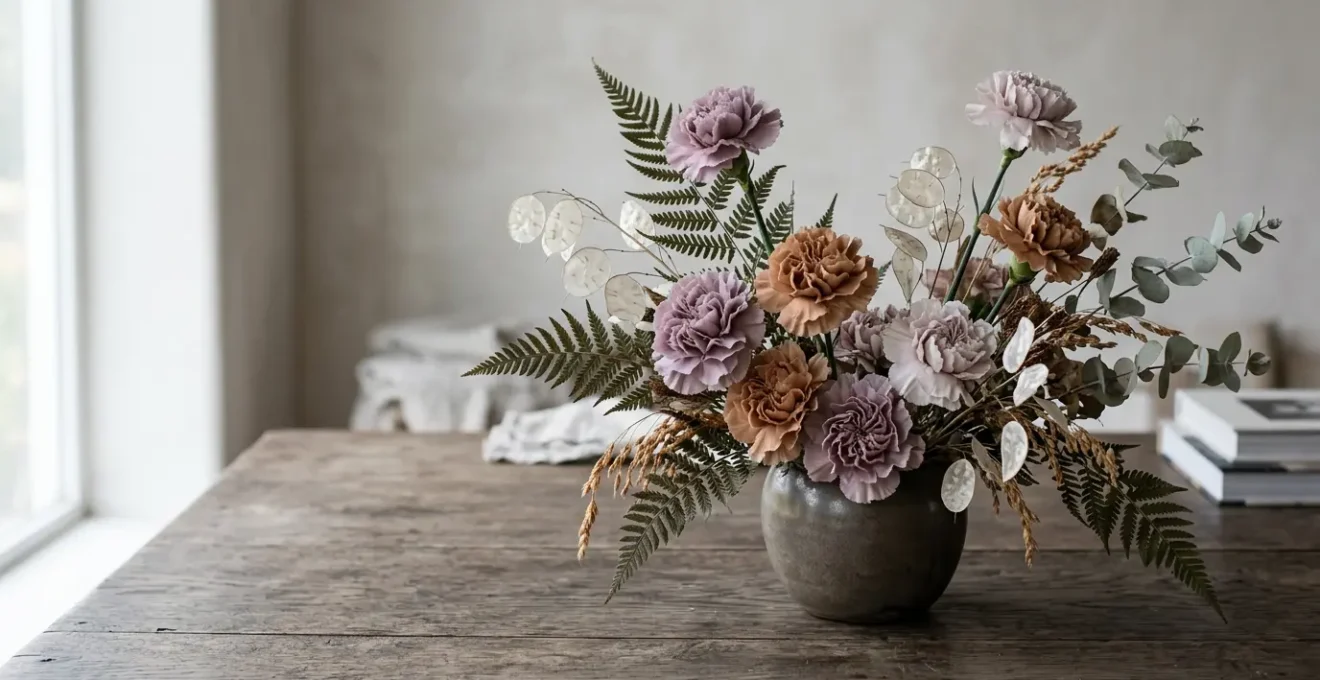
The first line of attack against carnation snobbery is to shatter the image of primary-colored gas station bouquets. The most compelling evidence lies in the world of antique varieties, a category born from deliberate horticultural ingenuity. These are not your grandmother’s carnations; they are the result of targeted breeding to meet the sophisticated demands of modern wedding and event design. Far from being a budget option, these cultivars are premium products, sought after for their complex and moody palettes.
Think of shades like dusty lavender, muted terracotta, rich caramel, and even true beige. These are colors that integrate seamlessly into the high-end, neutral-toned aesthetics that dominate the wedding industry. They provide a textural, ruffled element in a color space previously occupied by expensive, and often less reliable, niche flowers. Presenting a client with an image of a ‘Caramel’ or ‘Terracotta’ carnation immediately reframes the conversation from “cheap” to “chic.” It’s a visual argument that proves the flower’s range and sophistication.
Case Study: The Artisanal Response to a Mass-Market Image
The antique carnation phenomenon represents a deliberate breeding strategy to counter the flower’s mass-market image. As noted by floral experts, growers have worked to bring varieties like ‘Caramel,’ ‘Terracotta,’ and faded lavender to market specifically because this antiqued, muted aesthetic is highly sought after for sophisticated design work. These varieties offer designers a palette that pairs beautifully with neutral and moody color schemes. The success of these cultivars demonstrates how targeted breeding can elevate a flower’s perceived value and reposition it from ‘cheap filler’ to a premium design element.
The existence of these varieties is not an accident; it’s a market-driven response. By understanding and showcasing these unique cultivars, you demonstrate an expert-level knowledge that goes beyond the obvious, positioning yourself as a designer with a finger on the pulse of true floral innovation.
Petal Ruffle: How to Group Carnations to Look Like Peonies?
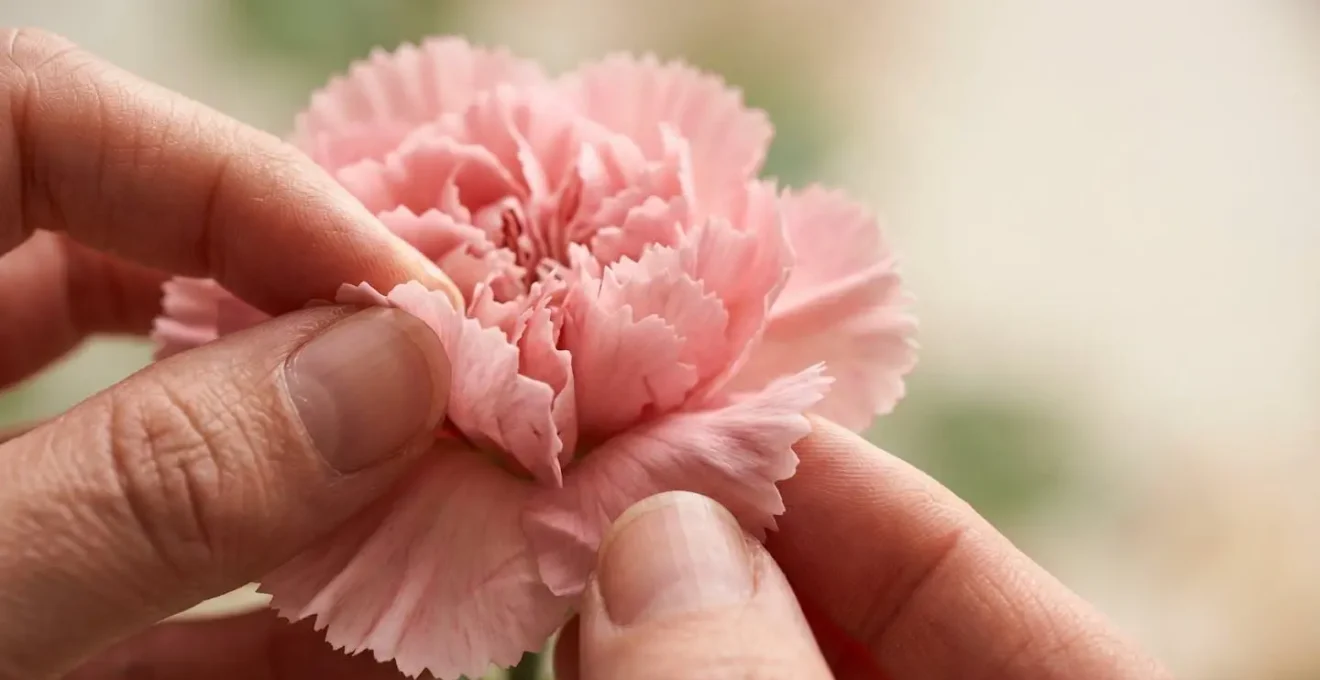
One of the most effective ways to sell a client on carnations is to show them a transformation. The carnation’s hidden superpower is its ability to be manipulated, or “reflexed,” to mimic the lush, romantic fullness of a peony at a fraction of the cost and with significantly more reliability. This isn’t a compromise; it’s a clever design hack that demonstrates technical skill and provides an incredible visual payoff. Reflexing involves gently turning back the outer petals of the bloom, which dramatically increases its surface area and softens its silhouette.
When multiple reflexed carnations are clustered together, the effect is stunning. The tight, ball-like shape disappears, replaced by a soft, undulating mound of ruffles that is almost indistinguishable from a peony to the untrained eye. Using a color gradation technique—grouping slightly different shades of the same color together—can further enhance this illusion, mimicking the natural depth and shadow found in a peony’s center. This technique is your answer to clients who want the peony look without the peony’s seasonal limitations, fragility, or prohibitive price point.
By mastering this technique, you are not just substituting a flower; you are providing a smarter, more resilient solution. You are offering the aesthetic the client desires, but built on a foundation of structural integrity that ensures the arrangement will look flawless from the start of the ceremony to the end of the reception. It’s a tangible demonstration of value that savvy clients will appreciate.
Your Action Plan: Creating the Peony Illusion
- Reflexing Preparation: Gently hold the carnation bloom at the base. Carefully turn back the outer two layers of petals downward and outward to maximize the bloom’s visible surface area and create a fuller appearance.
- Structural Foundation: Choose your clustering method: a floral foam cage for centerpieces, a chicken-wire ball for hanging installations, or a hand-tied posy technique for bouquets.
- Color Gradation: Select 2-3 carnations in slightly different shades. Cluster the darkest shade at the center and the lightest shades on the perimeter to mimic natural color depth.
- The One-Third Density Rule: Pack the central third of your cluster tightly. Allow the middle third to be moderately spaced, and keep the outer third slightly looser to create a natural-looking dome shape.
- Final Touches: Mist the final cluster lightly and ensure all mechanics are hidden. The resulting “super-bloom” is ready to be the star of any arrangement.
Carnation Lei: How to Thread Heads for a Garland?
While leis and garlands might seem like a niche application, the techniques involved showcase another of the carnation’s key strengths: its unmatched structural integrity. Unlike delicate blossoms that would shred or wilt, the carnation head, with its sturdy calyx, is perfectly engineered for threading. This durability allows for the creation of dense, luxurious, and impressively long floral installations that would be impossible or astronomically expensive with other flowers. This isn’t just about making a simple garland; it’s about architectural floristry.
The traditional Kui or piercing method is straightforward: a needle is passed through the center of the bloom. But modern techniques elevate this craft into an art form. Imagine creating a six-foot-long installation with a seamless ombré gradient, transitioning from ivory to blush to deep magenta. For a 40-inch garland, you’d need roughly 50 carnation heads, a density that creates an incredibly opulent look. This is something a client can see and feel—the weight, the richness, the sheer volume of flowers is undeniably luxurious.
For more ambitious, gravity-defying designs, the split-stem wiring technique is a game-changer. By threading blooms onto a flexible 22-gauge wire instead of a simple thread, you can create dramatic curves, spirals, or vertical drops. This allows you to “draw” with flowers in mid-air, creating statement pieces for arches, ceilings, or backdrops. Furthermore, pre-treating the blooms with a floral sealant can extend the freshness of these installations for 2-3 days, a critical factor for multi-day events. The carnation isn’t just a component; it’s a reliable building block for large-scale art.
The 3-Week Flower: Why Carnations Outlast Everything Else?
Here we arrive at the carnation’s ultimate, scientifically-backed trump card: its extraordinary longevity. While “long-lasting” is a common platitude, the reality is far more impressive and provides a powerful “smart luxury” argument. A client may pay a premium for a peony that looks stunning for three days, but a carnation offers breathtaking beauty that can last for three weeks. This isn’t an exaggeration; it’s a result of decades of horticultural research and selective breeding. This incredible vase life represents a tangible return on investment that no other cut flower can consistently offer.
The science is clear. While many flowers quickly succumb to the effects of ethylene gas (the ripening hormone that causes wilting), many modern carnation cultivars have been specifically bred for low ethylene sensitivity. This genetic advantage is the secret to their marathon performance in a vase. In fact, targeted breeding research has produced carnation cultivars with vase lives ranging from 17.7 to 32.7 days. This is not a happy accident; it is the pinnacle of floral science, delivering unparalleled value.
Case Study: The Ethylene Resistance Factor
The dramatic difference in carnation longevity can be explained by genetics. A 2024 study analyzing 14 carnation varieties revealed that those with the longest vase life had minimal sensitivity to ethylene gas. Cultivars like ‘Snow White’ maintained their freshness unchanged even when exposed to ethylene, while more sensitive varieties wilted quickly. The research pinpointed the specific genes responsible for this resilience. This explains why some carnations can last nearly a month, positioning these low-ethylene cultivars as the ultimate ‘smart luxury’ choice for consumers seeking maximum value and performance from their floral arrangements.
When a client is investing thousands in wedding or event flowers, guaranteeing that the arrangements will look as fresh at the end of the night (and for weeks after) as they did at the beginning is a powerful selling point. Frame it not as a cheap option, but as the highest-performance flower on the market. It’s the intelligent choice for a client who appreciates quality and durability.
Drinking Dye: How to Create Blue Carnations by Stem Absorption?
The classic science fair experiment of dyeing a white carnation blue can be a source of derision, seen as tacky and artificial. However, your role as a design strategist is to reframe this capability not as a childish craft, but as an advanced tool for achieving bespoke, fashion-forward color palettes. This is the concept of deliberate artifice. Instead of hiding the unnatural color, you embrace it as a bold, contemporary design statement. This technique gives you ultimate control, allowing you to create colors that simply do not exist in nature and perfectly match a client’s specific vision.
Forget food coloring. The modern approach uses more sophisticated and subtle dyes, including natural options. A rich magenta can be achieved with beetroot juice, a deep indigo with butterfly pea tea, and golden tones with turmeric. The real artistry comes with advanced methods like the split-stem tie-dye technique. By splitting the stem and placing each section in a different color, you can create a single bloom with multi-toned petals—a truly unique and captivating effect that looks intentional and highly designed.
The key to selling this to a skeptical client is to lean into the aesthetic. Don’t try to pretend a dyed blue carnation is natural. Instead, pair it with other elements that celebrate its modern, artistic nature. Combine dyed carnations with metallic foliage, black-painted branches, or sleek, modern vessels. This creates a cohesive, high-fashion look that feels deliberate and confident. You’re not just dyeing a flower; you are commissioning a custom color for a living sculpture. It’s the ultimate in personalization, turning a simple flower into a bespoke work of art.
Carnations vs Sweet Peas: Which Varieties Are Genetic Survivors?
To truly drive home the “smart luxury” argument, a direct comparison is incredibly effective. Let’s juxtapose the carnation with a flower that enjoys an impeccable reputation: the sweet pea. The sweet pea is beloved for its delicate beauty, intoxicating fragrance, and romantic, fleeting nature. But in the context of event floristry, those romantic qualities are, in fact, significant liabilities. The carnation, by contrast, has been bred for performance, making it a true genetic survivor and a more reliable design partner.
The sweet pea is the ephemeral poet; the carnation is the resilient engineer. This is not an opinion; it is a reflection of their distinct breeding goals. Sweet peas are bred for fragrance and garden charm, while commercial carnations are optimized for sturdy stems, transport resilience, and, most importantly, longevity. This contrast provides a powerful narrative for your client: do you want a flower that embodies a fleeting moment, or one that guarantees a flawless look for the entire duration of your event and beyond?
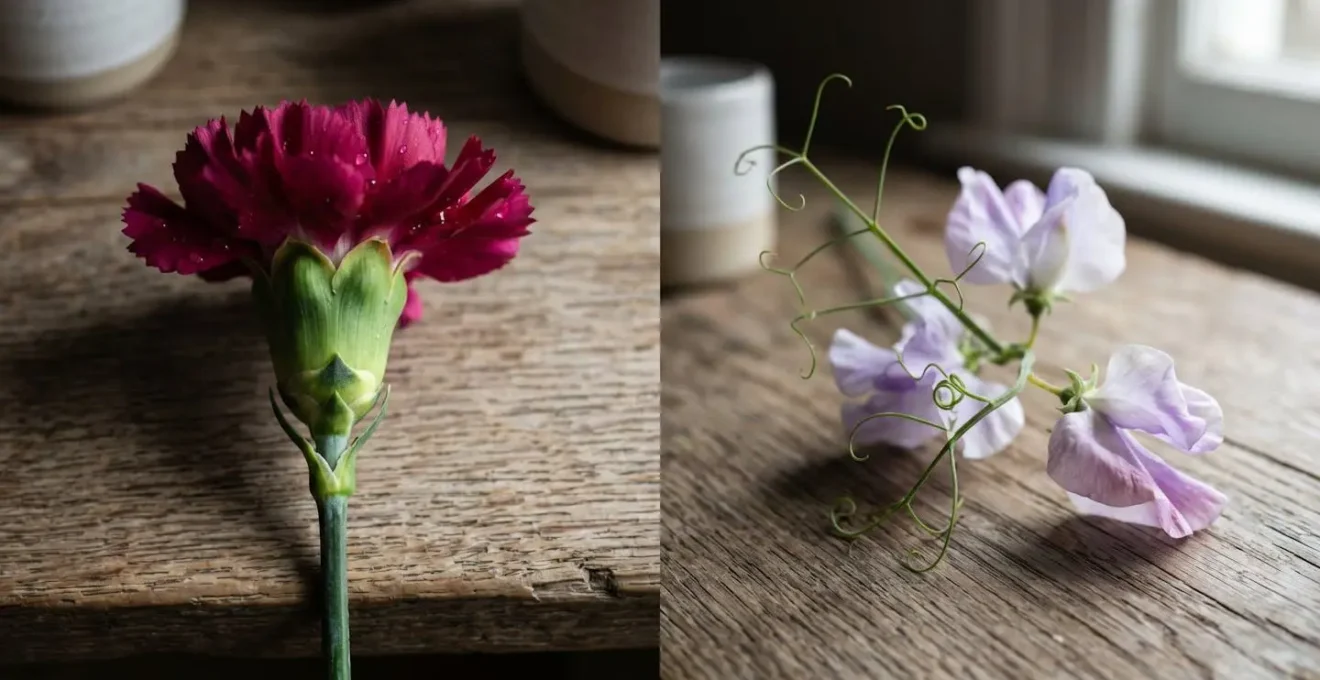
The following table breaks down the objective differences. It’s a data-driven argument that moves beyond aesthetics to focus on practical performance—a language that appeals to any client making a significant investment. The carnation’s superior climate adaptability also positions it as the ‘flower of the future’ for sustainable floristry in a changing world.
| Characteristic | Carnation (Dianthus caryophyllus) | Sweet Pea (Lathyrus odoratus) |
|---|---|---|
| Primary Breeding Goal | Global floral trade optimization: sturdy stems, longevity, transport resilience | Garden ornamental appeal: fragrance intensity, romantic beauty, fleeting charm |
| Vase Life | 7-32 days depending on cultivar; genetically improved varieties exceed 3 weeks | 3-7 days; highly ephemeral, wilts quickly after cutting |
| Drought Tolerance | High; Mediterranean origins, bred for resilience | Low to moderate; sensitive to water stress and temperature fluctuations |
| Ethylene Sensitivity | Moderate to low (varies by cultivar); some varieties are ethylene-resistant | High; extremely sensitive to ethylene exposure, accelerates wilting |
| Fragrance | Lost in many modern commercial breeds; antique varieties retain spicy, clove-like scent | Signature intense fragrance; primary breeding focus for garden varieties |
| Climate Adaptability | Excellent; thrives in varied climates, positioned as ‘flower of the future’ for sustainable floristry | Poor; prefers cool temperatures, struggles in heat, less viable in climate-change scenarios |
| Commercial Use Case | Structure, reliability, bold color, long-lasting arrangements, event floristry | Scent, movement, garden-fresh aesthetic, short-term romantic gestures |
Pink and Red: How to Make a Clashing Combo Look High Fashion?
Nothing says “confident design” like pulling off a notoriously difficult color combination. The pairing of pink and red is often seen as a cardinal sin, a “clash” that screams amateur. As a vintage revivalist and floral strategist, your job is to re-educate your client’s eye and show them that, when handled with expertise, this combination is not a clash but a source of vibrant, high-fashion tension. The key is to approach it not with fear, but with the precision of color theory.
The secret lies in the undertones. A true clash happens when you mix a warm, orange-based red with a cool, blue-based pink. The results are jarring. However, the Undertone Matching Rule creates harmony: pair cool reds (like crimson) with cool pinks (like fuchsia or magenta), or pair warm reds (like vermillion) with warm pinks (like coral or peach). This shared color temperature creates a cohesive, intentional palette that feels electric rather than chaotic. Carnations, with their vast range of reds and pinks, are the perfect medium for this kind of color play.
Texture can also act as a peacemaker. Imagine combining frilly, fully-reflexed crimson carnations with the tight, smooth buds of a magenta variety. The difference in form creates visual separation, allowing each color to have its own space while contributing to a unified whole. To bolster your case, bring in outside precedents. Reference the iconic red-and-pink collections of the fashion house Valentino or the bold, unapologetic palettes of Fauvist painters like Matisse. This frames your choice not as an accident, but as a curated, artistic decision rooted in a rich history of design.
Key Takeaways
- Shift the conversation from “cheap” to “smart luxury,” focusing on performance and longevity.
- Embrace the carnation’s structural integrity, using it as a reliable building block for ambitious designs.
- Leverage horticultural ingenuity, from antique varieties to advanced dyeing, as proof of the flower’s sophistication.
Bold Palettes: How to Sell Bright Colors to Pastel-Loving Brides?
You’ve made the case for the carnation’s technical superiority. Now comes the final hurdle: the aesthetic preference. Many clients, especially brides, are conditioned to associate weddings with soft, pastel palettes. A bold, saturated color can feel scary or out of place. Your task is to gently guide them out of their comfort zone by speaking their language and addressing their underlying fears, particularly the fear of their wedding photos not looking timeless and beautiful.
First, rebrand your language. Eliminate the word “bright.” Instead, talk about “rich,” “saturated,” or “jewel tones.” This simple linguistic shift elevates the conversation from something potentially childish to something opulent and luxurious. The “Photography-First Argument” is your most powerful tool here. Show a side-by-side comparison: a photo of a pastel bouquet in bright sunlight (where it looks washed out) and another in dim reception lighting (where it appears gray and muddy). Then, show a bouquet with bold carnations that remains vibrant and defined in all lighting conditions. You are appealing directly to their desire for stunning photos that last a lifetime.
For truly hesitant clients, propose the 80/20 Comfort Formula. This is a low-risk compromise: 80% of their beloved pastel and neutral vision, with just 20% “pops” of a bold carnation color. This introduces drama and visual interest without overwhelming their original aesthetic. It ensures their arrangements won’t disappear against the backdrop. You can even use a progressive mood board to walk them through this evolution visually, helping them see how a touch of bold color enhances, rather than replaces, their dream. This incremental approach builds trust and reduces resistance, making you a trusted advisor, not just a vendor.
Now armed with the science, techniques, and strategic language, you are equipped to lead the carnation’s renaissance. You can confidently counter any outdated prejudice with irrefutable proof of the flower’s value, resilience, and sophisticated potential. Go forth and create, knowing you are championing not a lesser flower, but one of the most versatile and intelligent choices in modern floristry.