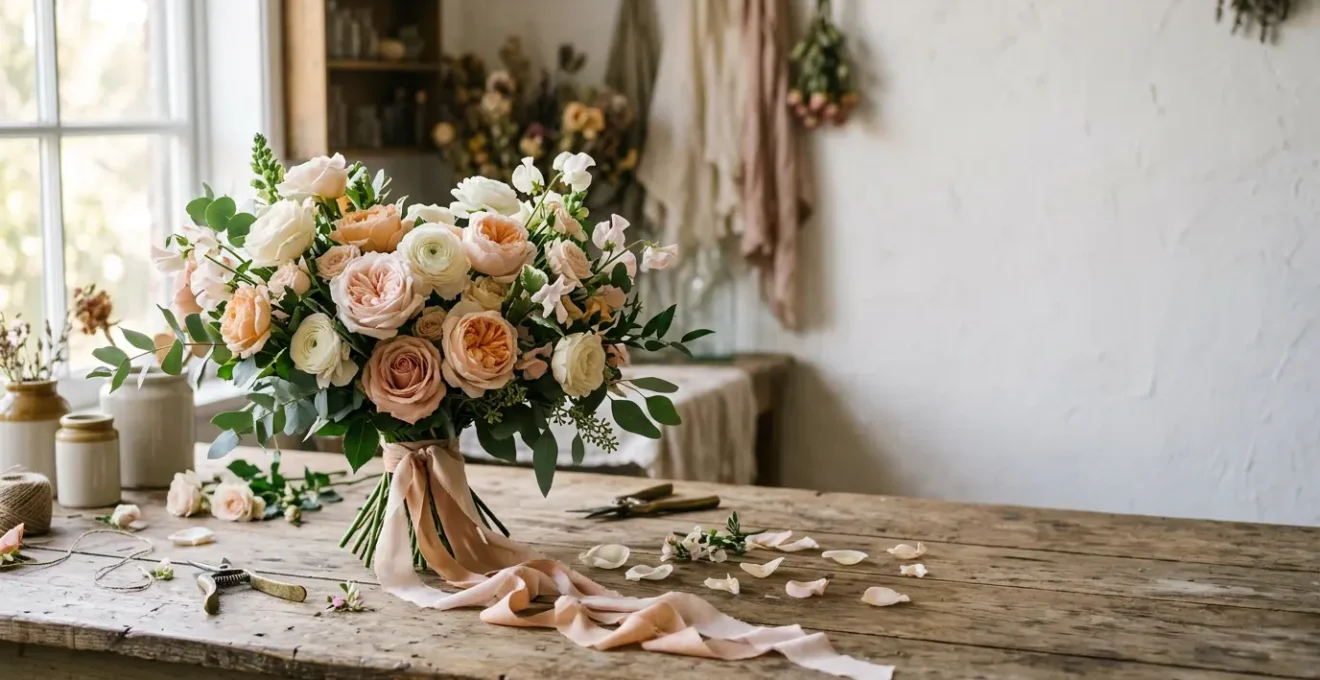
The breathtaking beauty of a garden rose on your wedding day is not a matter of luck, but a result of mastering its delicate biology.
- Their higher price reflects a complex structure (often with over 100 petals) and intense fragrance, which requires specific, gentle handling.
- Techniques like temperature control, precise thorn removal, and invisible calyx wiring are non-negotiable for ensuring they reach peak bloom perfectly for your event.
Recommendation: Treat your garden roses not as simple flowers, but as living sculptures that require a specific choreography of care from the moment you receive them to their final placement in your bouquet.
For a bride with a vision, especially one captivated by the romantic allure of David Austin roses, the bouquet is more than an accessory—it’s the centerpiece of a floral dream. You’ve likely spent hours admiring their lush, ruffled petals and imagining their intoxicating scent. Yet, this dream often comes with a whisper of anxiety. You hear they are fragile, expensive, and have a tragically short vase life. The common advice to “handle with care” or “put them in water” feels woefully inadequate for flowers that carry so much emotional and financial weight.
But what if their perceived weaknesses were actually their greatest strengths, if only you understood how to manage them? What if the key wasn’t just to care for them, but to guide them? This is where the expertise of a grower comes in. The secret to perfect wedding-day roses lies in a form of floral choreography—a series of precise steps to control their form, fragrance, and timing. It’s about transforming their biological vulnerabilities into predictable, breathtaking beauty.
This guide will move beyond the superficial advice. We will deconstruct the mystique of the garden rose, giving you the professional techniques to ensure every bloom is flawless. We will explore the architecture of their scent, the science behind handling their delicate stems, the mechanics of encouraging a perfect bloom, and the structural support that allows their heavy heads to shine. By the end, you will be empowered with the knowledge to not only choose your roses but to ensure they perform beautifully on your most important day.
Summary: The Ultimate Garden Rose Guide for the Discerning Bride
- Scent Profiles: Myrrh vs Fruit, Which Rose Smells Best to You?
- Thorn Stripping: Does Removing Thorns Shorten Vase Life?
- The Blow: How to Encourage a Tight Rose to Open Fully for the Event?
- Garden Rose vs Standard Rose: Is the Price Difference Worth It?
- Wiring the Calyx: How to Support a Heavy Garden Rose Head Invisibly?
- Stage of Opening: When to Buy Peonies So They Are Perfect for Saturday?
- Internal vs External Wiring: When Should You Pierce the Calyx?
- Handling Delicate Cultivars: A Guide to Poppies, Hellebores, and Dahlias
Scent Profiles: Myrrh vs Fruit, Which Rose Smells Best to You?
When you choose a garden rose, you’re not just selecting a color and shape; you are designing an olfactory experience. The fragrance of a David Austin rose isn’t a simple, singular note. In fact, research shows that a single rose can contain up to 400 different aromatic components, creating a complex perfume. Understanding the primary scent families allows you to build a true scent architecture for your wedding. The two most iconic profiles in English roses are Fruit and Myrrh.
The fruity fragrances are often the most immediately appealing, with notes ranging from crisp apple and pear to rich raspberry and apricot. Cultivars like ‘Juliet’ or ‘Beatrice’ exude this fresh, sweet, and universally loved aroma. They are perfect for creating an atmosphere of bright, joyful celebration. A bouquet filled with fruity-scented roses is welcoming and radiantly cheerful.
The Myrrh scent, on the other hand, is a more sophisticated and unique fragrance, characteristic of many famous English Roses. It is often misunderstood, but it is a signature of the brand’s breeding program. As the experts at David Austin Roses explain, it is a warm, spicy, and slightly anise-like aroma.
Myrrh in roses is a totally different scent. It comes from the Latin Myrrhis odorata – the name for Sweet Cicely, which is classically light and delicate, full of air and hints of green aniseed.
– David Austin Roses, Fragrant Roses – Your Guide
Cultivars like ‘Constance’ or the classic ‘Gertrude Jekyll’ carry this distinctive note. Choosing a myrrh-scented rose adds a layer of elegant complexity and a memorable, almost nostalgic, quality to your floral design. The best approach? Experience them yourself. Visit a florist and ask to smell different varieties. Deciding which smells “best” is a deeply personal choice that will define the sensory memory of your day.
Thorn Stripping: Does Removing Thorns Shorten Vase Life?
The instinct to create a smooth, perfect stem is understandable. Those sharp thorns seem like an imperfection to be removed. However, from a horticultural perspective, aggressive thorn stripping is one of the most common mistakes that can compromise the health and longevity of a garden rose. The answer to the question is a definitive yes: improperly removing thorns shortens vase life. It’s a critical aspect of vulnerability management.
Every thorn is part of the stem’s protective outer layer, the epidermis. When you strip thorns, you are not just removing a prickle; you are creating small wounds along the stem. These wounds break the seal that keeps water in and bacteria out. As the esteemed growers at Alexandra Farms point out, this opens the door to infection.
Any cutting that is done to a rose, including the peeling of guard petals and de-thorning, leaves wounded tissue exposed to floating bacteria and the spores of botrytis mold.
– Alexandra Farms, Processing Garden Roses: Sometimes Less Is More
These bacterial invasions can create blockages within the stem’s vascular system (the xylem), preventing water from reaching the heavy, thirsty bloom and causing the head to wilt prematurely. The goal is not to have a perfectly smooth stem, but a perfectly hydrated flower. This means removing only what is necessary, and doing so with surgical precision.
Action Plan: The Professional Thorn Removal Protocol
- Tool Selection: Use a dedicated floral knife or a professional thorn stripper. Avoid scissors, which can crush stem tissue. Ensure your tool is impeccably clean.
- Proper Grip: Hold the rose firmly by the upper part of the stem, just below the bloom, to avoid putting any pressure on the delicate head.
- Gentle Removal: Slide the tool gently downwards, applying just enough pressure to pop off the thorns. Your goal is to remove the thorn itself, not to peel or scrape the green bark of the stem.
- Waterline Focus: Only remove thorns and leaves that will sit below the waterline in your vase. This is the critical zone for bacterial growth. Thorns above the waterline pose no threat and should be left intact to maintain the stem’s integrity.
- Immediate Hydration: After processing, place the rose immediately into a clean vase with fresh water and flower food to help it recover and hydrate efficiently.
The Blow: How to Encourage a Tight Rose to Open Fully for the Event?
There is a magical moment in the life of a garden rose known as “the blow”—the point at which it unfurls from a tight bud into a gloriously full and ruffled bloom. Achieving this for a specific day and time is the essence of peak bloom timing. A rose that is too tight won’t display its full beauty, while one that is too open may not last through the event. Your goal is to gently coax it to its perfect stage.
The primary tool for this is temperature. Roses are living things that respond to their environment. Warmer temperatures signal them to open faster. If your roses arrive on a Wednesday or Thursday for a Saturday wedding and are still tight, you can give them a fresh cut on the stem (at an angle) and place them in a clean vase with lukewarm water and flower food. The key is “lukewarm,” not hot, as hot water can shock and damage the cells. Place them in a warm, bright room, but away from direct sunlight, drafts, or ripening fruit (which releases ethylene gas, an aging agent).
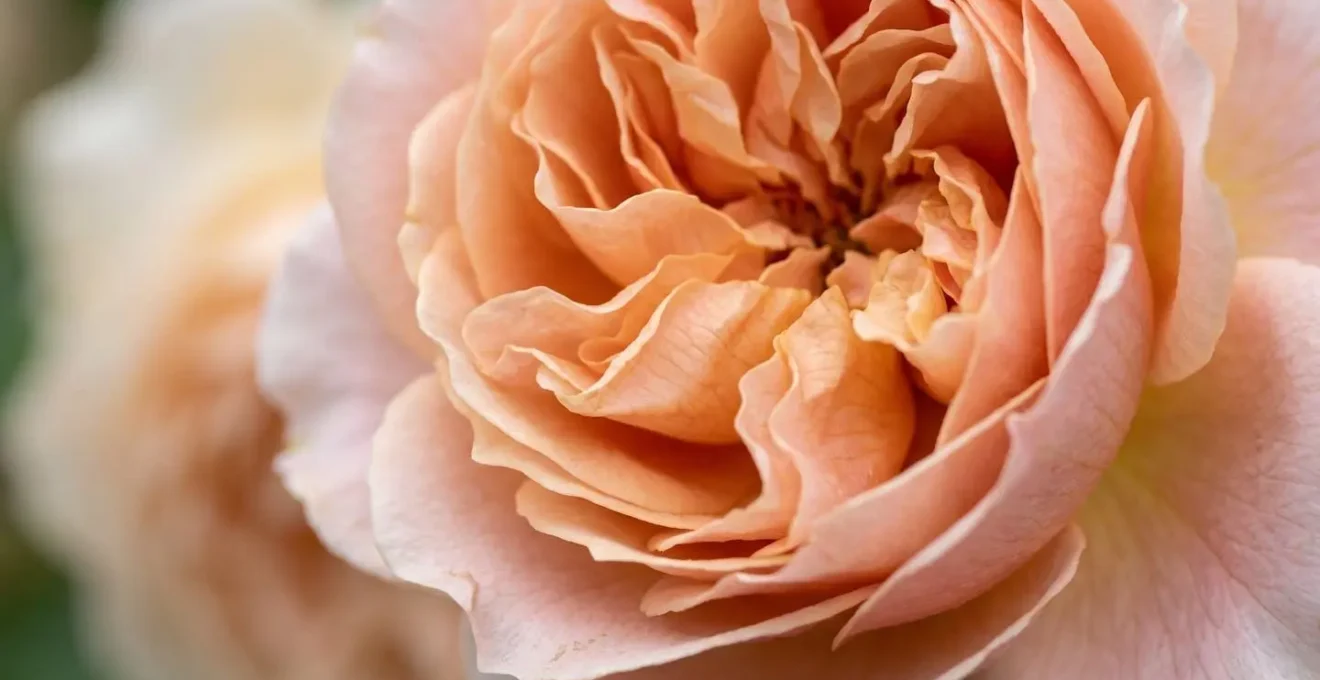
As you can see in the intricate detail of the petals, the process of unfurling is a complex mechanical feat. Once the rose begins to soften and open, you can employ more hands-on petal engineering techniques. One professional trick is to hold the rose upside down and gently spin it between your palms. The centrifugal force can encourage the outer petals to relax and open. For a final touch, you can “reflex” the outermost guard petals by gently folding them back on themselves, which can help create a fuller, more open look and encourage the inner petals to follow.
Garden Rose vs Standard Rose: Is the Price Difference Worth It?
When planning a wedding budget, the cost of flowers is a significant factor, and the price difference between a standard rose and a garden rose can be stark. It’s easy to wonder if the extra expense is truly justified. The answer becomes clear when you stop comparing them stem-for-stem and start evaluating what you are actually paying for: complexity, fragrance, and visual impact. A garden rose is not just a larger rose; it is an entirely different product.
Standard roses, the kind you find in a typical grocery store, are bred for durability, uniformity, and long vase life. They have a classic, elegant shape but typically a lower petal count and little to no fragrance. Garden roses, especially those from breeders like David Austin, are bred for beauty and scent above all else. This results in a flower with an astonishingly high petal count—indeed, some premium garden roses can have over 100 petals per bloom, compared to the 25-40 of a standard rose. This density of petals creates the signature lush, romantic, and deeply cupped form.
This side-by-side comparison makes the value proposition clear. While a garden rose may cost more per stem and have a shorter vase life, its size and complexity mean you may need fewer stems to create a full, high-impact bouquet. Its powerful fragrance adds a sensory dimension that standard roses simply cannot offer.
| Feature | Garden Roses | Standard Roses |
|---|---|---|
| Price per stem (bulk) | $4.03 (David Austin Luxury) | $1.50 (Classic Red) |
| Petal count | 50-100+ petals | 25-40 petals |
| Bloom diameter | 3-6 inches | 2.5-4 inches |
| Vase life | 3-7 days (max) | 7-14 days |
| Fragrance | Strong, complex scents | Often minimal/absent |
| Best use | Bridal bouquets, focal flowers, luxury designs | Large-scale arrangements, cost-effective events |
Ultimately, the price difference is worth it if your priority is achieving a specific aesthetic of opulent romance and sensory luxury. You are not just buying a flower; you are investing in a statement piece. The cost reflects the intricate breeding, delicate handling, and unparalleled beauty that define the garden rose.
Wiring the Calyx: How to Support a Heavy Garden Rose Head Invisibly?
The very thing that makes a garden rose so magnificent—its large, heavy head full of countless petals—is also its structural weakness. The slender stem sometimes struggles to support the weight of the bloom, especially as it becomes fully hydrated and opens. This can lead to a gracefully drooping neck, which can be beautiful in some arrangements but is often undesirable in a bridal bouquet where you want the flower to be forward-facing. This is where the professional technique of calyx wiring becomes essential.
This is a core skill in our “petal engineering” toolkit. The goal is to create an invisible internal armature that supports the bloom’s head without being seen. The most common and effective method is the pierce-through technique. This involves using a thin gauge floral wire (around 24 or 26 gauge) to create a supportive “spine” for the flower’s neck.
The process requires a steady hand. First, you cut a piece of wire about 2-3 inches long. You then carefully insert the wire into the very base of the flower head, at the fleshy green part called the calyx, just below the petals. You gently push the wire straight through the center of the calyx until a small portion emerges from the other side. You then bend both ends of the wire down so they run parallel to the natural stem. Finally, using floral tape, you wrap the wire tightly against the stem, starting at the very top and working your way down. This effectively splints the weak “wrist” of the rose, keeping the head upright and secure.
This technique is virtually invisible, especially in a hand-tied bouquet where stems are clustered together. It ensures your prized David Austin roses look alert and picture-perfect throughout the day, surviving movement, photos, and all the rigors of a wedding celebration without drooping.
Stage of Opening: When to Buy Peonies So They Are Perfect for Saturday?
While garden roses are the star, many luxury weddings pair them with another floral icon: the peony. Like the garden rose, the peony’s beauty is fleeting and highly dependent on peak bloom timing. Buying them at the correct stage is crucial for a perfect Saturday event. A peony bought too open on Wednesday will be a shower of petals by the weekend; one bought too tight may never open at all.
The key is to purchase your peonies when they are in the “soft marshmallow” stage. A tight, hard peony bud feels like a small marble and is a risky buy, as it may be too immature to open. An ideal bud should feel firm but with a slight give when you gently squeeze it, much like a marshmallow. You should also be able to see a hint of the final color cracking through the green sepals at the top of the bud. This is the sign of a healthy, mature bud that is ready to begin its bloom cycle.
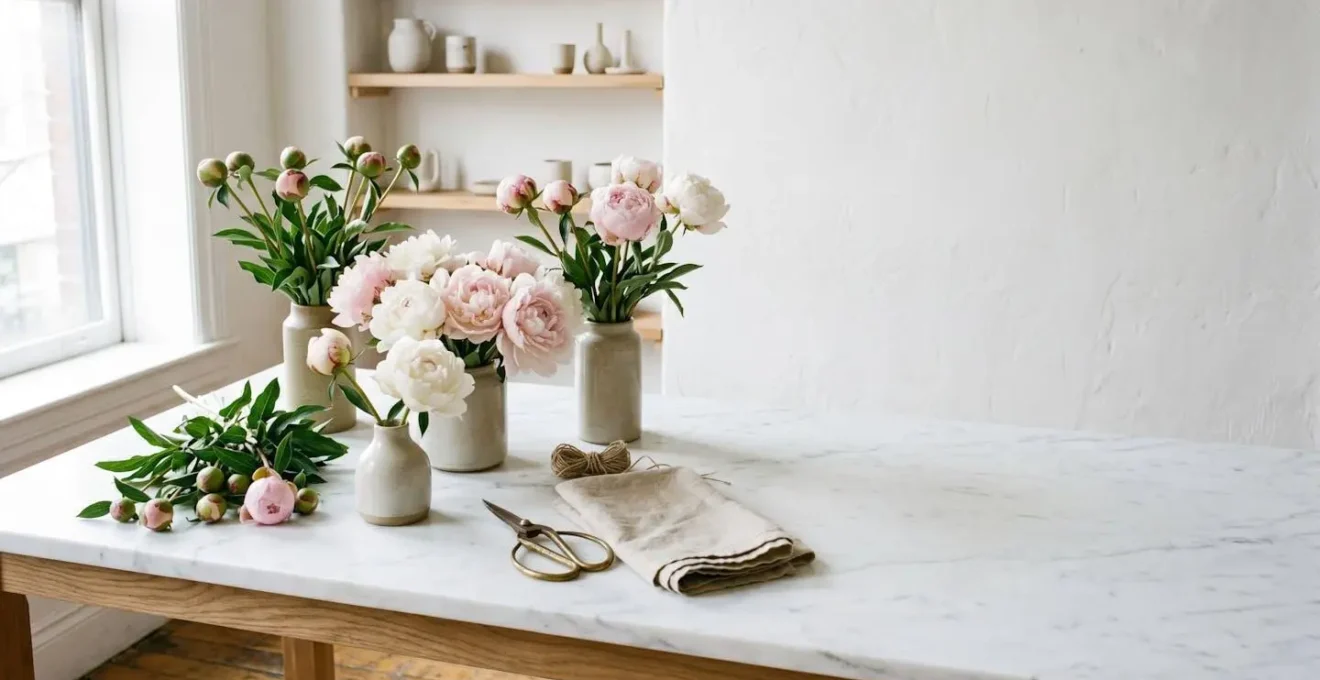
For a Saturday wedding, the ideal purchasing day is Tuesday or Wednesday. When you get them home, give them a fresh cut and place them in cool water in a cool, dark room. This slows their development. On Thursday morning, assess their progress. If they are still tight, you can move them to lukewarm water and a warmer room to speed them up. If they are opening too quickly, you can place them back in a cooler spot (even a refrigerator, away from fruit). This allows you to effectively “steer” the peonies, so they reach their most beautiful, fully open stage on Friday evening or Saturday morning, ready for your event.
Internal vs External Wiring: When Should You Pierce the Calyx?
The concept of wiring a flower, our “petal engineering,” is not a one-size-fits-all solution. The choice between an internal or external wiring technique depends entirely on the flower’s final use and the mechanical stresses it will face. Knowing when to pierce the calyx versus when to support it from the outside is a mark of true floral expertise.
You should pierce the calyx for an internal wire—the technique we discussed for garden roses—when the flower will be seen from all angles and must look as natural as possible. This is the default method for flowers in a bridal or bridesmaid bouquet. Because the wire is inserted through the base and taped flush against the stem, it is virtually invisible within the cluster of stems. It provides excellent support against the drooping effect of gravity while maintaining a clean, organic look.
Conversely, you should opt for an external wire when the flower needs maximum structural support and its base will be hidden from view. This method is used for flowers in large-scale installations like arches, hanging arrangements, or foam-based centerpieces. The most common external method is the “stitch” or “hairpin” wire. This involves threading a wire through the back of the calyx, like a stitch, or creating a U-shaped hairpin of wire that cradles the calyx from underneath. The wire ends are then twisted around the stem or used as an insertion point into floral foam. While more visible up close, this method provides superior reinforcement against lateral and shear forces, ensuring the flower head stays exactly where it is placed.
Therefore, the decision is simple: pierce the calyx for the aesthetic demands of handheld bouquets. Use an external support wire for the structural demands of large-scale décor. Each method serves a distinct purpose in ensuring your floral designs are both beautiful and durable.
Key Takeaways
- The fragrance of a garden rose is a complex design element; understand the difference between fruit and myrrh to build your desired ‘scent architecture’.
- Minimize stem damage at all costs. Every unnecessary cut or scrape on a rose stem is a potential entry point for bacteria that shortens its life.
- The higher price of a garden rose is an investment in petal count, bloom size, and fragrance—metrics where it vastly outperforms a standard rose.
Handling Delicate Cultivars: A Guide to Poppies, Hellebores, and Dahlias
Once you have mastered the art of managing garden roses, you can apply the core principle of vulnerability management to other exquisitely beautiful but notoriously delicate flowers. Adding cultivars like poppies, hellebores, or dahlias to your wedding palette elevates your design from beautiful to unforgettable. However, each has a unique weakness that must be addressed with a specific conditioning technique.
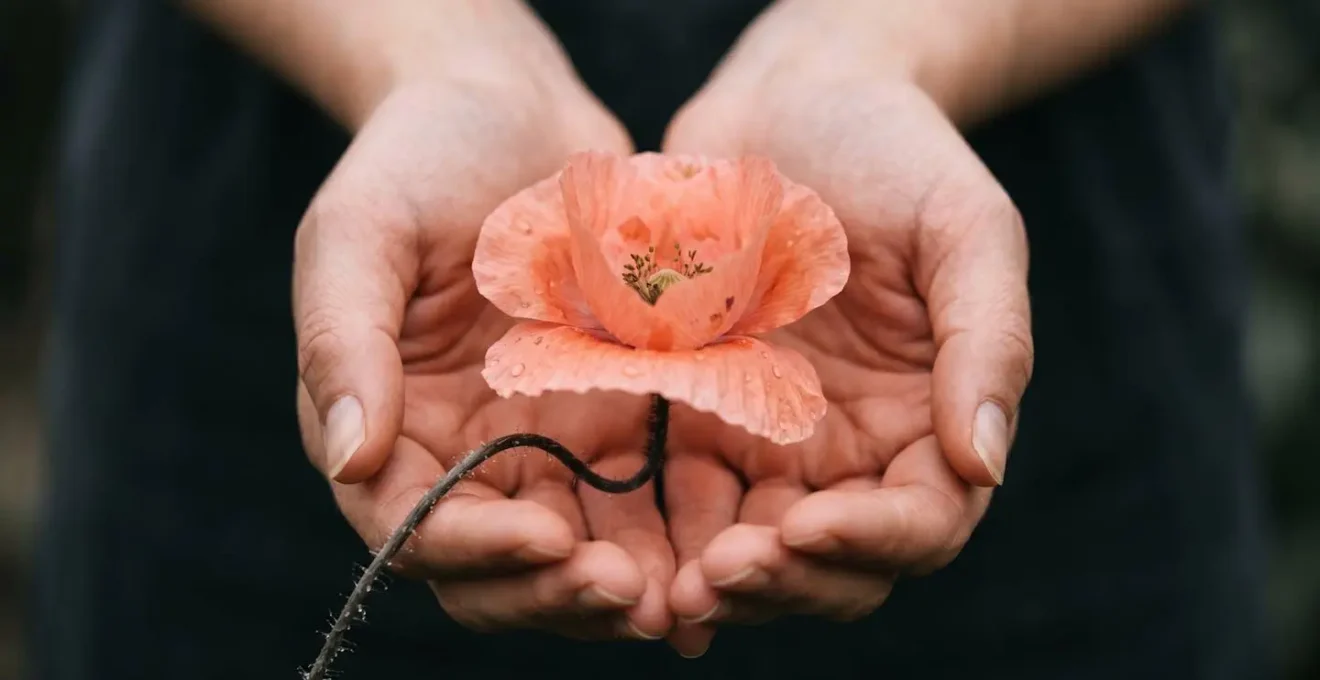
Icelandic Poppies, with their papery, translucent petals, are breathtaking. Their weakness is a milky sap that, upon cutting, immediately seals the stem and prevents water uptake. The solution is fire and water. Immediately after cutting the stem to your desired length, you must sear the cut end for 7-10 seconds with a lighter or candle flame until it turns black. Then, immediately plunge the entire stem into cool water. This cauterizes the wound, stops the sap, and allows the poppy to drink freely.
Hellebores, also known as Lenten Roses, have a tendency to wilt dramatically. Their woody stems struggle to hydrate. The professional trick is twofold. First, after cutting, turn the flower upside down and fill its bell-shaped bloom with water for a few minutes to hyper-hydrate the petals. Second, and more importantly, take a sharp knife and score the stem by making long, vertical cuts up the last inch of the stem. This breaks the tough outer layer and exposes more surface area for water absorption when placed in the vase.
Dahlias are stunningly geometric but are known to be fragile and have a short vase life. Their hollow stems are prone to air bubbles and bacterial growth. The key is to use very hot (but not boiling) water for their initial hydration. Cut the stems and place them in a vase of hot water for about an hour. This helps to force out any air trapped in the stem. After this initial shock treatment, move them to a cool place in a vase with fresh, cool water and flower food. This combination of an initial hot-water blast followed by cool storage drastically improves their longevity.
You are now equipped with the insider knowledge that separates a casual flower admirer from an informed floral connoisseur. This understanding of scent, structure, and timing empowers you to have a more detailed, productive conversation with your floral designer. The next logical step is to use this guide as a foundation for your planning, ensuring that your vision for the perfect garden rose bouquet is executed flawlessly.