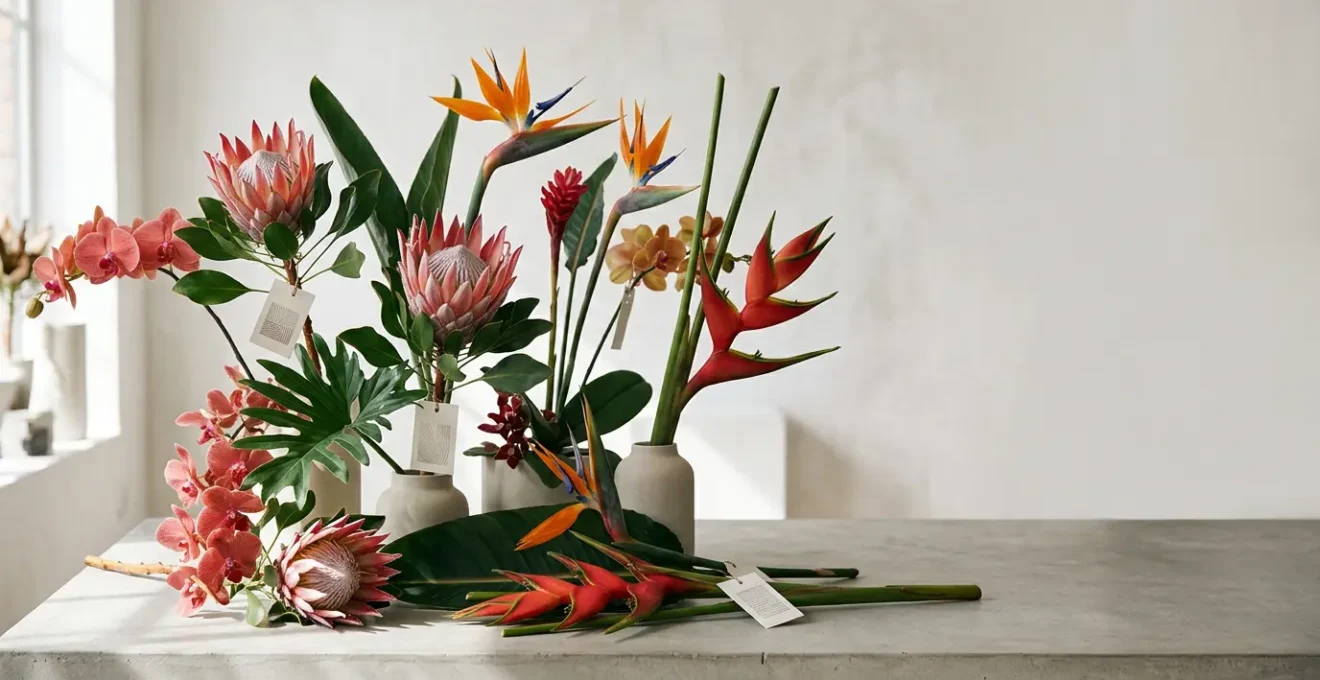
Elevating your floral business to a luxury brand hinges not on selling more flowers, but on strategically engineering the value and narrative of every single stem.
- Mastering the specific environmental needs of tropicals (like temperature and humidity) is a non-negotiable technical requirement that prevents costly losses.
- The highest profit margins are found in the “single-stem experience,” where packaging, storytelling, and presentation justify premium pricing (£15+).
Recommendation: Shift your mindset from ‘florist’ to ‘curator of luxury assets’ and begin auditing every touchpoint for value enhancement.
For any ambitious florist, the allure of exotic stems is undeniable. They represent a world beyond the common rose and carnation—a world of architectural shapes, vibrant colours, and premium price points. Yet, many who venture into this space find themselves struggling with the same old problems: competing on price, fighting a losing battle against the clock as expensive inventory wilts, and failing to capture the imagination of high-end clientele. The standard advice to “find a good wholesaler” or “make beautiful bouquets” falls short. It treats these magnificent botanicals as mere commodities.
But what if the true key to unlocking the luxury market wasn’t about selling flowers at all? What if it was about engineering and selling perceived value? The transition from a local florist to a revered floral brand is a paradigm shift. It requires moving from a mindset of perishable ‘inventory’ to one of curated ‘assets’. It means understanding that a single, perfectly presented stem can be more profitable and do more for your brand than a dozen hurried arrangements. It’s a business built on technical mastery, narrative-driven sales, and an obsessive focus on the client experience.
This guide is not about basic floristry. It’s an insider’s look at the strategic pillars required to build a profitable luxury brand around exotic stems. We will deconstruct the critical decisions in sourcing, the non-negotiable science of tropical care, the art of selling a story instead of a product, and the design principles that separate the premium from the pedestrian. Prepare to rethink everything you thought you knew about the business of flowers.
This comprehensive guide breaks down the essential strategies for transforming your business. Explore the key areas of focus in the table of contents below to navigate the path to becoming a luxury floral purveyor.
Contents: The Business of Exotic Stems: Sourcing and Selling Tropical Luxury
- Heliconia vs Strelitzia: Which Exotic Flower Lasts Longer?
- Tropical Care: Why You Should Never Put Orchids in the Fridge?
- One Stem Wonder: How to Sell a Single Protea for £15?
- Monstera and Palm: Which Leaves Best Compliment Exotic Blooms?
- Air Miles: Is It Ethical to Import Flowers from Ecuador to the UK?
- Taping and Wiring: How to Put a Single Orchid Head in a Wedding Bouquet?
- Tropical Care: Why You Should Never Put Orchids in the Fridge?
- Orchid Elegance: Using Phalaenopsis and Cymbidium in Modern Design
Heliconia vs Strelitzia: Which Exotic Flower Lasts Longer?
In the luxury floral market, longevity is not just a feature; it’s a direct reflection of quality and value. Your ability to make informed sourcing decisions based on post-harvest performance is a critical business skill. Heliconia and Strelitzia (Bird-of-Paradise) are both iconic tropicals, but their behaviour as cut stems is profoundly different. Understanding this difference separates the profitable expert from the florist suffering from unexpected losses. While Strelitzia is known for its hardiness and can last for several weeks, Heliconia is a more delicate asset that requires precise management.
Recent post-harvest research confirms that under optimal conditions, the vase life of Heliconia ranges from 8.6 to 11.6 days. This is a respectable duration, but it is highly dependent on avoiding any cold chain errors, as they are extremely sensitive to chilling injury. Strelitzia, by contrast, is far more forgiving. This doesn’t make Heliconia a poor choice; it makes it a specialist’s choice. Offering Heliconia signals to clients that you possess a higher level of expertise in handling and conditioning.
The decision of which to stock is not just botanical, it is strategic. Strelitzia is your reliable workhorse for long-lasting corporate contracts. Heliconia is your high-impact, shorter-term star for events and statement pieces where its dramatic form justifies the specialised care. The following table breaks down the key business considerations for these two assets.
This comparative data, drawn from postharvest handling analysis, provides a clear framework for procurement and inventory management.
| Factor | Heliconia | Strelitzia (Bird-of-Paradise) |
|---|---|---|
| Minimum Storage Temperature | >10°C (50°F) | >8°C (46.4°F) |
| Transport Hardiness | Sensitive to chilling injury; collapses if exposed to cold | More cold-tolerant; can withstand broader temperature range |
| Vase Life (Typical) | 8.6-11.6 days with proper handling | Several weeks |
| Post-Vase Afterlife | Limited; bracts often collapse after display | Can be dried for permanent decor use |
| Key Preservative | GA3 (gibberellic acid) extends life significantly | Sucrose + citric acid + 8-HQC solutions |
Tropical Care: Why You Should Never Put Orchids in the Fridge?
This is one of the most expensive mistakes a florist can make when upgrading to luxury tropicals. The standard practice for roses and tulips—placing them in a cold floral cooler—is a death sentence for many exotic blooms, especially Phalaenopsis orchids. These flowers are native to warm, humid climates; exposing them to refrigeration triggers a catastrophic cellular collapse known as chilling injury. This isn’t just wilting; it’s irreversible damage that renders a premium-priced stem worthless in hours.
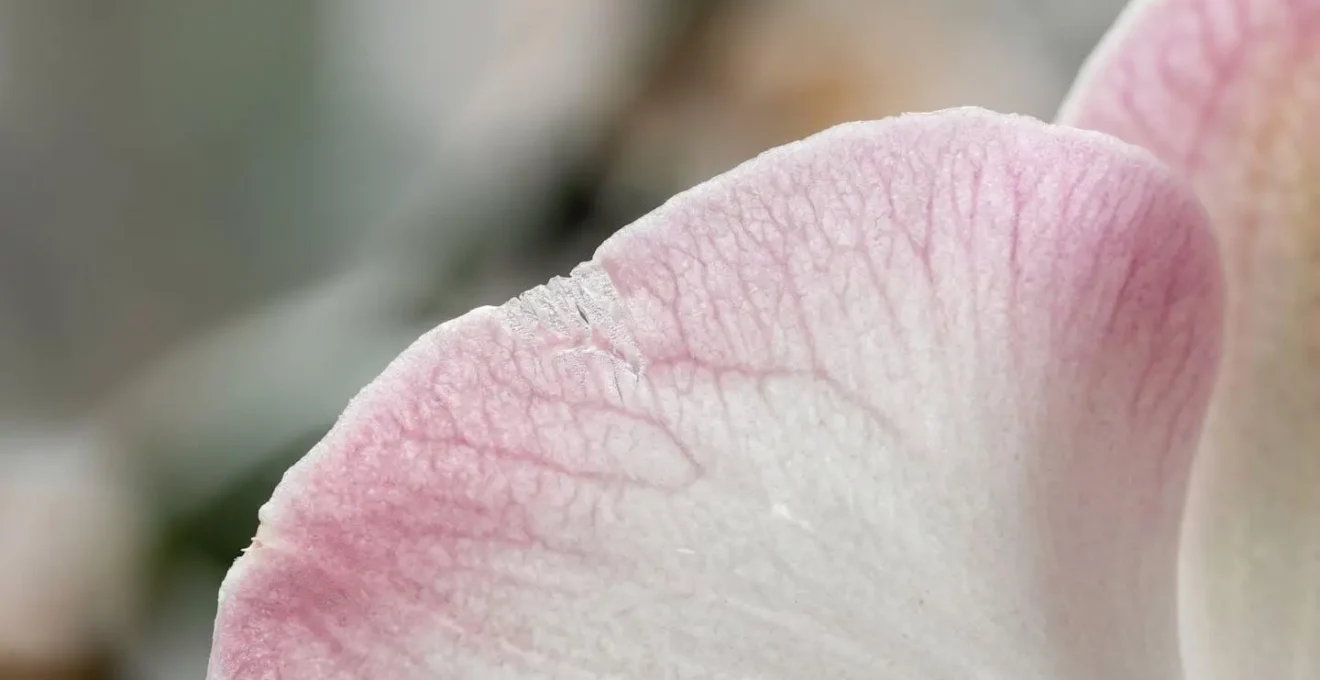
Industry research confirms that for Phalaenopsis orchids, chilling injury begins at temperatures below 7°C (45°F). The visual signs are devastating: translucent patches on the petals, a darkening or browning of the delicate lip and column, and a cascade of premature flower drop. To a client, this looks like poor quality. To your business, it’s a direct hit to your bottom line and reputation. This is where technical mastery becomes a financial imperative. You must establish a separate conditioning area for your tropicals, a sanctuary kept at a stable 13-18°C with high humidity.
The delicate, velvety texture of an orchid petal is a testament to its sensitivity. One look at the intricate cellular structure under a macro lens reveals why cold is such an enemy, causing the water within the cells to damage their own fragile walls.
Protecting these assets requires a strict, non-negotiable protocol. It’s not just about knowing the right temperature; it’s about building a system that makes it impossible for your team to make a costly error. This is your “Orchid ICU” protocol, a set of operational rules that safeguard your most valuable inventory.
- Dedicated Conditioning Area: Establish a space separate from standard coolers, maintaining 13-18°C (55-65°F).
- Humidity Control: Target 60-80% relative humidity to prevent dehydration.
- Gentle Airflow: Use oscillating fans on low; position orchids away from direct cold drafts.
- Visual Tagging System: Attach bright red ‘NO FRIDGE’ tags to all orchid shipment boxes upon arrival.
- New Arrival Checklist: Mandate a verification process for every new delivery, logging flower type and correct storage location.
- Staff Training: Educate all team members on recognising the early signs of cold damage.
One Stem Wonder: How to Sell a Single Protea for £15?
The ability to sell a single stem for a premium price is the ultimate test of a luxury floral brand. It’s a shift from selling a product (a flower) to selling an experience (a meticulously crafted gift). A customer paying £15 for one King Protea isn’t just buying the flower; they are buying the story, the presentation, the perceived status, and the convenience of a perfect, ready-to-give gesture. This is where you, the florist, become a value engineer.
The £15 price point is not arbitrary. It’s calculated based on the value you add at every step. Let’s assume the wholesale cost of a magnificent King Protea is £3. The generic florist might sell it for £6, doubling their money. The luxury brand understands that the remaining £12 of potential profit is unlocked through strategic investment in packaging, narrative, and branding. You are transforming a botanical specimen into a luxury good, and the unboxing experience is your primary tool. It must be tactile, memorable, and communicate value before the flower is even fully revealed.
This isn’t about extravagance for its own sake. It’s a deliberate business strategy to command higher margins, attract a corporate gifting clientele, and position your brand in a class of its own. It requires a detailed audit of every touchpoint in the customer journey for that single stem, from the custom packaging to the story it tells.
Your Action Plan: The Single-Stem Luxury Experience Audit
- Packaging as Presentation: Do you use custom cylindrical tubes with a matte finish and embossed logo? This is your first point of contact. Standard cellophane is a signal of a commodity, not luxury.
- The Narrative Card: Does each stem come with a high-quality (300gsm+) ‘story card’? This should detail the flower’s origin (e.g., “Hand-selected from a family farm in South Africa’s Western Cape”) and expert care instructions.
- Layered Reveal: How is the stem prepared inside the packaging? The base should be wrapped in a water source, sealed, and then encased in branded tissue paper. This shows care and attention to detail.
- The Finishing Touch: How is the package sealed? A simple tie is functional; a branded wax seal or natural twine with a dried botanical element is an emotional and tactile upgrade.
- Value-Based Pricing Model: Have you calculated your price based on total value, not just cost-plus? (Wholesale Cost + Packaging + Labour + Brand Premium = Retail Price). You must be able to justify the price to yourself before you can communicate its value to a customer.
Monstera and Palm: Which Leaves Best Compliment Exotic Blooms?
In luxury floral design, foliage is not filler. It is the canvas, the architecture, and a strategic financial asset. The choice between a dramatic Monstera leaf or a graceful fan of Palm is not merely aesthetic; it’s a business decision that impacts your design’s perceived value, your cost of goods, and your overall profitability. A savvy floral brand treats its greenery with the same careful consideration as its most expensive blooms. As the experts at the Floral Design Institute note, the right foliage elevates the entire composition.
Monstera is a perfect complement to exotic flowers like orchids, birds of paradise, or proteas.
– Floral Design Institute, Monstera Foliage Design Guide
Monstera leaves offer a bold, graphic statement. Their large surface area and iconic fenestrations (natural holes) provide immediate high impact, making them perfect for creating a sense of lushness and scale with minimal stems. Palm fronds, on the other hand, offer a more linear, architectural feel, ideal for creating height and a delicate tropical atmosphere. Beyond aesthetics, their cost-per-impact ratio is what a business owner must analyze. A single £3 Monstera leaf might provide the same visual weight as £10 worth of smaller foliage, drastically improving your margin.
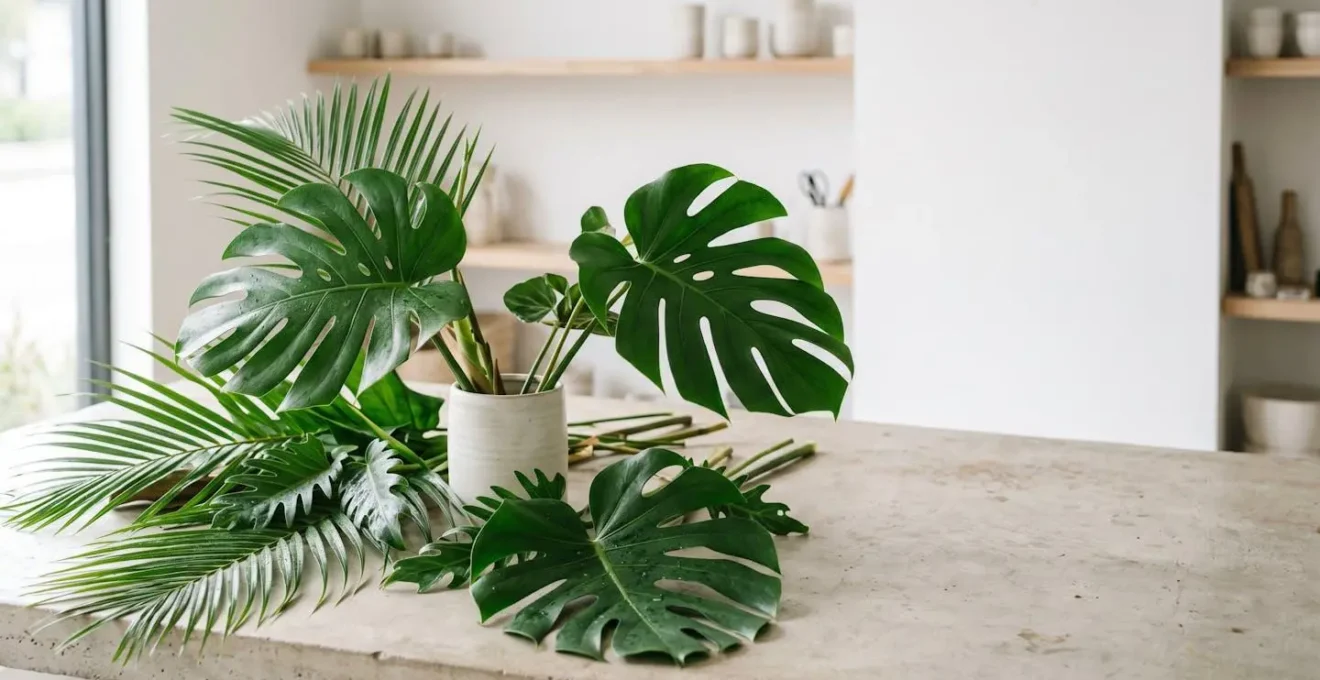
To make truly strategic decisions, you need to move beyond simple wholesale pricing and develop a “Foliage Profit Matrix.” This tool helps you evaluate each type of greenery based on its acquisition cost, vase life, visual surface area, and ultimate return on investment for different design applications. This analytical approach ensures that every leaf in your cooler is working hard for your bottom line.
The following analysis provides a framework for evaluating foliage not just as a creative element, but as a component of your business’s financial health, helping you choose the right green for the right job to maximize profitability.
| Foliage Type | Cost of Acquisition (per stem/bunch) | Vase Life (days) | Visual Surface Area | Cost-per-Impact Score | Best Use Case |
|---|---|---|---|---|---|
| Monstera Leaf (Fresh) | Moderate (£2-4/stem) | 7-10 days | Very High (large, dramatic) | Excellent (high impact, moderate cost) | Statement centerpieces, luxury bouquets, photo backdrops |
| Palm Fronds (Robellini/Areca) | Low-Moderate (£1.50-3/stem) | 10-14 days | High (linear, architectural) | Very Good (longest life, lower cost) | Tall arrangements, tropical events, volume work |
| Aspidistra (Cast Iron Plant) | Moderate (£1-2.50/leaf) | 14-21 days | Medium (glossy, structural) | Excellent (exceptional longevity) | Corporate installations, wedding arches, binding/wrapping |
| Preserved/Bleached Foliage | Higher upfront (£3-6/stem) | Indefinite (months-years) | Medium-High | Outstanding for reuse (zero waste, permanent installations) | High-margin art pieces, permanent decor, retail displays |
| Local Seasonal (Eucalyptus, Birch) | Low (£0.50-2/stem) | 7-14 days | Medium (textural filler) | Good (eco-conscious positioning, cost-effective) | Sustainable luxury hybrid designs, budget-conscious clients |
Air Miles: Is It Ethical to Import Flowers from Ecuador to the UK?
For a luxury brand, transparency is not optional. As you build a narrative around exotic, far-flung blooms, the question of ethics and sustainability will inevitably arise. Is it responsible to air-freight flowers thousands of miles? This is not a question to be avoided; it’s a powerful opportunity to deepen your brand’s story and connect with conscientious consumers. The knee-jerk reaction is to see “air miles” as a negative, but the reality of the global flower trade, particularly in countries like Ecuador, is far more nuanced.
The key is to shift the conversation from a simple carbon footprint calculation to a more holistic view of socio-economic impact and responsible sourcing. Instead of hiding the origin of your flowers, you celebrate it. You build relationships with farms that are certified by organisations like the Rainforest Alliance or Fairtrade. These certifications are your proof that the price of your flowers supports fair wages, safe working conditions, and environmental stewardship in communities where the flower industry is a vital economic lifeline.
You are no longer just selling a flower; you are selling a story of positive impact. You can communicate to your clients that their purchase helps support rural communities, funds educational programs, and empowers a workforce that is predominantly female. This transforms an ethical challenge into a cornerstone of your brand identity and a unique selling proposition that price-focused competitors cannot match.
Case Study: The Ecuadorian Flower Industry as a Brand Asset
The debate around air-freighted flowers from Ecuador balances environmental impact with social benefit. This industry is a major employer, with women making up 60-70% of the workforce. Many Ecuadorian farms have earned Rainforest Alliance and Fairtrade certifications, ensuring fair wages, safe conditions, and environmental care. By building a transparent sourcing policy, a florist can verify these certifications and communicate this positive social impact to clients. This approach turns ethical concerns into a brand differentiator. Some UK florists even partner with specific South American reforestation projects, creating a traceable ‘Sustainability Partner’ relationship that allows them to integrate carbon offset programs into their checkout, transforming a potential negative into a powerful, positive story about conscious luxury.
Taping and Wiring: How to Put a Single Orchid Head in a Wedding Bouquet?
In the world of high-end weddings, perfection is the baseline. The ability to seamlessly incorporate a delicate, stemless Phalaenopsis or Cymbidium orchid head into a bridal bouquet is a display of pure technical mastery. This is not a task for glue guns and guesswork; it requires the precision of a surgeon and an intimate knowledge of the right tools and techniques. This skill is a significant differentiator, allowing you to create fluid, modern designs that are impossible for less-experienced florists to replicate, and to command a premium for your expertise.
The goal is twofold: security and invisibility. The wired orchid head must be absolutely secure—able to withstand a full day of movement, photographs, and celebration without wobbling or detaching. Simultaneously, the mechanics must be completely hidden, creating the illusion that the bloom is floating naturally amongst the other flowers. The choice of wire gauge, the type of adhesive, and the method of insertion are all critical decisions that separate an amateur attempt from a professional execution. Mastering this technique is an investment in your brand’s reputation for flawless, high-value work.
The following protocol outlines the professional-grade tools and steps required to securely and beautifully wire a single orchid head for inclusion in critical event work like a wedding bouquet.
- Tool Selection: Use 22-gauge wire for lightweight Phalaenopsis and 20-gauge for heavier Cymbidium. Apply a small amount of cold glue (Oasis brand) or clear floral adhesive at the insertion point. Use high-quality, stretchable floral tape like Stemtex to wrap the wire.
- Insertion Method (Phalaenopsis): Gently insert the wire horizontally through the sturdiest part of the flower’s base, just behind the lip, and thread it through the central column. The wire should exit on the opposite side, creating a stable cross-support.
- Insertion Method (Cymbidium): For these heavier blooms, use a hooked-wire method. Create a small hook at the wire’s end, insert it through the flower’s base from top to bottom, and pull gently until the hook embeds securely in the flower’s throat.
- Stem Creation: Bend both ends of the wire down to run parallel. Starting at the very base of the flower, wrap the wire tightly with floral tape, stretching the tape as you spiral downwards to create a clean, sealed, and natural-looking false stem.
- The Stress Test: Before adding to the bouquet, gently shake the wired head. It must be completely firm. Once the bouquet is complete, hold it upside-down for ten seconds—nothing should move. This is your final quality control check.
Tropical Care: Why You Should Never Put Orchids in the Fridge?
We’ve discussed the technical reasons behind chilling injury, but let’s re-examine this rule from a purely financial perspective. For a luxury floral business, every stem is an investment. A single Phalaenopsis orchid stem might cost you £8-£12 wholesale. A single box could represent an investment of hundreds of pounds. Placing that box in a standard floral cooler is not a mistake; it’s an act of financial self-sabotage that can wipe out the profit of an entire shipment in under an hour.
Consider the cascade effect. A staff member, working on autopilot, moves a new orchid delivery into the main cooler. The flowers look fine for a few hours. The next morning, you discover the damage: translucent petals, dropped blooms. The stems are now unsellable. You have not only lost the initial wholesale cost of the flowers, but you have also lost the potential retail revenue they represented. If those orchids were destined for a pre-sold corporate contract or a wedding, you now face the additional costs of sourcing last-minute replacements at a premium and, most damagingly, the potential loss of a client’s trust and future business.
This is why the “No Fridge” rule is the most important operational policy for a business dealing in tropicals. It’s a risk management strategy. The cost of setting up a dedicated, temperature-controlled conditioning area is not an expense; it’s an insurance policy against catastrophic loss. It demonstrates to suppliers, clients, and your own team that you understand the intrinsic value of your assets and have the professional systems in place to protect them. In the luxury market, operational excellence is the foundation of profitability.
Key Takeaways
- Master the Cold Chain: Your profit margin on tropicals is directly linked to your ability to manage temperature and humidity, preventing costly chilling injury.
- Sell the Experience, Not the Stem: Justify premium prices by engineering value through luxury packaging, narrative storytelling, and flawless presentation.
- Foliage is a Financial Asset: Analyze greenery based on its cost-per-impact, not just its wholesale price, to maximize design value and profitability.
Orchid Elegance: Using Phalaenopsis and Cymbidium in Modern Design
The true power of Phalaenopsis and Cymbidium orchids in a luxury business model extends far beyond single sales. Their remarkable longevity is the key to unlocking high-margin, recurring revenue streams. While a rose may last a week, a cut Phalaenopsis orchid stem can look pristine for much longer. According to professional post-harvest guidelines, with proper care, their vase life can be 3-6 weeks. This exceptional durability makes them the perfect candidates for business models that move beyond the transactional and into the relational, such as premium rental services.
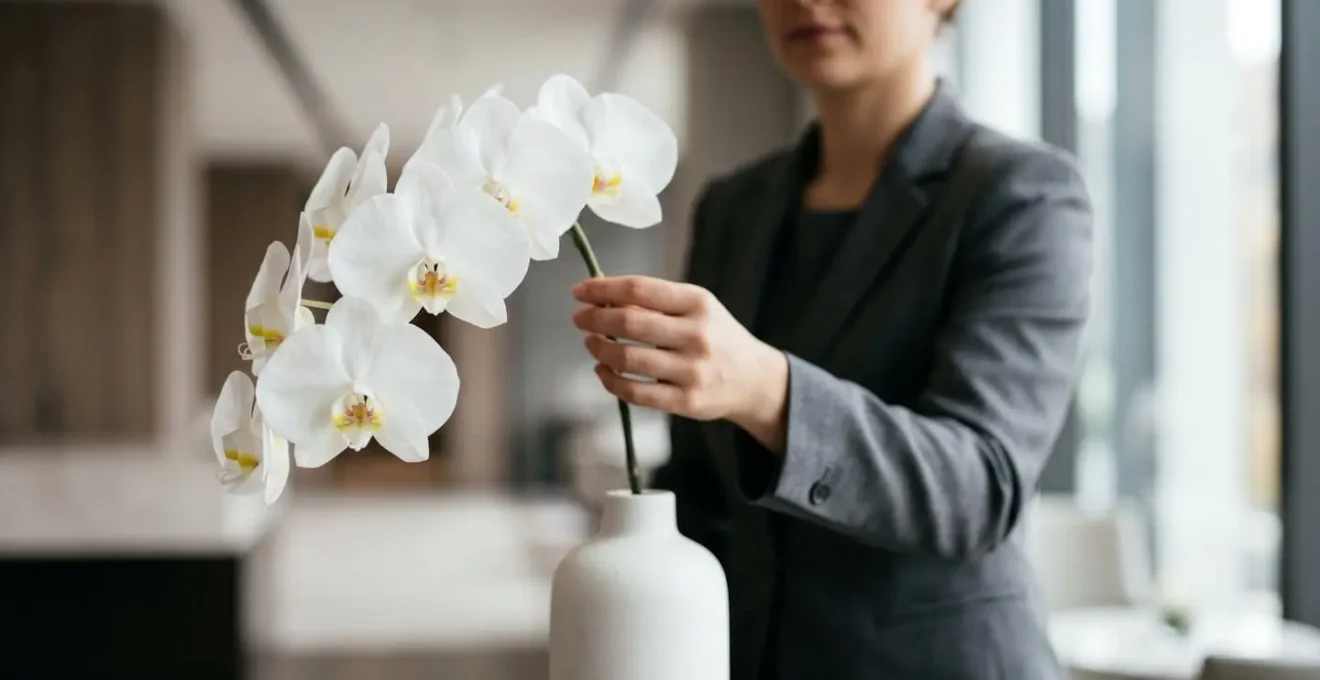
Modern design sensibilities favour clean lines, minimalism, and lasting impact. An elegant, arching stem of white Phalaenopsis in a simple vessel makes a more powerful and enduring statement in a corporate lobby or luxury hotel reception than a complex, mixed bouquet that needs frequent replacement. This is the foundation of the orchid rental business model, a strategy that turns your most durable assets into a source of predictable monthly income.
This model is built on service and guaranteed perfection. Clients pay a premium for the convenience of always having a flawless, high-end floral display without any of the maintenance burdens. It positions your business not as a flower shop, but as a partner in maintaining their brand’s luxury aesthetic. By curating an inventory of premium orchid varieties and rotating them before they show any sign of fading, you provide a white-glove service that justifies high-end contract pricing.
Case Study: The Orchid Rental Business Model
This recurring revenue strategy capitalizes on the long vase life of Cymbidium and Phalaenopsis. Florists structure monthly contracts (from £200-£800+) for luxury hotels, offices, and retail spaces. The service involves rotating live orchid installations (potted or cut) on a 2-4 week schedule. During each visit, fading blooms are replaced with fresh specimens and vessels are cleaned. The key advantages are predictable revenue and reduced waste, as plants can be rotated back to a greenhouse to recover. Clients pay for the ‘always perfect’ guarantee. This model thrives on sourcing rare cultivars and providing impeccable, white-glove service, establishing the florist as a trend-leading luxury provider.
The journey from a conventional florist to a luxury floral brand is a strategic undertaking. It requires a fundamental shift in mindset, a commitment to technical excellence, and a deep understanding of how to build and communicate value. Start today by auditing one aspect of your business through this new lens—whether it’s your conditioning process, your foliage sourcing, or the presentation of a single stem. Begin to implement these strategies to transform your craft into a coveted luxury experience.