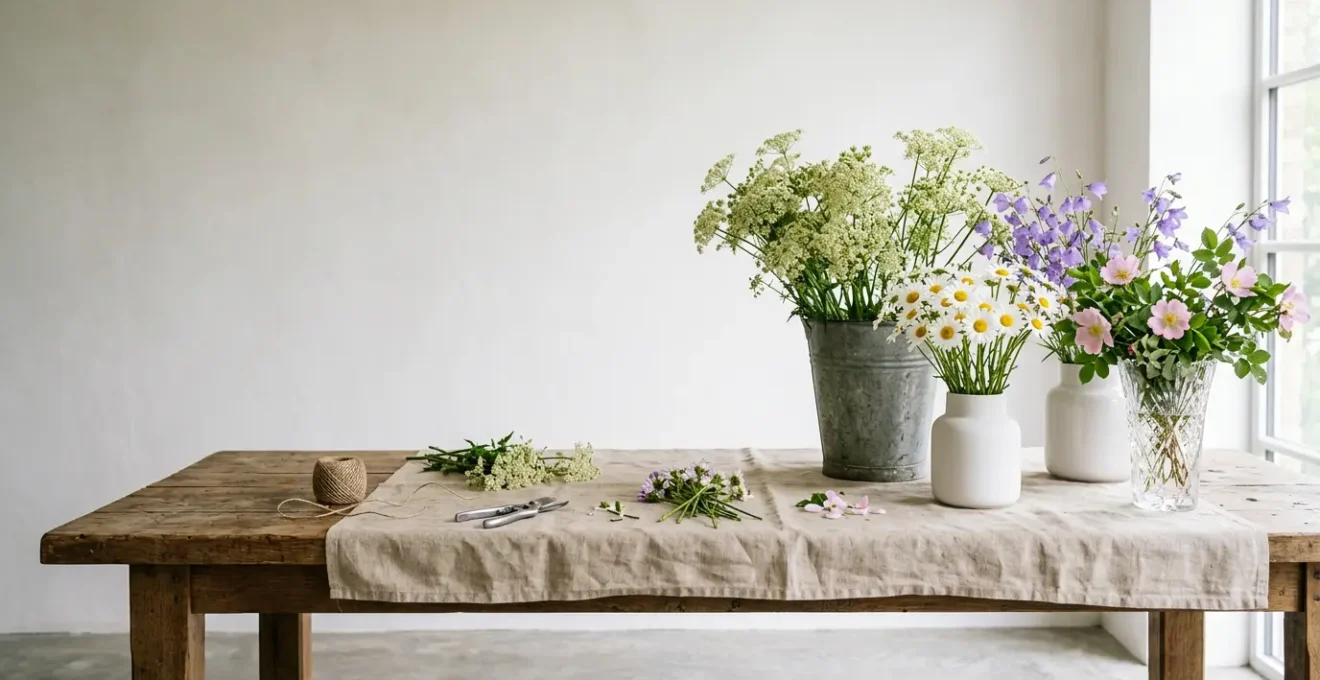
Moving beyond aesthetics, using British native flowers is an act of ecological stewardship that offers a powerful, premium narrative for your brand.
- Native plants are functionally superior for supporting UK pollinators, which are in significant decline.
- Ethical and legal sourcing requires direct partnerships with landowners, creating a transparent, high-value supply chain.
Recommendation: Shift your design philosophy from simply ‘local’ to ‘ecologically functional’, using your craft to actively support British biodiversity.
As a florist, you create beauty. You arrange stems, balance colours, and craft moments of joy or solace. But what if your work could do more? The conversation around local flowers often stops at reducing air miles—a valid, yet incomplete, picture. We are taught to appreciate the cultivated perfection of a hybrid rose or a Dutch tulip, while the delicate umbel of cow parsley in a hedgerow is dismissed as a common weed. This perspective overlooks a profound opportunity for British florists.
This guide challenges you to see your role differently: not just as an artist, but as a conservationist. It reframes the use of native British flora from a rustic, niche choice into a sophisticated act of ecological stewardship. We will move beyond the superficial appeal of ‘wild’ aesthetics and delve into the functional science of why these plants are vital. The true value of a native bloom lies not just in its ephemeral beauty, but in its deep connection to our landscape and the life it supports.
We’ll explore which ‘weeds’ are actually viable, long-lasting cut flowers, and how to tell a compelling, premium story about them. Crucially, we will navigate the legal and ethical minefield of foraging, highlighting why partnership with landowners is the only sustainable path. By understanding the intricate relationships between our native plants and pollinators, you can transform your floral designs from mere decoration into a powerful statement of support for the UK’s fragile biodiversity. This is conservation-grade floristry.
This article provides a comprehensive framework for integrating British native flora into your work, not as a trend, but as a core business philosophy. Explore the sections below to understand the legal, ethical, and ecological dimensions of this powerful practice.
Contents: Why Using British Native Flowers is a Conservation Act
- Weed or Wildflower: How to Use Cow Parsley and Ox-Eye Daisies?
- Meadow in a Vase: Which Natives Have a Decent Vase Life?
- Storytelling: How to Sell “Roadside Weeds” as Premium Local Flora?
- Wildlife and Countryside Act: What Can You Legally Pick in the UK?
- Bee-Friendly Blooms: Why Natives Are Better for Insects Than Hybrids?
- Flower Farms as Habitats: How Growing Flowers Helps UK Bees?
- The 10% Foraging Rule: How to Gather Wild Materials Without Harming Nature?
- Crafting Identity with Regionally Grown Blooms
Weed or Wildflower: How to Use Cow Parsley and Ox-Eye Daisies?
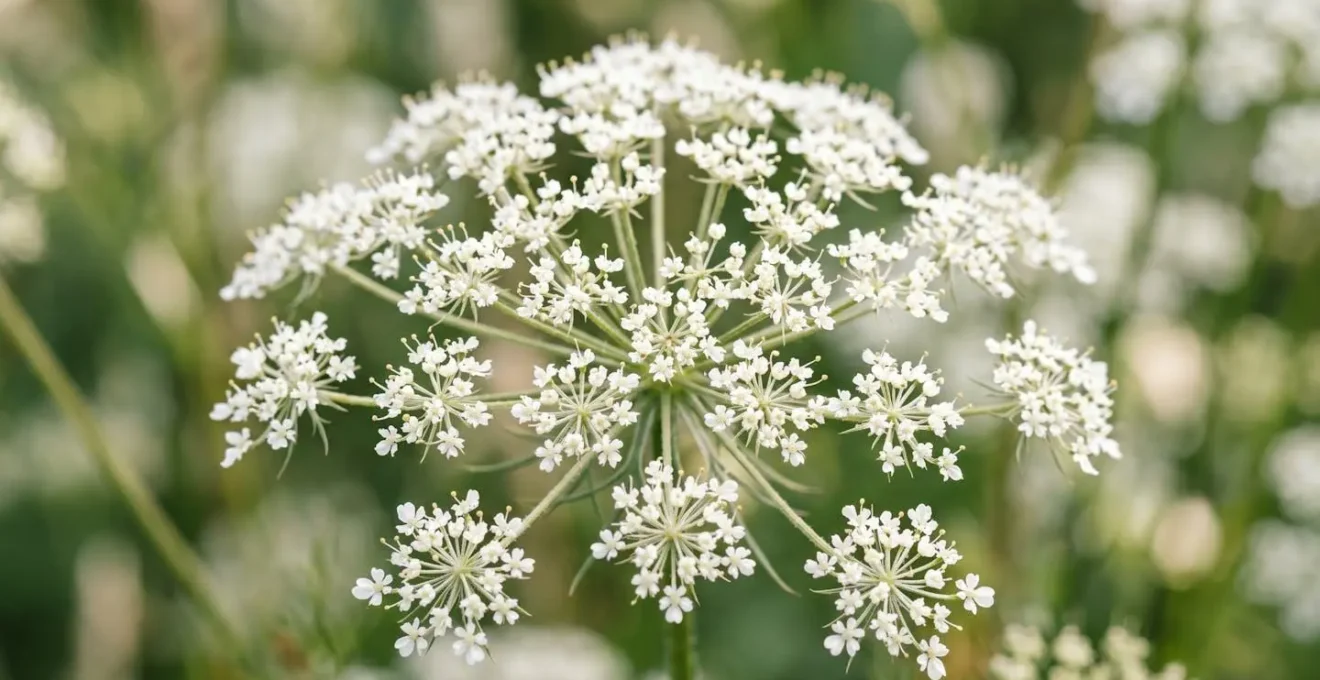
The first step in conservation-grade floristry is a mental shift. What one person calls a “weed,” a knowledgeable florist sees as a textural, locally significant design element. Plants like Cow Parsley (Anthriscus sylvestris) and Ox-Eye Daisy (Leucanthemum vulgare) are often overlooked precisely because they are successful and abundant. Yet, it is this very resilience that makes them an authentic part of the British landscape. Using them is not a compromise; it’s a celebration of ecological function and form.
The beauty of a plant like cow parsley lies in its intricate structure. Its delicate, lace-like umbels provide a frothy, ethereal quality that is difficult to replicate with cultivated species. When you look closely, you see a masterclass in natural engineering, designed to be accessible to a wide array of small pollinators. Incorporating this into a design is to incorporate a piece of a functioning ecosystem.
Of course, professionalism demands that these materials are treated with the same respect as expensive imports. Many native species, particularly those with hollow stems like cow parsley, require specific conditioning to perform well. Ignoring these techniques is what gives natives a bad reputation for poor vase life. True ethical stewardship means applying your expert knowledge to showcase these plants at their best, proving that “wild” does not mean “weak.” By mastering their care, you elevate them from weed to a valuable, professional-grade material.
This reframing from “weed” to “wildflower” is the foundational act of becoming a florist-conservationist, recognising the inherent value in the flora of our own landscape.
Meadow in a Vase: Which Natives Have a Decent Vase Life?
A common misconception holding florists back from using native species is the fear of a short vase life. While some wildflowers are indeed ephemeral, many British natives are surprisingly robust when handled with professional care. The narrative that only imported, specially bred flowers are long-lasting is a myth often perpetuated by a lack of knowledge in proper conditioning. In fact, with proper care and conditioning techniques, cut wildflowers can last up to 2 weeks, rivalling many commercial varieties.
The key is not the origin of the flower, but the florist’s expertise. Different plant families require different treatments. Simply placing a bunch of freshly picked natives in a bucket of water is a recipe for failure. Professional conditioning is what separates a drooping mess from a long-lasting arrangement. For instance, sap-producing flowers like wild poppies need their stem ends seared with a flame, while woody stems like hawthorn benefit from being split at the base. These are not amateur hacks; they are essential techniques of the trade applied to a different set of materials.
Understanding the specific needs of each plant is a mark of true craftsmanship. It demonstrates a deeper connection to the materials you work with. Below are some conditioning methods tailored for common British native types:
- Woody stems (hawthorn, wild rose): Split stems at the bottom rather than crushing them to enable better water uptake.
- Sap-producing natives (poppy, globe thistle): Sear stem bottoms with a match or scald in boiling water for 20 seconds immediately after cutting.
- Delicate blooms (ox-eye daisies): Harvest before pollen matures by testing with your fingertip – no pollen should transfer, as this signals the flower is past its peak.
- Structural Foliage: Use long-lasting elements like ivy, ferns, and silver birch as a foundational structure that can outlive the flowers, allowing for arrangements that evolve over time.
By mastering these techniques, you not only ensure beautiful, lasting designs for your clients but also bust the myth that local means less durable. You prove that value lies in knowledge, not just in novelty.
Storytelling: How to Sell “Roadside Weeds” as Premium Local Flora?
Embracing native flora requires a shift not only in your workshop but also in your marketing. How do you convince a client to choose a bouquet featuring “weeds” over one filled with classic peonies? The answer lies in crafting a powerful botanical narrative. You are not selling common plants; you are offering a slice of the authentic British landscape, rich with story and ecological significance. As Master Horticulturist Colin Skelly notes, “Whilst we don’t have as many native plants as many parts of the world…many UK natives or their cultivated forms are garden classics.” Your job is to reclaim that “classic” status.
The key is to change the language. Instead of “roadside weeds,” you use terms like “hedgerow botanicals,” “meadow-grown,” or “heritage flora.” Each arrangement becomes a story about a specific place and season. Explain the provenance: “This arrangement features Ox-Eye Daisies harvested from a conservation meadow in Sussex, where they provide a vital nectar source for Gatekeeper butterflies.” This transforms a simple flower into a protagonist in a larger ecological story.
This strategy of transparency and education is not just theoretical; it’s a proven business model for forward-thinking florists.
Case Study: Bryonia’s Premium Positioning of British Flora
The UK florist Bryonia provides a masterclass in marketing British-grown flowers as a premium product. Their success is built on radical transparency and celebrating specialist knowledge. By providing clients with detailed information about the flower’s origin—down to the specific local farm—they frame ‘local’ not as a cheaper alternative, but as an artisanal, demonstrably sustainable choice. This detailed provenance justifies a premium price. A key part of their strategy is highlighting their specialist conditioning knowledge, which extends the vase life of these native blooms, directly linking their expertise to the quality and value of the final product.
Ultimately, you sell what you value. By passionately communicating the ecological importance, unique beauty, and local heritage of native plants, you invite your clients to become part of the conservation story. That is a value proposition imported flowers can never match.
Wildlife and Countryside Act: What Can You Legally Pick in the UK?
Before a single native stem is cut, every conservation-minded florist must understand the law. The romance of foraging from a country lane quickly evaporates when faced with the strict legal framework designed to protect Britain’s flora. For a commercial florist, the most important piece of legislation is the Wildlife and Countryside Act 1981. Its rules are unambiguous: it is illegal to uproot any wild plant without permission from the landowner. Furthermore, while the public may pick the ‘Four Fs’ (Flowers, Fruit, Fungi, Foliage) for personal use in moderation on some land, this does not apply to commercial activity. For business purposes, the rule is absolute: you can take 0% from the wild without explicit landowner permission for commercial use.
This is not a barrier; it is a call to professionalism and ethical practice. It pushes florists away from casual, potentially damaging foraging and towards a much more sustainable and valuable model: formal partnerships. Building relationships with local farmers, estate managers, and conservation landholders is the cornerstone of ethical sourcing. These landowners often see the flora on their field margins and in their hedgerows as incidental, but for a florist, it is a valuable, renewable resource. A formal agreement—whether through payment, a share of profits, or providing floral services—transforms a legally grey activity into a transparent, mutually beneficial business relationship.
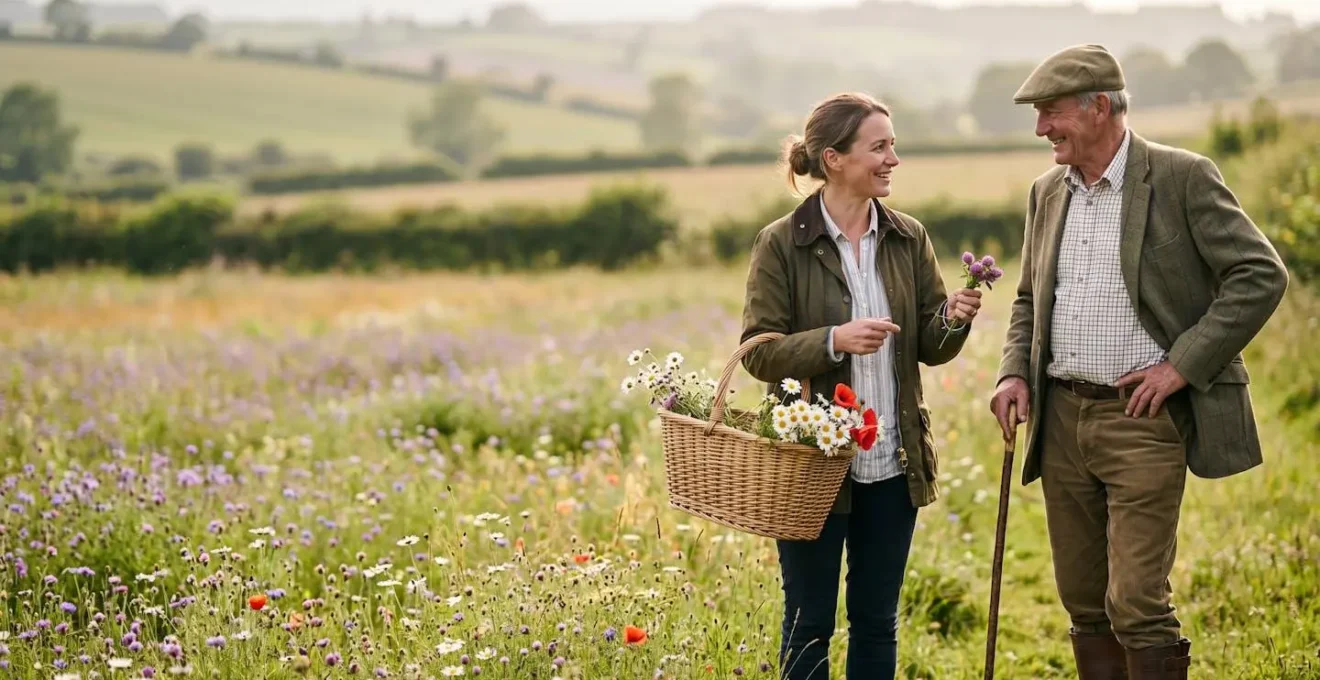
This partnership model is the heart of ethical stewardship. It ensures that harvesting is done sustainably, with knowledge and consent, and contributes to the local rural economy. It also provides a powerful story for your brand, demonstrating a real commitment to legal and ethical sourcing. To navigate this correctly, a clear checklist is essential.
Your Action Plan: Legal and Ethical Sourcing Checklist
- Always obtain explicit written permission from the landowner before harvesting any quantity for commercial purposes.
- Never uproot any wild plant without permission; only harvest flowers, fruit, and foliage when permitted.
- Check the status of the land: avoid harvesting from Sites of Special Scientific Interest (SSSIs) or National Nature Reserves (NNRs) without specific permission from the relevant body (e.g., Natural England).
- Know the protected list: Do not pick any species listed on Schedule 8 of the Wildlife and Countryside Act (1981).
- Establish formal partnerships with landowners, creating a legal, sustainable, and transparent supply chain for your native flora.
Operating within the law is not just about compliance; it’s about respecting the very landscapes from which you draw inspiration and materials. It is the only way to build a truly sustainable floristry business.
Bee-Friendly Blooms: Why Natives Are Better for Insects Than Hybrids?
The most compelling reason for a conservationist florist to prioritise native species lies in their ecological function. A flower is not just a pretty object; it’s a service station for pollinators. Native British plants and native British insects have co-evolved over millennia, resulting in perfectly matched relationships. The shape of a foxglove bell is perfectly designed for a bumblebee to crawl into; the simple, open face of a daisy is an ideal landing pad for a host of different insects. This is the essence of ecological function.
Many modern, cultivated hybrids have been bred for human aesthetic preferences—more petals, unusual colours, or larger sizes. Often, this comes at a direct cost to wildlife. As one study notes, “Double-flowered cultivars were the least attractive. The reproductive organs in double-flowered varieties have been modified into additional petals, thus reducing the quantity and accessibility of floral rewards.” These ‘improved’ flowers are often sterile, offering little to no pollen or nectar, making them floral deserts for a hungry bee.
Double-flowered cultivars were the least attractive. The reproductive organs in double-flowered varieties have been modified into additional petals, thus reducing the quantity and accessibility of floral rewards.
– Research findings on Echinacea cultivars, Piedmont Master Gardeners pollinator study
Scientific evidence consistently shows that pollinators are not fooled by these flashy imposters. They actively seek out the real deal. In a direct comparison, research from Oregon State University found that pollinators favored wild native plants 37% of the time vs. only 8% preferring cultivars. By choosing a native Red Clover over a sterile hybrid, a florist is making a direct contribution to the food supply of local pollinators. This is particularly crucial given that over two-thirds of pollination in Britain is performed by wild bees, not honeybees, and these wild species are often specialists that depend on specific native plants.
When you choose a native flower, you are choosing to feed the bees, butterflies, and hoverflies that form the foundation of our ecosystem. Your vase becomes a tiny, temporary habitat—a statement that your business supports life, not just aesthetics.
Flower Farms as Habitats: How Growing Flowers Helps UK Bees?
While ethical foraging from established partnerships is one part of the solution, the most sustainable and scalable model for conservation-grade floristry is cultivation. Encouraging and supporting British flower farms that prioritise native and near-native species is a direct investment in habitat creation. A field of commercially grown native flowers is not just a crop; it is a large-scale pollinator restaurant, a buffer against habitat loss, and a vital part of the rural economy.
The need for such habitats is urgent. Pollinators are not just a charming part of the countryside; they are essential agricultural workers. In the UK, the service of insect pollination has been valued at £400 million per year to our food crops. Yet, these vital partners are in crisis. Habitat loss, pesticide use, and climate change have led to a staggering decline. A major study revealed a net loss of over 2.7 million occupied 1 km² grid cells across all pollinator species between 1980 and 2013 in the UK. This isn’t a future threat; it is a documented, ongoing ecological collapse.
In this context, a flower farm becomes a radical act of conservation. Unlike a sterile monoculture of grain, a well-managed flower farm offers a succession of blooms from spring to autumn, providing a continuous food source for a wide range of pollinators. By planting rows of scabious, knapweed, and yarrow, flower farmers are actively creating the very habitats that have been disappearing from our landscape. They are, in effect, farming biodiversity.
As a florist, every stem you buy from such a farm is a vote for this model. You are not just purchasing a product; you are funding habitat restoration. Your support allows these farmers to dedicate more land to ecologically rich planting, creating a virtuous cycle where commercial demand directly fuels positive environmental change.
The 10% Foraging Rule: How to Gather Wild Materials Without Harming Nature?
Even with landowner permission, the act of harvesting from the wild comes with great responsibility. The core principle of ethical stewardship is to leave a place better, or at least no worse, than you found it. The goal is to harvest in a way that is regenerative, or at least has a neutral impact, ensuring the plant population remains healthy and can continue its ecological role. Several guidelines have been developed by conservation bodies to help foragers make responsible choices.
A well-known guideline is the “one in twenty rule” from the Botanical Society of Britain and Ireland (BSBI), which provides a simple, memorable metric for sustainability.
If there are twenty, it is reasonable to take one.
– BSBI (Botanical Society of Britain and Ireland), BSBI Code of Conduct
This translates to a 5% harvest rate, a very conservative and safe margin. Others suggest a ‘30% rule’, never taking more than a third of a plant or colony. Whichever specific number you follow, the underlying principle is the same: take only a small fraction. Never take the first bloom you see, as it may be a crucial early food source. Never take the last, as it is needed for seed production. Your harvest should be unnoticeable to the casual observer and, more importantly, to the ecosystem.
This careful approach requires observation and record-keeping. A responsible forager returns to the same spots year after year, monitoring the health of the plant populations. Are they as strong as last year? Are they spreading? If you see any sign of decline, you must reduce or cease harvesting from that area. The ultimate sustainable source, however, is one you create yourself. For a commercial florist, dedicating a small patch of a garden or allotment to growing your own ‘wild’ natives provides a reliable, legal, and impact-free supply of your most-used materials.
Mindful harvesting is not a limitation; it is a discipline. It forces you to be more observant, more connected to the seasons, and more aware of your impact, which are the defining traits of a true conservationist-florist.
Key takeaways
- Prioritise native plants to provide essential food and habitat for declining UK pollinators.
- Always obtain explicit landowner permission for any commercial harvesting; building formal partnerships is the only legal and ethical model.
- Master professional conditioning techniques to ensure native blooms have excellent vase life, debunking myths about their fragility.
- Use storytelling and transparency about provenance to market native flora as a premium, sustainable, and artisanal choice.
Crafting Identity with Regionally Grown Blooms
The ultimate expression of conservation-grade floristry is to create designs that are not just beautiful, but are deeply rooted in a specific place. Using regionally grown native blooms allows you to craft a powerful botanical narrative that connects your clients to the unique landscape and cultural heritage of a particular part of the UK. This moves beyond generic “British grown” to a much more specific and compelling story.
A fascinating framework for this is the County Flowers project, an initiative that assigned a native wildflower to each county, creating a botanical map of regional identity. This provides a ready-made story for florists. An arrangement for an event in Yorkshire could thoughtfully incorporate Harebells, the county’s official flower, while a design for a Cornish wedding could celebrate the coastal resilience of Thrift. This approach provides a deep layer of meaning and personalisation that cannot be achieved with generic imported flowers.
Case Study: The County Flowers of the United Kingdom
In 2002, the charity Plantlife conducted a public survey to assign native wildflowers to each UK county, creating a unique link between local identity and botany. For example, Norfolk is represented by the Poppy, Yorkshire by the Harebell, and other regions like Scotland and Wales have their own specific floral emblems. This project gives commercial designers a powerful tool to create geographically-grounded floral narratives, connecting clients directly to the specific landscapes and cultural heritage of the British Isles and celebrating regional pride through flowers.
This regional focus allows a florist to develop a signature style based on their local ecology. A florist in the Scottish Highlands will have a different palette (heather, harebells) to one in the Welsh valleys (Welsh Poppy, Ragged Robin). The table below offers a starting point for thinking about these regional palettes, linking specific native flowers to their character and design potential.
| UK Region | Signature Native Flowers | Bloom Period | Design Characteristics |
|---|---|---|---|
| Scotland | Scottish Heather (Calluna vulgaris), Harebells (Campanula rotundifolia) | July-September (Heather), June-August (Harebell) | Purple moorland palette, delicate bell shapes, upland character |
| Wales | Welsh Poppy (Meconopsis cambrica), Ragged Robin (Lychnis flos-cuculi) | June-August (Poppy), May-August (Ragged Robin) | Yellow and pink vibrant hues, damp meadow texture |
| Cornwall | Thrift/Sea Pink (Armeria maritima), Cornish Heath (Erica vagans) | April-July (Thrift), July-September (Heath) | Coastal resilience, pink coastal palette |
| English Woodlands | Bluebells (Hyacinthoides non-scripta), Wood Anemone (Anemone nemorosa) | April-May (both) | Carpet-forming spring blooms, woodland blue and white palette |
| Yorkshire | Harebell (official), White Rose (Rosa × alba – symbolic cultivar) | June-August (Harebell) | Delicate blue bells, cultural heritage symbolism |
By embracing the flowers of your region, your work transcends decoration. It becomes a form of place-making, an expression of local identity, and a celebration of the unique biodiversity that makes your corner of Britain special. This is the culmination of your journey as a florist and a conservationist.