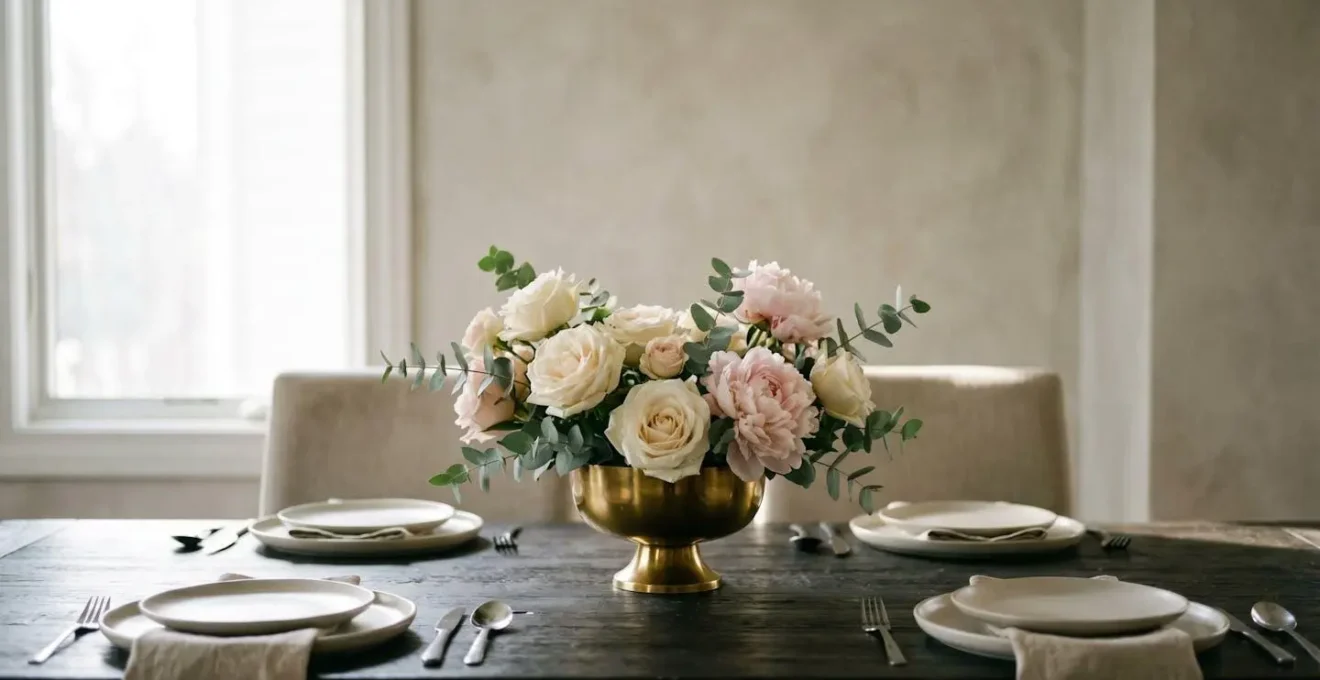
The ultimate goal of a table centerpiece is not simply to be beautiful, but to actively foster connection and conversation.
- Effective design respects sightlines, keeping arrangements below 14 inches or well above eye level to encourage guest interaction.
- A successful tablescape prioritizes the dining experience by avoiding heavily scented flowers that compete with the meal’s aroma.
Recommendation: Think like a designer by prioritizing social architecture over sheer scale. A centerpiece’s success is measured in the quality of conversation it allows, not just the visual statement it makes.
As an event stylist, I’ve witnessed a common tragedy unfold at countless beautiful dinners: the “wall of flowers.” A host invests time and resources into a stunning, towering floral arrangement, only to realize their guests are forced to play a frustrating game of peek-a-boo all night. The centerpiece, intended to be a unifier, becomes a barrier. We’ve been taught to focus on matching colors, themes, and using the freshest blooms, and while these elements matter, they miss the most critical point.
The conventional wisdom about tablescaping often revolves purely around aesthetics. But what if I told you the most important function of a centerpiece isn’t decorative, but social? A truly successful design is a piece of social architecture, engineered to enhance connection, not obstruct it. It’s about managing sightlines, curating a sensory experience, and creating an atmosphere that invites easy, flowing conversation. Forget simply decorating the table; it’s time to start designing for human interaction.
This guide will walk you through the core principles of designing for conversation and impact. We will deconstruct the rules of social architecture for your table, moving from the foundational geometry of sightlines to the subtle science of scent and the safe integration of light. By the end, you’ll be equipped to create centerpieces that are not only beautiful but are also powerful tools for creating memorable, engaging experiences for your guests.
Summary: Mastering the Social Architecture of Your Tablescape
- The 14-Inch Rule: Why Flowers Should be Below Chin or Above Head Height?
- Food and Flowers: Why Heavily Scented Flowers Ruin the Meal?
- Footed Bowls: How Elevating the Flowers Creates More Table Space?
- Candle Safety: How Far Should Flowers Be from the Flame?
- Round vs Rectangular: Matching the Centerpiece to the Table Shape
- The 14-Inch Rule: Why Flowers Should be Below Chin or Above Head Height?
- Bud Vase Clusters: How to Group Vases for Maximum Impact?
- Low Tablescapes
The 14-Inch Rule: Why Flowers Should be Below Chin or Above Head Height?
The most fundamental principle in centerpiece design is the preservation of sightlines. A beautiful arrangement is wasted if it prevents guests from seeing and connecting with each other across the table. This is where the 14-Inch Rule comes into play. It dictates that for a centerpiece to be successful, its main floral mass must be either below chin height (typically under 14 inches) or well above head height when guests are seated.
This isn’t just arbitrary advice; it’s based on the simple geometry of human interaction. The space between your guests’ faces is sacred territory for conversation, relying on eye contact and non-verbal cues. An arrangement that intrudes upon this space effectively builds a wall. Interior design experts confirm that centerpieces more than 12 inches tall block guests’ view and directly inhibit the natural rhythm of conversation. The goal is to create an unobstructed plane for conversation flow.
As you can see in this example, a low arrangement defines the center of the table without dominating it. It adds beauty and color but respects the primary function of the dining table: to bring people together. By keeping the bulk of the arrangement below the 12 to 14-inch mark, you ensure that the flowers frame the interaction rather than becoming a frustrating obstacle to it.
Food and Flowers: Why Heavily Scented Flowers Ruin the Meal?
A successful dining experience is a symphony of senses, with the aroma of the food playing a leading role. The mistake many hosts make is introducing a competing scent through their floral arrangements. While a fragrant bouquet of lilies, hyacinths, or gardenias is wonderful in a foyer, placing it on a dining table creates sensory competition. The powerful perfume of certain flowers can clash with, or even overpower, the delicate aromas of the food and wine, dulling the palate and diminishing the culinary experience.
Think of it as a sensory hierarchy: at the dining table, the chef’s creation must always be the star. Your floral choices should act as a supporting character, not try to steal the scene. Heavily scented blooms can muddle the flavors of a dish. Imagine trying to appreciate the subtle notes of a pinot noir while inhaling the potent fragrance of a stargazer lily; it’s an olfactory conflict that the wine will almost always lose. To protect the integrity of the meal, you must curate the table’s scent profile with as much care as its visual design.
Instead of potent florals, consider arrangements that complement the culinary theme. Sprigs of rosemary, thyme, or mint can add a subtle, food-friendly fragrance. This doesn’t mean all flowers are forbidden. As noted by restaurant design experts, lightly scented blooms, when chosen carefully, can enhance the ambiance. Flowers like ranunculus, tulips, dahlias, or anemones provide stunning visual appeal with little to no scent, ensuring the olfactory palate remains focused on the meal.
Footed Bowls: How Elevating the Flowers Creates More Table Space?
One of the biggest challenges on a dining table is the competition for space. Between place settings, wine glasses, serving dishes, and candles, every square inch is valuable. A traditional low bowl centerpiece, while respecting sightlines, can consume a large footprint. This is where the footed bowl, or pedestal bowl, becomes a brilliant strategic tool for reclaiming precious table real estate.
By elevating the floral arrangement even just a few inches, a footed bowl achieves two critical goals simultaneously. First, it lifts the visual mass of the flowers, making the arrangement feel more significant and intentional without blocking the view. It separates the design from the “clutter” on the table surface. Second, and more practically, it creates valuable negative space underneath the bowl. This newly opened-up area is perfect for placing salt and pepper shakers, small votive candles, place cards, or even allowing serving platters to be passed more easily.
The pedestal itself becomes a design element. A glass stem can create an airy, floating effect. A ceramic or stone base can add a rustic, earthy feel, while a brass or metal pedestal lends a touch of glamour. This allows you to not only manage space but also to reinforce your event’s aesthetic. Using a footed bowl is a sophisticated move that demonstrates a deep understanding of both form and function, proving that a centerpiece can add beauty while simultaneously making the table feel more spacious and organized.
Candle Safety: How Far Should Flowers Be from the Flame?
Nothing creates ambiance like the warm, flickering glow of candlelight. It brings an unparalleled sense of intimacy and magic to a tablescape. However, combining the open flame of candles with flammable materials like dried foliage and flowers requires careful planning and a strict adherence to safety protocols. The goal is to achieve a beautiful synergy between flame and flora, not to create a fire hazard. This is the practical side of atmospheric engineering.
The primary rule is distance. A candle’s flame and its “heat radius” must be respected. Any part of your floral arrangement—a leaf, a petal, a trailing vine—should be positioned far enough away that it cannot possibly come into contact with the flame, even if a slight breeze were to pass through the room. A good rule of thumb is to maintain several inches of clear space around each candle. For an added layer of safety, using glass hurricane holders or other protective vessels for your candles is always the best practice. They shield the flame from drafts and create a physical barrier between the heat source and your florals.
The beauty of this approach is that it forces a more thoughtful and dynamic design. Instead of clustering everything together, you create pockets of light and shadow, allowing the candlelight to illuminate the flowers from the side, highlighting their texture and color in a dramatic way. This intentional separation creates a tablescape that feels both safer and more visually sophisticated.
Your Action Plan: Safe Flame and Flora Synergy
- Distance Rule: Position flowers and foliage several inches away from the candle’s wick and heat radius. Ensure no botanical element can droop or fall into the flame.
- Material Selection: If incorporating botanicals near candles, use small, dried petals rather than whole flowers or large leaves, as they pose less of a risk if a spark occurs.
- Container Strategy: Always use stable, appropriate candle holders. Opt for wider containers or hurricane lamps to create a physical barrier between the flame and the arrangement.
- Monitoring Protocol: Never leave burning candles unattended. Always be present and watchful when combining open flames with any decorative elements.
Round vs Rectangular: Matching the Centerpiece to the Table Shape
A one-size-fits-all approach to centerpiece design is a recipe for failure. The shape of your table is not just a logistical detail; it’s a fundamental directive that should guide the form and structure of your floral arrangements. Matching the centerpiece to the table’s geometry is crucial for creating a balanced and harmonious visual flow.
For round or square tables, the design logic is straightforward. These shapes have a natural center point, which calls for a single, central arrangement. A solitary, impactful centerpiece acts as a visual anchor, drawing guests’ eyes inward and reinforcing the intimate, communal nature of the table. A cluster of smaller vases or a sprawling linear design would feel disjointed and fight against the table’s inherent symmetry. The key here is to concentrate the visual weight in one place.
Rectangular or long banquet tables demand a completely different strategy. A single centerpiece, no matter how beautiful, will inevitably leave guests at the far ends of the table feeling excluded. The solution is to create a sense of linear flow that extends the design’s presence along the length of the table. This can be achieved in several ways:
- A series of three or more smaller, identical arrangements spaced evenly down the center.
- A “runner” of interconnected greenery and flowers that snakes down the table’s midline.
- An eclectic collection of bud vases in varying heights and shapes, creating a whimsical, deconstructed tablescape.
By spreading the visual interest, you ensure every guest has a beautiful view and the entire table feels cohesive and thoughtfully designed.
The 14-Inch Rule: Why Flowers Should be Below Chin or Above Head Height?
Now that we’ve established the foundational 14-inch rule for preserving conversation, it’s time to explore the exceptions. Like any good rule in design, it can be broken with intention and purpose. Moving beyond the low centerpiece opens up opportunities for creating dramatic, high-impact designs, but only if you understand the two valid ways to go “tall.” The goal is still to protect the conversational space, but the strategy shifts from going under it to going completely over it.
The first strategy involves creating arrangements with significant architectural impact. This is for grand events in large venues. As floral designer Rachel Cho explains, “Tall centerpieces create a sense of grandeur and drama—perfect if you’re planning a formal reception.” In a ballroom with high ceilings, low centerpieces can feel lost and underwhelming. Tall, soaring arrangements help to draw the eye upward, filling the vertical space and making the room feel more intimate and defined. The key is that the bulk of the floral design begins well above eye level, leaving the sightlines clear beneath them.
This leads to the second strategy: the “elevated cloud.” These arrangements utilize very tall, slender vases or stands (like candelabra or metal structures) to lift the entire floral composition high above the guests’ heads. The stems are kept bare and thin, creating a “see-through” effect at eye level. The flowers then appear to float over the table, creating a magical, immersive canopy. This approach provides the drama of a tall arrangement while meticulously preserving the all-important line of sight for conversation below.
Bud Vase Clusters: How to Group Vases for Maximum Impact?
For those seeking an alternative to a single, structured centerpiece, the bud vase cluster offers a modern, whimsical, and highly effective solution. The principle is simple: while a single bud vase can feel lonely and insignificant, a curated grouping of them creates a collective impact that is greater than the sum of its parts. This approach allows for a deconstructed, organic tablescape that feels both effortless and intentionally designed.
The key to a successful cluster is to follow the rule of odds. Groupings of three, five, or seven vases are almost always more visually appealing than even-numbered groups. This creates a more dynamic and less static composition. Within your cluster, play with variety:
- Vary Heights: Combine short, medium, and tall vases to create a miniature skyline that draws the eye.
- Mix Textures: Pair smooth glass with ribbed ceramic or colored stoneware to add depth and interest.
- Diversify Blooms: Use a mix of single-stem flowers. For example, one vase might hold a single rose, another a sprig of delicate waxflower, and a third a textured piece of greenery.
This approach creates a visual rhythm down the length of a long table. Instead of one focal point, you create a series of small, delightful moments for the eye to discover. It’s a fantastic way to stretch a floral budget while still achieving a lush, full look.
To unify your cluster, you can place the grouping on a small tray, a slice of wood, or a mirrored placemat. This defines the “centerpiece zone” and prevents the small vases from looking like scattered afterthoughts. The result is a personalized and charming tablescape that invites guests to look closer.
Key Takeaways
- Prioritize sightlines above all else. Keep floral arrangements below 14 inches or well above eye level to foster guest conversation.
- Protect the dining experience by choosing flowers with little to no scent. The aroma of the food should always be the star.
- Match the shape of your centerpiece to the shape of your table—a single arrangement for round tables, and a linear design for rectangular ones.
Low Tablescapes
We’ve explored the rules, the exceptions, and the specific tactics. Now, let’s synthesize it all into the unifying concept of the “low tablescape.” A truly masterful low tablescape is more than just a short flower arrangement; it’s a holistic ecosystem of design elements working in harmony. It’s the thoughtful interplay of low florals, delicate bud vase clusters, the strategic glow of candlelight, and the texture of your linens and tableware. It’s an entire environment designed at a low altitude.
The beauty of focusing on a low tablescape is that it forces you to think horizontally. You move beyond the idea of a single “centerpiece” and begin to design a journey for the eye across the entire table. This landscape can undulate with the varied heights of bud vases, be anchored by the solid form of a footed bowl, and be illuminated by the soft glow of safely placed candles. It is a design that is meant to be experienced from a seated position, one that feels lush and abundant up close without ever becoming a barrier.
Ultimately, designing a great tablescape is an act of hospitality. It’s a non-verbal way of telling your guests that you have thought about their comfort and their experience. By prioritizing conversation flow, sensory harmony, and safety, you are creating a space where connection can flourish. You are setting the stage for memories to be made. The flowers are not the main event; they are the beautiful backdrop for human interaction.
Now, you are equipped with the principles of social design. Go beyond just decorating your table; start engineering connection and creating unforgettable experiences for your guests.