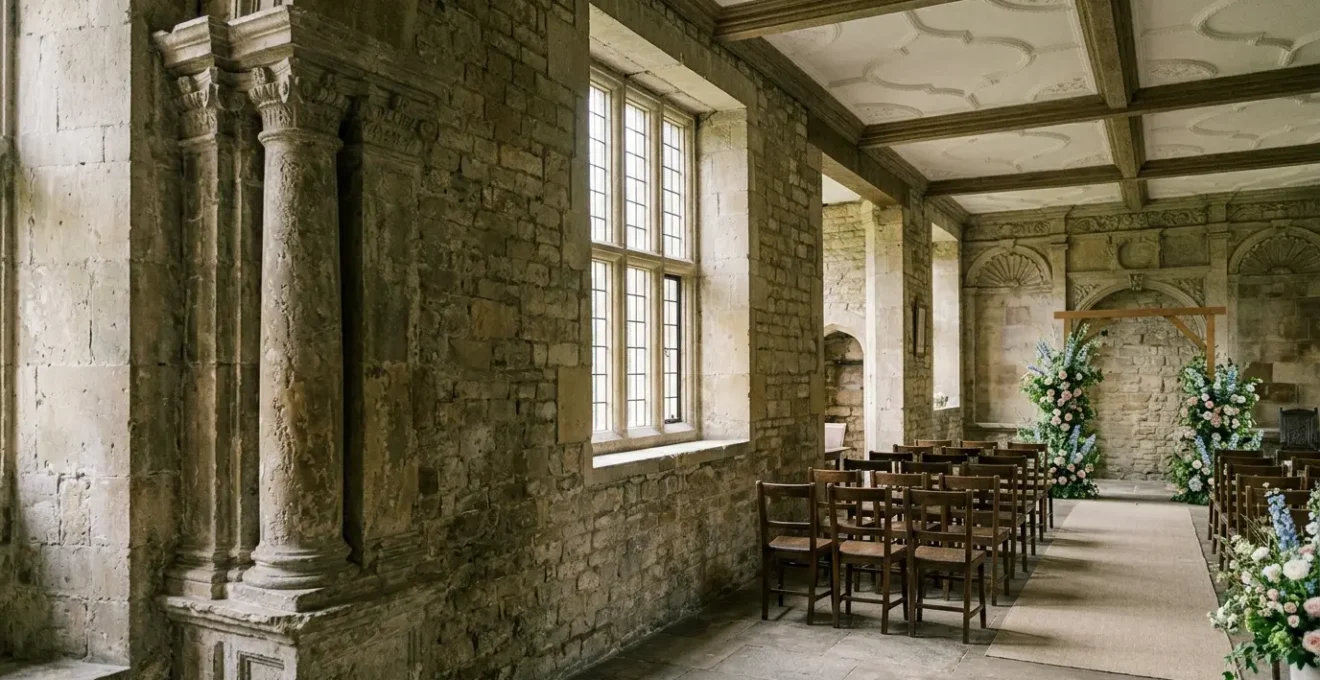
Creating a truly cohesive floral concept for a country house wedding isn’t about matching colours; it’s about crafting a narrative that honours the venue’s unique soul.
- Architectural features, not just the season, should dictate your flower shapes and textures for a design that feels truly integrated.
- Focusing your budget on high-impact focal points creates more ‘wow’ factor than scattering small arrangements throughout the entire space.
Recommendation: Start by ‘listening’ to your venue—its history, materials, and light will guide you to a design that feels both personal and timeless.
Envision your perfect country house wedding. The historic stone, the rolling green lawns, the sense of timeless elegance. Now, imagine the flowers. For many couples planning their celebration in a cherished venue, perhaps even a National Trust property, the immediate instinct is to turn to Pinterest boards and colour palettes. The common advice revolves around matching your blooms to the bridesmaids’ dresses or choosing a rigid theme. While these are starting points, they often miss the very essence of what makes a floral design feel truly breathtaking and personal.
The secret to an unforgettable floral concept lies not in simple coordination, but in storytelling. It’s about moving beyond surface-level aesthetics to engage in a deeper dialogue with your chosen venue. A truly cohesive design doesn’t just occupy a space; it becomes part of its fabric. It listens to the architecture, honours the season, and ultimately, tells your unique story in the language of flowers. This is the art of narrative botany—where every stem and petal has a purpose beyond its colour.
But how do you translate this philosophy into practical decisions? How do you choose between the rustic charm of a barn and the stately elegance of a manor house? How do you navigate the realities of seasonal availability and budget constraints without sacrificing impact? This guide is designed to walk you through that process. We will explore how to let your venue’s architecture inform your floral style, what to realistically expect from local British growers, how to budget intelligently for maximum effect, and how to preserve the memories long after the day is done.
This article provides a comprehensive framework for designing a floral concept that feels authentic, considered, and deeply connected to your celebration. Follow along as we unpack the strategies to transform your wedding flowers from mere decoration into a meaningful and immersive experience.
Contents: A Guide to Cohesive Floral Storytelling
- Barn vs Manor House: How to Adapt Your Floral Style to the Architecture?
- British Flowers in June: What Can You Actually Get from Local Growers?
- The 30% Rule: How to Estimate Stem Quantities to Avoid Running Out?
- Bouquet Preservation: Pressing vs Resin, Which Lasts Longer?
- High Impact, Low Cost: Where to Spend and Where to Save on Wedding Flowers?
- British Flowers in June: What Can You Actually Get from Local Growers?
- Modern vs Traditional: Why Tropicals Don’t Suit a Cottage Interior?
- From Venue to Vows: Weaving Your Personal Story into the Flowers
Barn vs Manor House: How to Adapt Your Floral Style to the Architecture?
The first step in creating a cohesive floral concept is to listen to your venue. A flower that looks magnificent in a grand manor house might feel out of place in a rustic barn, and vice-versa. This isn’t about rigid rules, but about creating a harmonious architectural echo where your florals feel like a natural extension of the space. The key is to look beyond the general ‘style’ and analyse the specific architectural elements you have to work with.
In a historic manor house, you are often dealing with high ceilings, ornate plasterwork, grand fireplaces, and symmetrical layouts. The floral design should reflect this formality and scale. Think of tall, elegant arrangements with vertical lines, such as delphiniums, foxgloves, or gladioli, that draw the eye upwards and complement the ceiling height. Symmetrical mantelpiece displays and classic urn arrangements work beautifully here, echoing the refined and structured nature of the building.
A converted barn presents a completely different canvas. Here, the beauty lies in the raw textures of aged wood, exposed beams, and vast, open volumes. The floral style should embrace this rustic, organic character. Instead of formal vertical arrangements, prioritize horizontal and suspended installations. Garlands snaking along beams, hanging floral ‘meadows’, and arrangements filled with textured elements like grasses, thistles, and seed pods create a textural dialogue with the venue’s materials. The goal is to enhance the inherent charm, not to fight against it.
Consider the perspective of your guests. In a barn, a hanging installation will be viewed from below, making cascading elements like amaranthus particularly effective. In a manor, arrangements are often viewed at eye-level, requiring a clear ‘front’ and meticulous placement. By allowing the architecture to guide your hand, the florals will feel rooted, intentional, and seamlessly integrated into the story of your day.
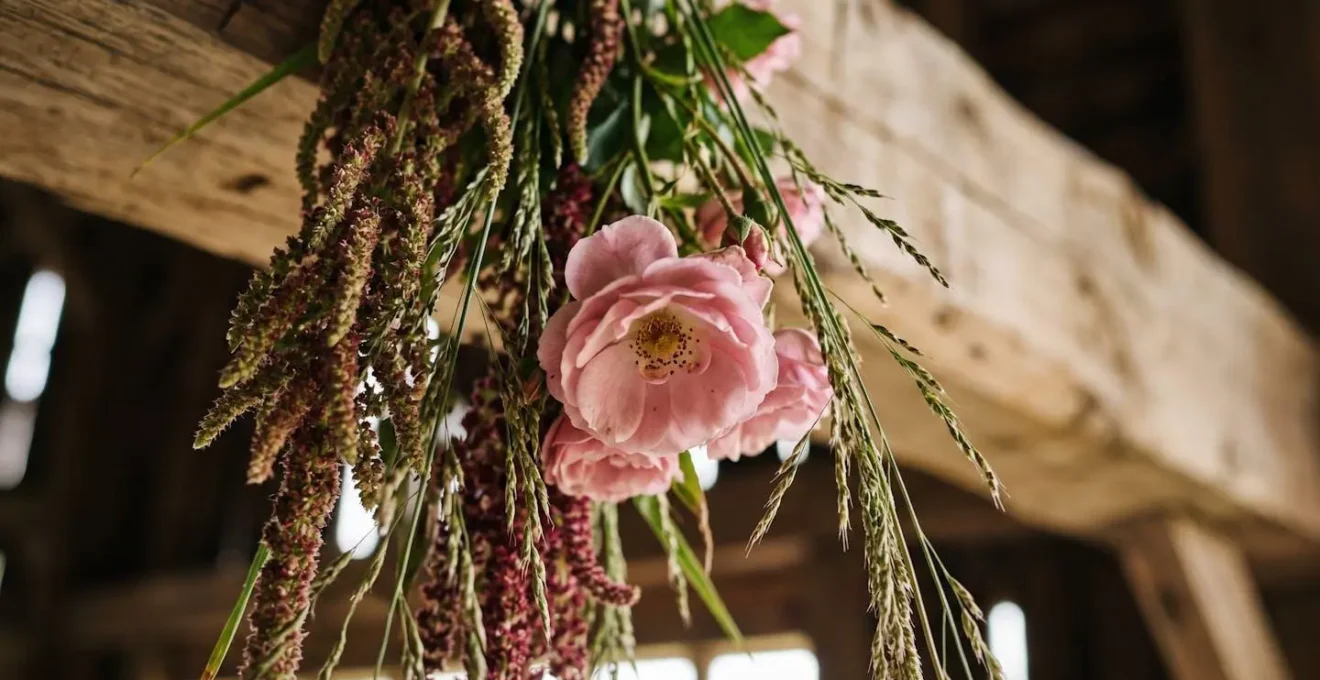
As this visual demonstrates, designing for the viewing angle creates an immersive experience. The choice of cascading florals creates movement and draws the eye up into the beautiful timber structure of the barn, making the architecture itself a star of the show. This is how florals and venue work in perfect harmony.
British Flowers in June: What Can You Actually Get from Local Growers?
Choosing to use seasonal, British-grown flowers is the single most powerful way to achieve temporal authenticity for your wedding. It roots your celebration in a specific time and place, creating a unique floral signature that cannot be replicated in any other month. For a June wedding in the UK, you are in luck—it is a time of glorious abundance, when the English garden is at its most romantic and generous.
The undisputed stars of June are peonies and garden roses. Peonies are at their absolute peak from late May through June, offering huge, ruffled blooms in shades from pure white to deep crimson. English garden roses, celebrated for their complex scent and delicate petal structures, are also in their prime. According to British flower seasonality guides, their peak abundance is in June, continuing through the summer months. These provide the luxurious, focal point flowers for bouquets and centrepieces.
However, a truly beautiful design relies on the supporting cast as much as the stars. Local growers across the UK, often connected through networks like the brilliant Flowers from the Farm, provide an incredible array of ‘unsung heroes’. In June, this includes the frothy chartreuse of Alchemilla mollis (Lady’s Mantle), the delicate white lace of Orlaya grandiflora, and the first flush of sweet peas, which add incredible scent and movement. Scented herbs like mint and rosemary can also be incorporated to create a multi-sensory experience.
Working with local growers requires a degree of flexibility. British weather is unpredictable, and a late frost could affect a specific crop. The best approach is to communicate your desired colour palette and overall aesthetic to your florist, rather than demanding a specific, non-negotiable flower. A good florist, working with their local growers, will always have beautiful, seasonal alternatives to ensure your vision is realised, capturing the true essence of a British June garden.
The 30% Rule: How to Estimate Stem Quantities to Avoid Running Out?
Once you have a vision, the practicalities of ordering begin. One of the most common anxieties for couples is understanding how many flowers are actually needed. Under-ordering can lead to sparse arrangements, while over-ordering is a waste of budget. As a luxury florist, my goal is precision and abundance without excess. We use a combination of ‘stem recipes’ for each arrangement and a crucial buffer known as the 30% rule.
First, we break down the wedding into individual floral components: bouquets, buttonholes, centrepieces, and larger installations. Each has a ‘recipe’. For example, professional florists typically use around 24-36 stems for a lush bridal bouquet, comprising a mix of focal flowers (like roses), secondary blooms, delicate fillers, and foliage. A bridesmaid’s bouquet would be smaller, perhaps 15-20 stems. A simple buttonhole might only need 3 stems: one focal flower, a sprig of filler, and a leaf.
Once we have a total stem count for all the planned arrangements, we apply the buffer. This is not a random number; it’s a tiered system to account for breakages, wilting, or blooms that simply don’t open perfectly. For hardy foliage, a 15% buffer is often enough. For standard, robust blooms like roses and carnations, a 30% buffer is the industry standard. However, for exceptionally delicate and fragile flowers like cosmos, dahlias, or sweet peas, a 40-50% buffer is essential to guarantee perfection. This foresight is what separates amateur arrangements from professional, flawless execution.
Your Action Plan: Estimating Wedding Flower Stem Counts
- Calculate Personal Flowers: Start by listing all personal items and their typical stem counts. A bridal bouquet requires 25-30 stems; a bridesmaid’s, 12-15; a standard buttonhole, 1-3; and a corsage, 2-6 stems. Tally these first as they are non-negotiable.
- Recipe for Centrepieces: Define the recipe for one guest table centrepiece based on your desired size and style. Count the stems needed for that single arrangement, then multiply by the number of tables.
- Identify High-Impact Installations: List any large-scale arrangements like arches or mantelpiece displays. These require bespoke recipes and should be estimated with your florist, but block out a significant stem count for them.
- Apply the Tiered Buffer System: Once you have a total raw stem count, apply a strategic buffer. As a baseline, leading UK suppliers advise adding +15% for hardy foliage, a crucial +30% for standard flowers like roses, and a safer +40-50% for very delicate blooms.
- Consolidate and Round Up: Add all your calculated numbers together (personals + centrepieces + installations + buffer). Finally, round up your final stem counts for each flower type to the nearest 10. This gives you your final order quantity with a professional safety margin.
Bouquet Preservation: Pressing vs Resin, Which Lasts Longer?
Your bridal bouquet is more than just a collection of flowers; it’s a central part of your wedding day story, carried with you through the most significant moments. It’s no wonder that so many brides wish to preserve this beautiful arrangement. Today, the two most popular methods are pressing flowers into a 2D artwork and encasing them in 3D resin blocks. Each has a distinct aesthetic and longevity, and the best choice often depends on the type of flowers in your bouquet.
Pressing is a traditional art form that transforms your bouquet into a delicate, graphic piece. It works best for flowers with flat faces, like cosmos, ranunculus petals, and delicate foliage. The process involves carefully dismantling the bouquet and pressing each element individually before arranging them in a frame. The result is a beautiful, two-dimensional piece of botanical art that can hang on your wall for years. While the colours may gently fade over time to softer, more vintage tones, the form and memory are perfectly preserved.
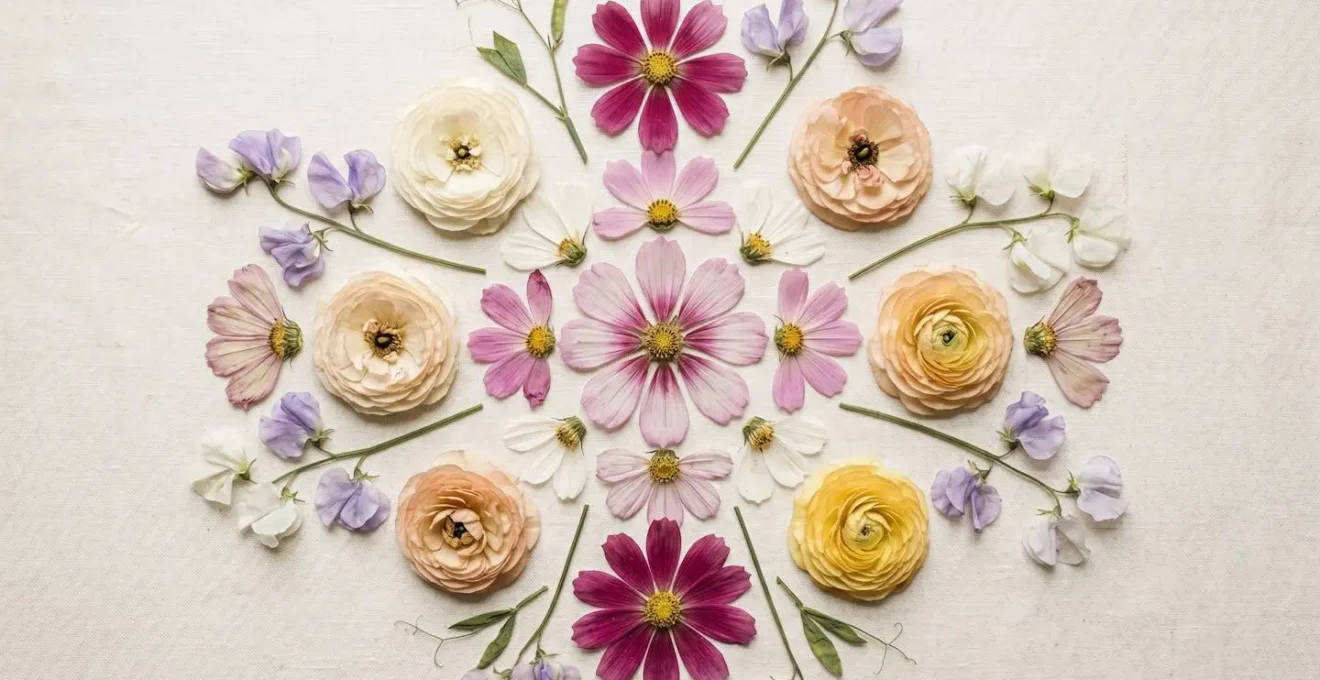
In contrast, resin encasing aims to capture the flowers in their original three-dimensional form. This method is ideal for more robust, globular flowers like full ranunculus, hardy roses, and thistles. After a careful drying process, the blooms are suspended in clear epoxy resin, creating sculptural objects like paperweights, coasters, or display blocks. This method offers incredible longevity, with the potential to last for decades with minimal change if kept out of direct sunlight. It freezes a moment in time, preserving the flower’s shape from all angles.
Ultimately, the choice is a personal one. Do you prefer a symbolic, artistic representation of your bouquet (pressing) or a sculptural, life-like memento (resin)? The following table provides a clear comparison of the most common methods available.
| Method | Processing Time | Longevity | Best Flower Suitability | Display Format |
|---|---|---|---|---|
| Pressing | 2-3 weeks | Years (with some color fading) | Flat-faced flowers like cosmos, ranunculus petals | 2D framed art, graphic piece |
| Resin Encasing | 3-7 days curing (after drying) | Decades with minimal change | Dense globular flowers like ranunculus, hardy blooms | 3D suspended sculpture (paperweights, coasters, display blocks) |
| Freeze-Drying (Professional) | 6-12 weeks | Decades (near-original appearance) | Most flower types; preserves 3D form and color exceptionally | Shadow box, glass dome, original bouquet shape |
| Air Drying | 2-4 weeks | Years (muted vintage tones) | Sturdy flowers like roses, lavender, greenery | Classic dried arrangement, rustic display |
High Impact, Low Cost: Where to Spend and Where to Save on Wedding Flowers?
While flowers are a transformative element of any wedding, the budget is a real-world consideration for every couple. The key to a sensational yet sensible floral scheme is not to cut corners everywhere, but to be strategic. It’s about identifying where to invest for maximum visual impact and where to exercise restraint. As a general guide, industry professionals typically recommend allocating around 8-10% of your total wedding budget to floristry.
The most important principle is to concentrate your spending on high-visibility focal points. These are the areas that will be photographed the most and will have the biggest influence on the atmosphere. Your personal flowers—the bridal bouquet in particular—are non-negotiable areas to invest in. They are in almost every formal photo and are an intimate expression of your style. The second key area is the ceremony backdrop. Whether it’s an arch, a mantelpiece, or two grand urns, this is the setting for the most pivotal moment of your day. A spectacular ceremony piece creates an unforgettable emotional and visual anchor.
So, where can you save? Instead of placing a small, forgettable arrangement on every single surface, be selective. You can create more impact with one incredible installation than with twenty tiny bud vases. For guest tables, consider a mix of high and low centrepieces to create visual interest without the cost of 20 identical, towering arrangements. You can also make smart choices with flower types. Repurposing ceremony arrangements to the reception (for example, moving two large urns to flank the entrance to the marquee) is another classic way to maximize your investment.
This strategic thinking is echoed by experts across the industry. As Bridgette of Botanicals By B notes in The Cost of Wedding Flowers Guide for THE WED Magazine, the approach should be focused and deliberate:
Firstly, identify the key elements that matter most to you, whether it’s your ceremony piece, bouquets, or tablescapes. Then, focus your investment on these impactful moments. Rather than scattering florals throughout every part of the venue, concentrate on creating striking, memorable focal points.
– Bridgette of Botanicals By B, THE WED Magazine
British Flowers in June: What Can You Actually Get from Local Growers?
Having established the headline acts available in a British June, the true artistry lies in how you combine them to create a specific narrative. A cohesive design is like a piece of music; it needs harmony, rhythm, and texture. It’s not just about having peonies and roses; it’s about what you pair them with to tell the story you want to tell. This is where the concept of Narrative Botany comes alive, using the full spectrum of locally-grown flowers.
Do you envision a wild, untamed meadow aesthetic? Then your florist will pair those star roses with airy, dancing stems like cow parsley (or its cultivated cousin, Orlaya), delicate grasses that catch the light, and trailing jasmine for movement. The colour palette might be soft and multi-tonal, reflecting the gentle chaos of nature. This approach is perfect for a rustic barn or a marquee set in a field, as it blurs the lines between the cultivated and the wild.
Perhaps you dream of a more classic, opulent English garden feel for your manor house setting. Here, the composition would be more structured. The peonies and roses would be supported by stately spires of delphinium and foxglove, adding height and grandeur. The fillers might be more rounded and lush, like snowball-like viburnum opulus or the soft clouds of gypsophila, creating a sense of decadent abundance. The colour palette might be more controlled—perhaps a classic combination of white, blush, and green.
The beauty of sourcing from local British growers is the unique, often-overlooked ‘character’ flowers they provide. These are the stems that add personality and prevent a design from looking generic. Think of the sculptural curves of an allium, the velvety texture of a salvia spike, or the surprising pop of colour from a geum. By trusting your florist to select these complementary blooms, you move beyond a simple bouquet and create a living tapestry that truly captures the spirit of an English summer’s day.
Modern vs Traditional: Why Tropicals Don’t Suit a Cottage Interior?
A frequent question that arises is how to achieve a ‘modern’ look within a traditional setting like a country house or cottage. Often, the temptation is to import elements from contemporary interior design, such as bold, architectural tropical flowers like monstera leaves, anthuriums, or orchids. While stunning in their own right, these plants can create a sense of narrative dissonance in a classic British interior. The reason lies in their fundamental nature.
Tropical plants evolved for bright, direct sunlight and high humidity. Their forms are often large, glossy, and starkly architectural. A British cottage or country house, by contrast, is defined by its softer, more diffused light filtering through smaller windows, and its textures of plaster, wood, and stone. Placing a bold tropical leaf in this context can feel jarring and visually heavy. British-grown flowers, on the other hand, evolved for our temperate climate and softer light. Their delicate movement, nuanced tones, and often-matte textures feel inherently at home in these spaces.
This doesn’t mean your design has to be old-fashioned. A ‘modernist traditional’ approach offers the perfect solution. This involves using authentic, seasonal British flowers but arranging them in contemporary ways. For example, instead of a mixed bouquet, imagine a mass of a single type of bloom—a huge, monochromatic cloud of gypsophila, or dozens of delphiniums clustered together for a powerful column of colour. Another modern approach is to focus on minimalism, using just a few sculptural branches of British willow or hazel with a handful of perfect blooms.
This method respects the integrity of both the venue and the season while still feeling fresh, clean, and contemporary. It proves that modernity in floral design is not about what you use, but how you use it. It’s an aesthetic that speaks of quiet confidence and a deep understanding of context, creating a look that is both modern and timeless.
Key Takeaways
- Listen to the Architecture: The most cohesive designs use floral shapes and textures that echo the venue’s materials, scale, and history, creating a natural and integrated look.
- Embrace True Seasonality: Sourcing locally-grown flowers roots your wedding in a specific time and place. Be flexible and trust your florist to work with the best of what the season offers.
- Invest in Focal Points: Concentrate your budget on high-impact areas like your bouquet and ceremony backdrop. Strategic spending creates a more memorable experience than spreading the budget thinly.
From Venue to Vows: Weaving Your Personal Story into the Flowers
We have journeyed from the grand architecture of your venue to the delicate petals of a single British-grown rose. We’ve balanced budgets and navigated the beauty of seasonality. The final, and most important, element in creating a cohesive floral concept is you. The flowers, ultimately, should be a reflection of your personal story, woven into the fabric of the venue you have so carefully chosen.
This is where all the threads come together. The architectural echo of the venue provides the stage. The temporal authenticity of seasonal flowers provides the setting and the time. But the narrative itself comes from your own memories, tastes, and emotions. Perhaps a particular scent, like lavender or sweet pea, reminds you of a cherished family garden. Perhaps the wild, untamed feel of a meadow arrangement reflects your adventurous spirits. These personal touches transform a beautiful wedding into a meaningful one.
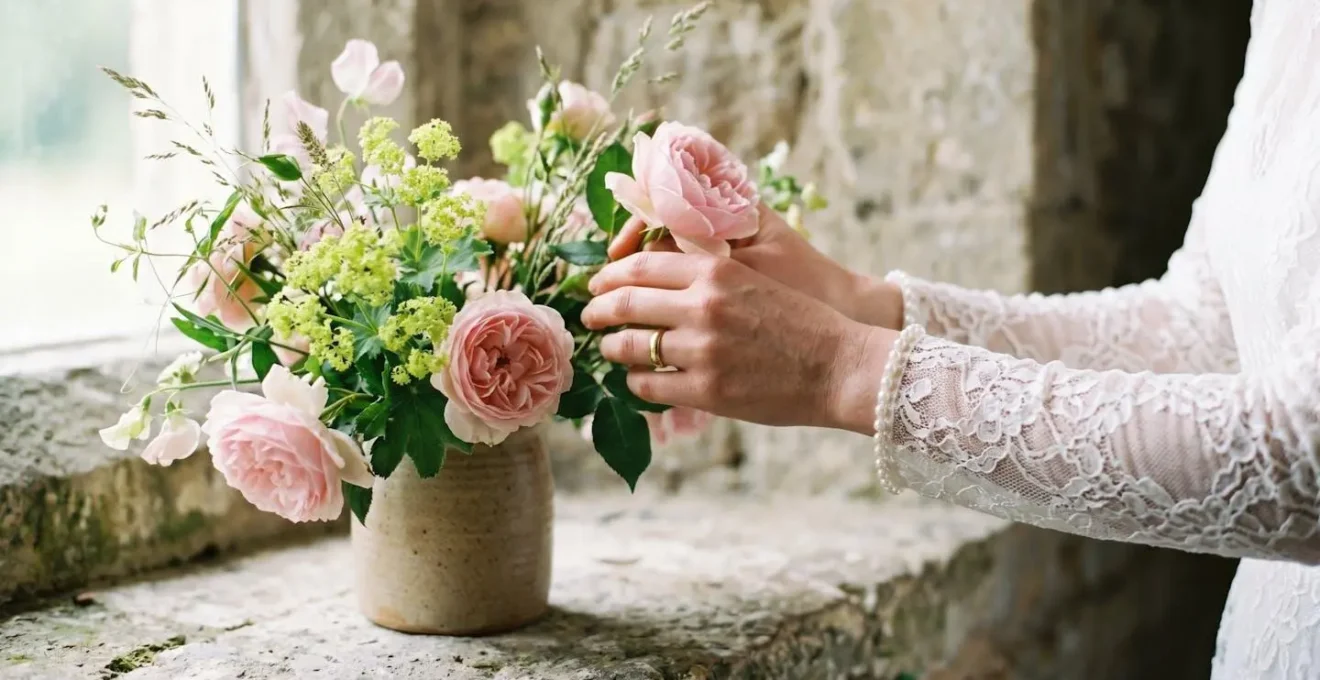
This final layer of personalisation is often found in the small details: the choice of a simple, hand-thrown ceramic vessel that speaks to your love of craft, or the inclusion of a flower with a specific meaning known only to the two of you. It’s in these quiet, intentional choices that the soul of the design truly resides. Your floral designer’s role is not just to arrange flowers, but to act as a translator, turning your personal narrative into a living, breathing botanical reality.
When you look back at your photographs, you won’t just see pretty flowers. You will see a design that felt like it could only have existed for your wedding, in that specific place, at that specific time. You will see your story, told in the most beautiful language of all.
To bring this vision to life, the next logical step is to partner with a floral designer who can translate your personal story and the soul of your venue into an unforgettable floral experience.